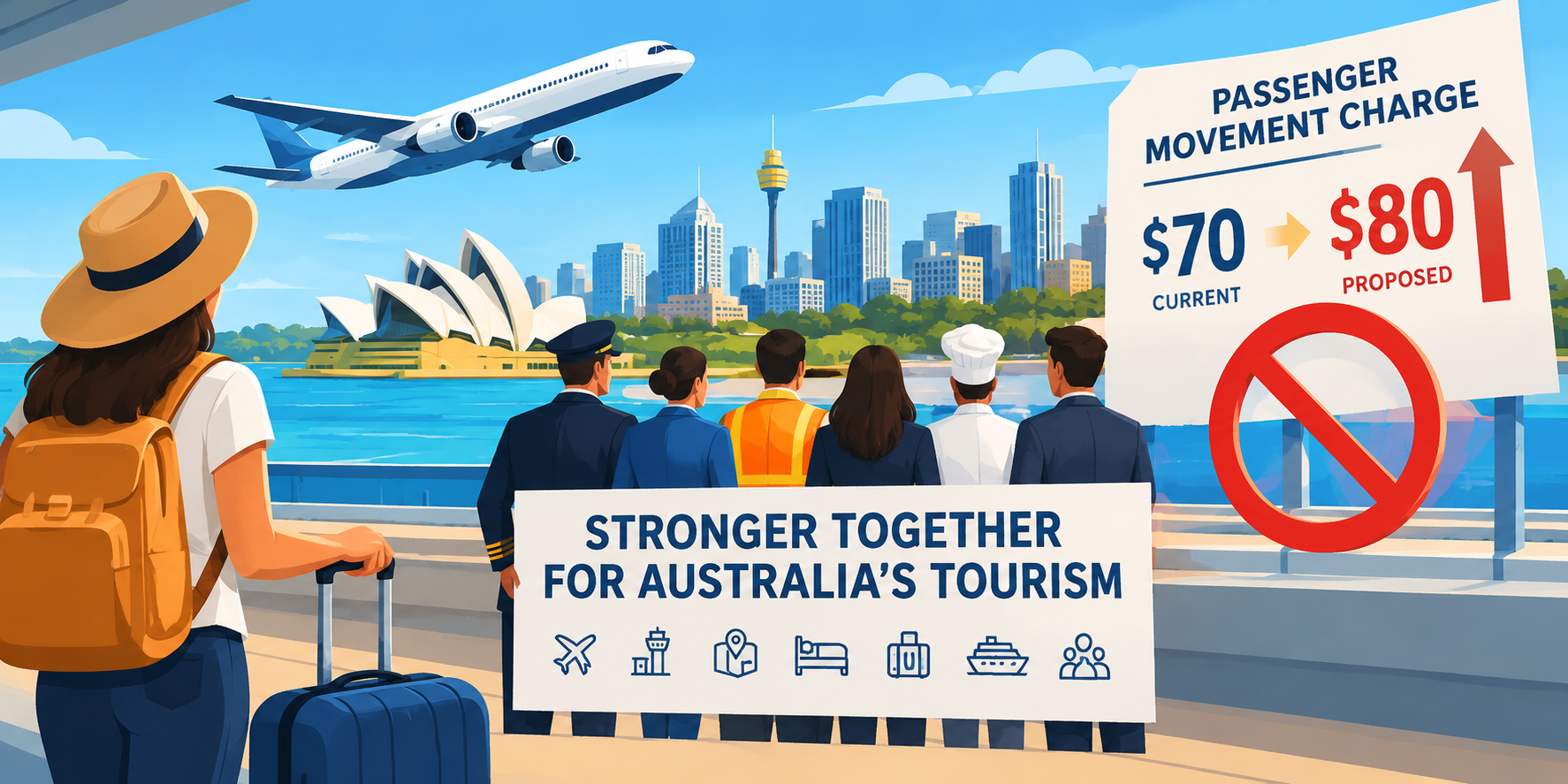
Australia’s tourism and transport sectors have joined forces to oppose the Federal Government’s proposed increase to the Passenger Movement Charge, warning it could increase travel costs and weaken the country’s international tourism competitiveness.
The proposal would lift the charge from $70 to $80 per international passenger. Eight industry bodies representing airlines, airports, regional aviation, tourism, accommodation, travel and cruise operators have jointly called on Parliament to reject the increase.
Stephen Pearse, Board of Airline Representatives of Australia Executive Director, said the proposed rise came as households and tourism businesses were already facing growing cost pressures.
“International travel is not simply a holiday expense. It connects families, supports education, facilitates trade and brings international visitors to Australian businesses and communities,” Mr Pearse said.
Stephen Beckett, Airlines for Australia and New Zealand CEO, said the proposed increase could not be considered in isolation from the growing wave of costs hitting the travel sector.
“The increase in the Passenger Movement Charge comes on top of a growing wave of costs being passed through to Australia’s aviation and tourism sectors,” he added.
“Rising government fees and taxes, service and security charges, along with skyrocketing fuel prices are putting enormous pressure on airfares and making Australia a more expensive place to travel to, from and within.”
Industry representatives said government and airport fees can account for more than half of some lower-priced international airfares and, in some cases, as much as three-quarters.
Margy Osmond, Tourism and Transport Forum CEO, said higher travel costs could have much wider consequences.
“International tourism, aviation and cruising support thousands of Australian businesses and jobs, including hotels, restaurants, retailers, tour operators, regional tourism operators and businesses throughout the supply chain,” she explained.
“Making international travel more expensive risks discouraging visitors from choosing Australia, taking spending away from local businesses and weakening the industries and communities that depend on international connectivity.”
The industry bodies have welcomed opposition to the proposed increase from the Coalition, Greens and One Nation, arguing Australia should instead focus on improving affordability and international connectivity.
“We should be looking at how we make travel more affordable, encourage international visitors and support greater connectivity, not introducing another tax that risks making Australia less competitive,” the industry leaders said.