Australia’s cruise industry has delivered a blunt warning to governments: the country is losing its competitive edge, and the economic consequences are mounting.
A new report released by Cruise Lines International Association (CLIA) Australasia and the Australian Cruise Association (ACA) reveals a 21 per cent decline in cruise tourism’s economic contribution, falling from $8.43 billion in 2023–24 to $6.68 billion in 2025–26.
The downturn comes despite record demand. A record 1.45 million Australians took an ocean cruise last year, up 9.5 per cent, while global passenger numbers reached 37.2 million, an increase of 7.5 per cent.
Speaking at the report’s launch in Sydney, CLIA Australasia Executive Director Joel Katz said Australia was losing ground to competing destinations.
“Australia is losing its competitiveness against other countries. Other countries are really recognising the value that cruise can deliver and are working hard to attract those cruise lines,” Katz said.
“We’ve seen that some of the brands have left Australia and signed long-term agreements to deploy their assets into other parts of the world.”
20,021 jobs at stake
The report shows the cruise sector supported 20,021 full-time equivalent jobs and generated $2.15 billion in wages during 2025–26.
Passengers are also spending more ashore, averaging $459 per person, per day.
“More Australians are flying overseas to cruise, so we need to increase the number of ships and the number of ports that they visit,” Katz said. “We want Australians to cruise at home, keep that money in Australia and support Australian jobs.
“There’s just not enough cruises in Australia for them to cruise on.”
Carnival departures add to concerns
Carnival Cruise Line’s decision to withdraw two ships from Australian waters in 2028 is expected to remove hundreds of millions of dollars in economic activity.
Katz warned that cruise lines were already planning deployments towards the end of the decade.
“We really need those decisions to be made quickly so that cruise lines can include Australia in their forward plans and get those ships committed to Australia,” he said.
Asked whether the industry was facing a crisis or a correction, Katz pointed to the latest figures.
“We’ve now seen another $640 million decline. We are likely to see further declines because of the long lead times.”
Regional ports losing out
The report also highlights a significant decline in regional ports receiving cruise calls, with destinations across Victoria, South Australia and Western Australia among the hardest hit.
Australian Cruise Association CEO Jill Abel said regional destinations were working to develop their cruise offering, particularly for expedition ships.
“We just have to make it a bit easier to facilitate,” Abel said, pointing to industry workshops and familiarisations designed to build regional capacity and develop shore excursion opportunities.
For smaller communities, cruise calls provide valuable business for local tour operators, retailers, hospitality venues and attractions.
Governments under pressure to act
Industry representatives are calling on the Federal Government to provide longer-term regulatory certainty and the NSW Government to review port fees and charges.
Business Sydney Executive Director Paul Nicolaou urged the Albanese Government to extend licensing arrangements beyond the current two-year timeframe, arguing cruise lines needed greater certainty when making deployment decisions.
He also called on the NSW Government to review the costs of bringing ships into Sydney Harbour.
“It is uneconomical for a lot of these cruise ships to come here with all these fees and charges being too high,” Nicolaou said.
He warned that hospitality, tourism and retail businesses were suffering as cruise activity declined.
CLIA defends lobbying efforts
Questioned about the industry’s failure to secure meaningful government action, Katz said port fees were only part of a broader challenge involving regulation, operating costs and Australia’s recognition of cruise tourism.
He defended CLIA’s advocacy efforts, saying it worked closely with governments, the Australian Cruise Association and stakeholders to highlight the sector’s economic contribution.
However, he acknowledged that cruising did not always receive the recognition it deserved within Australia’s visitor economy.
Australian cruisers face fewer choices
For Australian cruisers, the decline could mean fewer ships, reduced regional itineraries and rising prices as cruise lines commit more capacity to overseas markets.
Katz urged frustrated passengers to make their voices heard.
“Speak to your local council, speak to your local MPs, and tell them why cruising is important to you,” he said.
With cruise lines planning deployments years in advance, the industry says urgent government action is needed to keep ships in Australian waters.
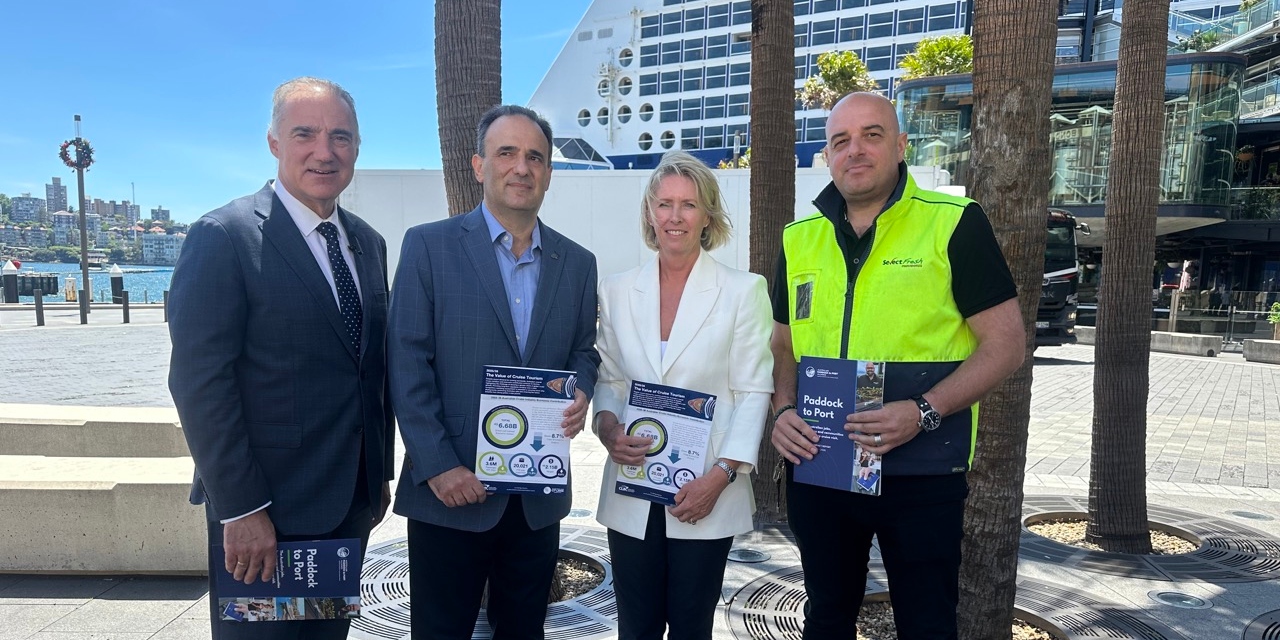
Pictured: Joel Katz, Jill Abel (Australia Cruise Association exec director), Paul Nicolau (Executive Director at Business Sydney), Steven Biviano (Select Fresh Providores Group General Manager)