
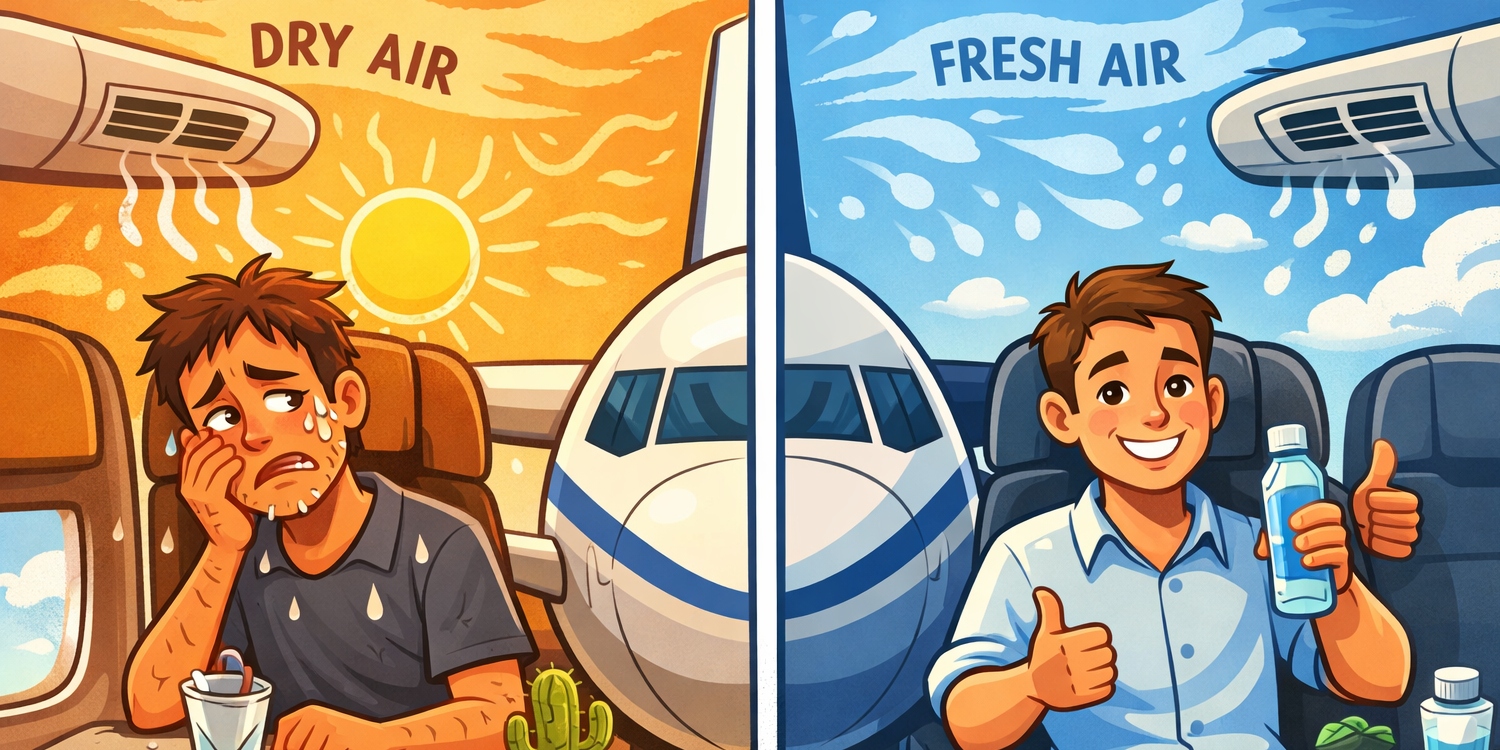
Where you sit on a plane could have a bigger impact on your skin than your skincare routine, with new research revealing certain seats dramatically increase dehydration during flights.
Analysis from Fresha, based on expert insights and cabin airflow patterns, found humidity levels inside aircraft cabins can drop below 20 percent, drier than desert conditions. Combined with recycled air, UV exposure and limited movement, some seats are far more likely to leave passengers with tight, flaky or irritated skin.
Window seats rank worst for mid flight dehydration
Window seats were identified as the worst for skin health, due to increased UV exposure and reduced airflow. Passengers seated near windows are also exposed to colder cabin walls, which can accelerate moisture loss.
The first and last five rows of the aircraft were also flagged as highly dehydrating zones, where airflow and temperature fluctuate the most during take off and landing.
By contrast, aisle seats in the middle of the cabin ranked best, offering more stable airflow and easier movement, helping maintain circulation and hydration. Seats above the wings also performed better, with the aircraft structure helping stabilise pressure and humidity changes.
Experts share tips to protect skin while flying
Beauty expert Danielle Louise said seat choice can directly affect skin hydration:
“Window seats get the harshest UV exposure, even on cloudy days, because you’re closer to the sun and light reflects off the clouds. It’s a recipe for dehydration,” she said.
She recommends avoiding active skincare ingredients before flying, applying barrier cream before boarding, using hydrating mist instead of wipes and wearing SPF even on night flights.
The findings come as long haul bookings rise and interest in pre flight skincare continues to grow, with Fresha reporting a 22 percent increase in searches for hydrating facials and barrier repair treatments.





