For travelers comparing hotels in Komodo Island, Indonesia, for diving, the real difference rarely comes down to room categories alone. It comes from how well a property understands the rhythm of diving days, the character of the Flores Sea, and the expectations of guests who want both adventure and comfort. In Komodo, accommodation is not just a place to sleep. It becomes part of the overall dive experience, shaping everything from early departures and gear handling to meal timing, recovery, and the sense of connection to one of Indonesia’s most remarkable marine regions.
- Many visitors arrive in Komodo with images of manta rays, coral gardens, dramatic island silhouettes, and pink-sand beaches already in mind.
- What often surprises them is how much their accommodation affects the quality of that trip.
A well-run resort can make a demanding dive itinerary feel seamless, while an unsuitable stay can leave even a beautiful destination feeling unnecessarily tiring.
Why Komodo Appeals to Serious and First-Time Divers Alike
Komodo has built a strong reputation among international dive travelers because it offers a range of experiences. It is not only for highly experienced divers chasing current-swept pinnacles and pelagic encounters. It also attracts soft-adventure travelers, couples, small groups, underwater photographers, and people taking their first major dive holiday in Indonesia.
The area’s appeal comes from contrast. Conditions can be wild in one site and calm in another. Marine life can shift from tiny macro species to large passing mantas within the same trip. On land, the scenery remains equally memorable: dry hills, clear bays, rugged coastlines, and a sense of remoteness that many travelers now actively seek.
- This variety is why guests often spend more time choosing accommodation here than they would in a standard beach destination.
- A stay in Komodo is expected to support activity, rest, logistics, and a feeling of place.
For diving-focused guests, the property serves as much as an operational base as a holiday setting.
What Divers Actually Need From Accommodation
The most effective hotels on Komodo Island, Indonesia, are those that understand that divers are not typical leisure-only guests. Their routines are different. They wake early, return tired, carry equipment, need practical drying space, and appreciate food and service that match an active day outdoors.
A diver-friendly property need not feel clinical or overly technical. In fact, the best ones avoid that entirely. Instead, they quietly build convenience into the guest experience.
The Small Details That Matter Most
Divers tend to value practical hospitality more than unnecessary luxury. A stylish room is welcome, but convenience usually carries greater long-term value.
- Early breakfast availability before boat departures
- Flexible meal timing for guests returning from full-day trips
- Freshwater rinse access for gear
- Comfortable outdoor areas for drying wetsuits and accessories
- Staff who understand changing sea schedules and weather windows
- Reliable transfers between the jetty, the dive operation, and the accommodation
Calm, efficient service at the end of a physically demanding day
These details may sound minor on paper, yet they strongly influence guest satisfaction. In resort management, this is often where excellent properties separate themselves from merely attractive ones.
The Difference Between a Hotel Stay and a Dive-Focused Resort
Not every property in Komodo is designed with diving at its core. Some are ideal for scenic relaxation, island hopping, or short-stay tourism. Others operate more like a true Komodo Island dive resort, where the entire flow of the guest stay is aligned with water-based activity.
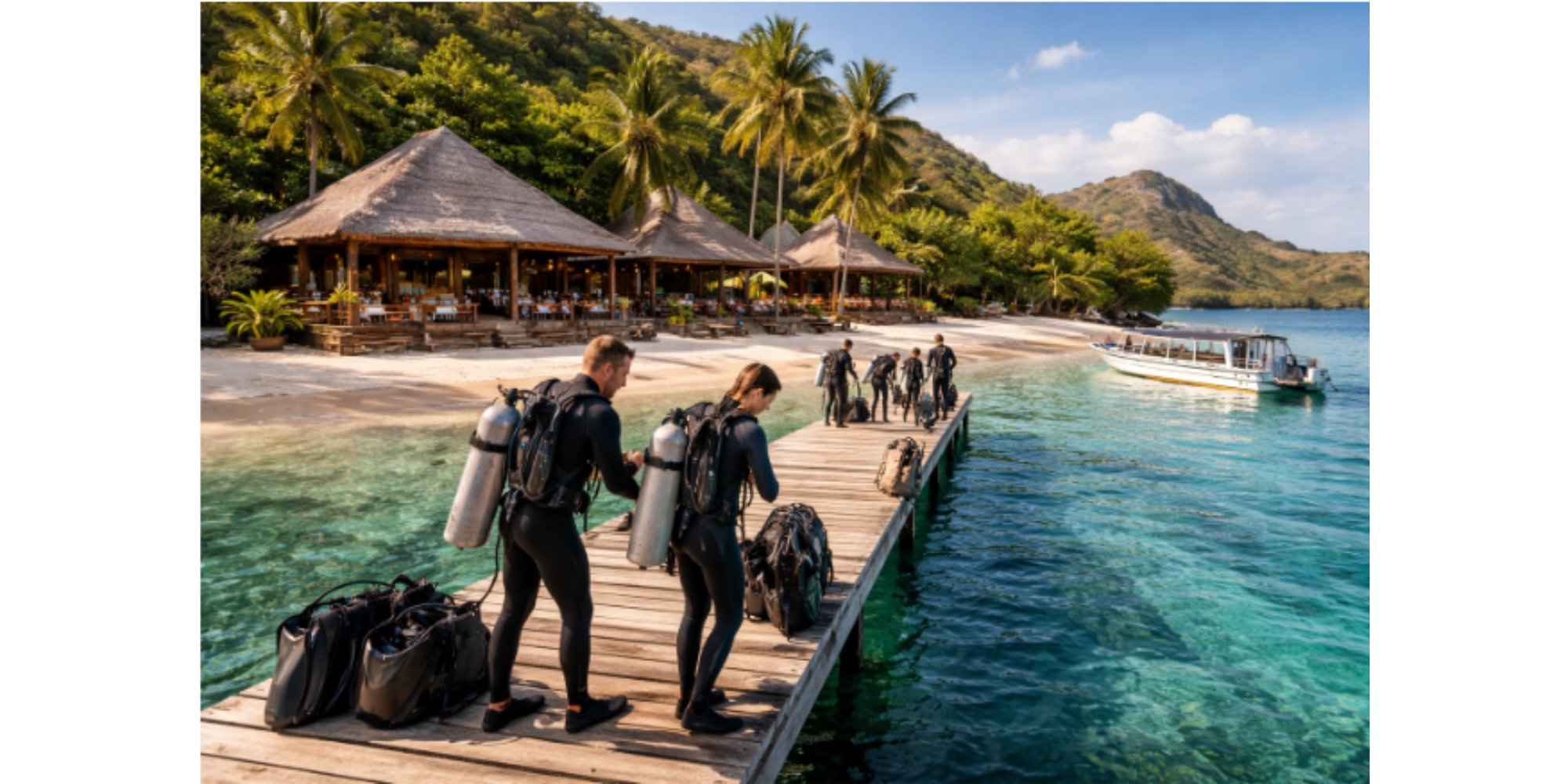
A dive-focused resort usually creates a stronger sense of continuity between accommodation and ocean experience. Guests do not feel they are moving between two separate worlds. The room, the jetty, the dining area, the briefing point, and the return from the boat all feel part of one connected journey.
- This kind of setup appeals strongly to travelers who want less friction and more immersion.
- It also works well for guests staying several nights, because familiarity improves comfort over time.
From a hospitality perspective, integration creates both operational efficiency and a more memorable guest impression.
That said, a classic hotel can still suit many visitors, especially those who want to mix diving with wildlife viewing, sailing, or a more flexible holiday pace. The best choice depends on how central diving is to the traveler’s purpose.
A Good Resort Reflects the Character of Komodo
A strong resort experience on Komodo Island should feel grounded in the destination rather than interchangeable with any tropical property elsewhere in Southeast Asia. Guests increasingly notice when design, service, and atmosphere actually respond to location.
Komodo is visually powerful. The landscape is dry, elemental, and dramatic, not lush as in Bali. Hospitality that works here often mirrors that identity with open views, natural textures, breezy layouts, and a quieter style of luxury. It feels less polished for display and more shaped by climate, sea access, and the surrounding islands.
Authenticity Is Not About Rustic Simplicity Alone
Some travelers assume authenticity means basic infrastructure or minimal comfort. In reality, authenticity is more about coherence. It is the sense that the property belongs where it is.
- Architecture should respect the environment and weather patterns
- Food should support active guests while reflecting local influence
- Service should feel relaxed but well-organized
Experiences should be framed around nature, not manufactured spectacle
When these elements align, a stay feels more memorable. Guests remember not only the dives, but also the mood of sunrise departures, the stillness after dinner, and the practical ease that allowed them to enjoy the destination without stress.
The Role of Dive Operations in Guest Satisfaction
One of the strongest influences on guest perception is the relationship between the accommodation and the dive operator. Whether formally integrated or closely coordinated, this connection matters. Travelers often use phrases such as “Komodo resort diving club” when looking for a stay where instruction, equipment support, and hospitality feel like part of a single ecosystem.
This does not mean every guest wants an intensive club-like environment. Many prefer something more relaxed. But they do appreciate a sense of professionalism, safety, and consistency. Clear communication about departure times, site conditions, certification expectations, and weather changes builds trust.
- Divers want to feel looked after, not managed.
- They value staff who are attentive without being intrusive.
They remember smooth coordination far more than exaggerated branding.
In practical terms, the strongest guest experiences usually come from teams that understand both marine operations and hospitality standards. That dual awareness is especially important in Komodo, where schedules can shift with tides, currents, and seasonal conditions.
Who Benefits Most From Staying Close to the Diving Experience
A dedicated Komodo Island dive resort is often the best choice for travelers whose itinerary revolves around time in the water. This includes underwater photographers, multi-day divers, small enthusiast groups, and couples in which at least one person dives regularly.
However, these properties can also work well for non-diving companions when the resort itself offers comfort, scenery, and a strong sense of escape. The best operators understand that not every guest shares the same pace.
- One guest may want three dives and an early sleep.
- Another may prefer a gentle boat outing, a quiet lunch, and sunset views.
Good hospitality allows both experiences to coexist comfortably.
This flexibility is increasingly important in the modern travel market. Guests are rarely one-dimensional, and the properties that adapt well to different energy levels often receive the strongest word-of-mouth praise.
What Travelers Should Look For Before Booking
A thoughtful booking decision goes beyond photographs. In Komodo, travelers benefit from understanding how the property works in real life.
Useful Questions to Consider
- Is the stay designed mainly for diving, general leisure, or both?
- How easy is the transfer between the room, the dock, and the boat departure point?
- Are meals structured around active day trips?
- Does the atmosphere suit couples, groups, photographers, or mixed-interest travelers?
Is the guest experience likely to feel calm and organized rather than rushed?
These questions often reveal more than promotional language ever could. In a destination like Komodo, function and feeling need to work together.
A Stay That Supports the Journey, Not Just the Night
The best accommodation in Komodo succeeds because it understands context. Divers do not simply need a room; they need a place that supports anticipation, movement, recovery, and reflection. Whether a traveler chooses a boutique hotel, a waterside retreat, or a full-service Komodo Island dive resort, the quality of the stay is measured by how naturally it fits the destination and the guest’s purpose.
In that sense, Komodo offers something more than a standard tropical holiday. It invites a style of hospitality where service, landscape, and marine adventure are closely intertwined. For readers considering their options, the smartest choice is rarely the most glamorous one on first glance. It is the property that understands the sea, respects the guest’s routine, and turns a diving trip into a complete island experience.