Sydney’s White Bay Cruise Terminal is on track to begin connecting ships to shore power during the 2026-27 cruise season, writes Honida Beram.
A two-storey Onshore Power Supply (OPS) structure has now been installed at White Bay, marking a major milestone in the project to build Australia’s first shore-powered cruise terminal.
The 10-container structure will convert 33,000 volts of electricity from the local grid into the voltage and frequency required by cruise ships, allowing compatible vessels to switch off their diesel generators while alongside.
The NSW Government says around 70 per cent of cruise ships calling at White Bay are capable of connecting to shore power.
Once operational, the system is expected to reduce carbon emissions by more than 4,000 tonnes a year, equivalent to removing around 1,100 vehicles from NSW roads.
Noise from cruise ship engines and generators could also be reduced by up to 10 decibels.
The move will be welcomed by residents around White Bay, where cruise ship noise and emissions have been ongoing community concerns.
For Australian cruisers, the project also brings Sydney closer to international cruise ports where shore power is already being introduced.
The Port Authority of NSW said the White Bay project is an Australian-first and is designed to reduce emissions from the cruise sector while delivering longer-term environmental benefits.
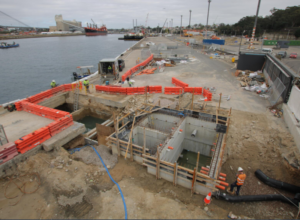 Construction is continuing on underground electrical cabling, the wharf-side Cable Management System and a seawater cooling system (above) for the OPS equipment.
The cooling system will draw water from Sydney Harbour and circulate it through heat exchangers, removing the need for conventional large-scale mechanical cooling and helping reduce energy consumption and noise.
Construction is expected to be completed by the end of the year, with cruise ships to begin testing and connecting to the system during the 2026-27 summer season.
The project comes as international ports increasingly invest in shore power and governments introduce measures aimed at reducing emissions from ships while they are berthed.
For Sydney’s cruise industry, the White Bay connection will mean ships equipped with the technology can use electricity from the grid rather than running their onboard diesel generators while in port.
The Port Authority said the project required complex high-voltage electrical infrastructure, underground cabling, wharf equipment and the new seawater cooling system.
Once completed, White Bay will become an important test of how Australia’s cruise industry can reduce its impact on neighbouring communities while keeping Sydney firmly on the cruise map.
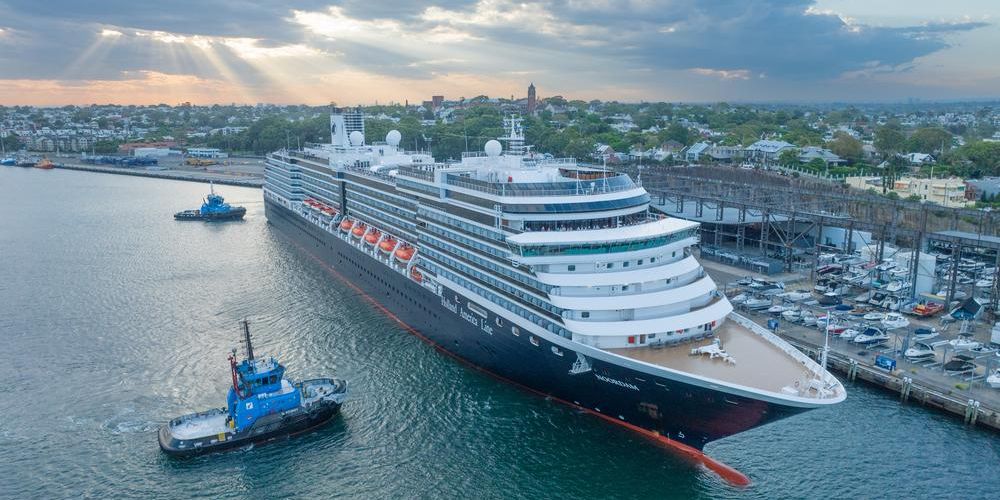
Main image: MS Noordam at White Bay. Picture courtesy Port Authority of NSW