
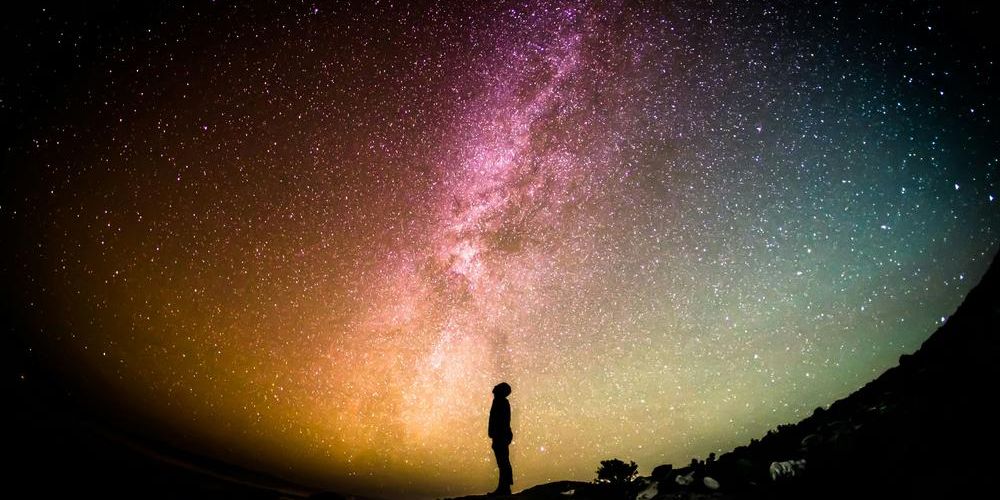
1. Uluru, Northern Territory, Australia
Few stargazing experiences on Earth come close to what unfolds above the Red Centre on a moonless night.
Sitting 1,600 kilometres from the nearest coastline and far from any city, Uluru offers almost zero light pollution and some of the darkest, clearest skies in the Southern Hemisphere.
Uluru Astro Tours is the only operator licensed to run stargazing experiences inside the UNESCO World Heritage-listed Uluru-Kata Tjuta National Park at night.
Guides weave together western astronomy and Anangu sky stories, introducing guests to the Southern Cross, the Milky Way and the Dark Emu, the celestial emu formed by the dark nebulae of the Milky Way, visible only from the Southern Hemisphere.
Tours run nightly and include professional telescope viewing and a complimentary photo under the stars.
Best time to visit: May to September, during the dry season.

2. Lake Tekapo, New Zealand
Nestled in the South Island, Lake Tekapo sits at the heart of the Aoraki Mackenzie International Dark Sky Reserve, the largest dark sky reserve in the Southern Hemisphere and one of only 11 gold-rated reserves in the world.
The Dark Sky Project offers a range of experiences at Mount John Observatory, New Zealand’s only professional research observatory.
The Summit Experience takes guests above the clouds to peer through a 16-inch telescope, exploring star clusters, distant galaxies and neighbouring planets.
For something more relaxed, Tekapo Stargazing combines a guided night sky tour with exclusive use of thermal hot pools where guests lie back on floating hammocks and soak under the stars. It’s the only experience of its kind in the world.
Best time to visit: Year-round, with autumn and winter offering the longest and darkest nights.

3. Atacama Desert, Chile
At 2,400 metres above sea level, with virtually no humidity and almost no rainfall, the Atacama Desert in northern Chile is home to some of the clearest skies on the planet.
It’s no coincidence that several of the world’s most powerful astronomical observatories are based here.
San Pedro de Atacama is the base for most stargazing tours, with operators running small-group experiences into the desert after dark.
The Roofless Experience is a standout, where guests observe the cosmos through four powerful telescopes while sipping wine or hot chocolate under blankets, guided by expert astronomers who blend science with storytelling. A professional astrophotography souvenir is included.
Best time to visit: May to October for the clearest skies and coolest evenings.

4. Mauna Kea, Hawaii, USA
Rising nearly 4,300 metres above sea level, Mauna Kea on the Big Island of Hawaii sits above 40 per cent of Earth’s atmosphere, making it one of the finest astronomical sites anywhere on the planet. On a clear night, guests can see more than 4,500 stars with the naked eye.
The Mauna Kea Visitor Information Station, operated by the University of Hawaii, runs free nightly stargazing programs for visitors, with powerful telescopes and knowledgeable guides on hand.
Several operators also offer guided summit tours that combine a sunset drive above the clouds with full night-sky viewing sessions.
Best time to visit: Year-round, though summer brings calmer conditions.

5. NamibRand Nature Reserve, Namibia
Covering more than 170,000 hectares of desert wilderness in southern Namibia, NamibRand is one of Africa’s premier dark sky destinations.
It also holds gold tier status from the International Dark Sky Association and on a clear night, visibility stretches up to 300 kilometres across the horizon.
Several eco-lodges within the reserve offer stargazing as part of the guest experience, with night walks and telescope sessions led by local guides.
The combination of towering red sand dunes, complete silence and an explosion of stars overhead makes this one of the most atmospheric stargazing destinations on Earth.
Best time to visit: May to September during the southern winter.

6. Wadi Rum, Jordan
Known as the Valley of the Moon, Wadi Rum is a protected UNESCO World Heritage landscape of towering sandstone mountains and vast desert plains.
Its high plateau, low humidity and near-zero light pollution create extraordinary conditions for stargazing year-round.
Bedouin camps scattered across the desert offer overnight stargazing experiences that blend astronomy with cultural storytelling, sharing how ancient desert navigators used the stars to find their way across the Arabian Peninsula.
Guests can sleep under an open sky in a traditional Bedouin tent, with the Milky Way arching overhead.
Best time to visit: September to April, when skies are clearest.

7. Bryce Canyon National Park, Utah, USA
Bryce Canyon is one of only a handful of places in the United States to hold both International Dark Sky Park certification and a dedicated astronomy program.
The park sits at an elevation of around 2,700 metres, well above the light pollution of nearby towns, and hosts regular star parties and ranger-led astronomy programs throughout the year.
The combination of the park’s extraordinary hoodoo formations, the orange and red rock spires that define Bryce’s landscape, and a sky blazing with stars creates one of the most visually dramatic stargazing settings anywhere in the world.
The park’s annual Astronomy Festival in June draws astronomers and sky enthusiasts from across the globe.
Best time to visit: Year-round, with summer star parties a highlight.

8. Lord Howe Island, New South Wales, Australia
Just a two-hour flight from Sydney, Lord Howe Island is one of Australia’s best-kept dark sky secrets.
The island hosts an annual Dark Sky Festival featuring astronomy talks, astrophotography workshops, yoga under the stars and telescope sessions with local experts.
With a permanent population of fewer than 400 people and strict visitor limits of 400 guests at any time, Lord Howe offers a level of darkness and quiet that is increasingly rare.
The island’s remote location in the Tasman Sea means zero industrial light pollution and skies that look much as they would have thousands of years ago.
Best time to visit: The Dark Sky Festival is held in autumn each year.

9. Jasper National Park, Canada
Jasper is the world’s second largest Dark Sky Preserve, stretching across 11,000 square kilometres of the Canadian Rockies.
Surrounded by rugged mountain peaks, alpine lakes and dense forest, the park offers a night sky backdrop that is as dramatic as it is dark.
The park hosts the annual Jasper Dark Sky Festival each October, drawing astronomers, photographers and travellers for workshops, guided walks and stargazing events.
At other times of year, visitors can stargaze from the shores of Pyramid Lake, join guided night hikes or simply pull over on a mountain road and look up.
Best time to visit: October for the Dark Sky Festival; winter for maximum darkness.

10. Kennedy Space Center, Florida, USA
For those who want to connect stargazing with the human story of space exploration, Florida’s Space Coast offers something unique.
At Kennedy Space Center Visitor Complex, just 45 minutes east of Orlando, guests can come face-to-face with the Space Shuttle Atlantis and walk through exhibits dedicated to the Apollo missions, the Space Shuttle program and the future of human spaceflight, including the Artemis program.
Nearby Port Canaveral offers a rare vantage point for rocket launch viewing, with launches from the Cape Canaveral Space Force Station visible from the beach and from cruise ships departing the port.
There is something genuinely moving about watching a rocket climb into the same sky that has fascinated humans since the beginning of time.
Best time to visit: Year-round, with launch schedules available on NASA’s website.





