Having travelled to South Africa many times, I’d experienced the drama of Cape Town’s coastline, the wild pulse of Kruger and the cultural energy of Johannesburg.
I’d followed its famous routes and lingered in its headline destinations. Yet one vast province at the country’s heart remained a blank space on my personal map: the Free State.
I arrived with few expectations and little knowledge. What I found instead was a landscape of immense skies, wide horizons, small-town warmth and unexpected adventure.
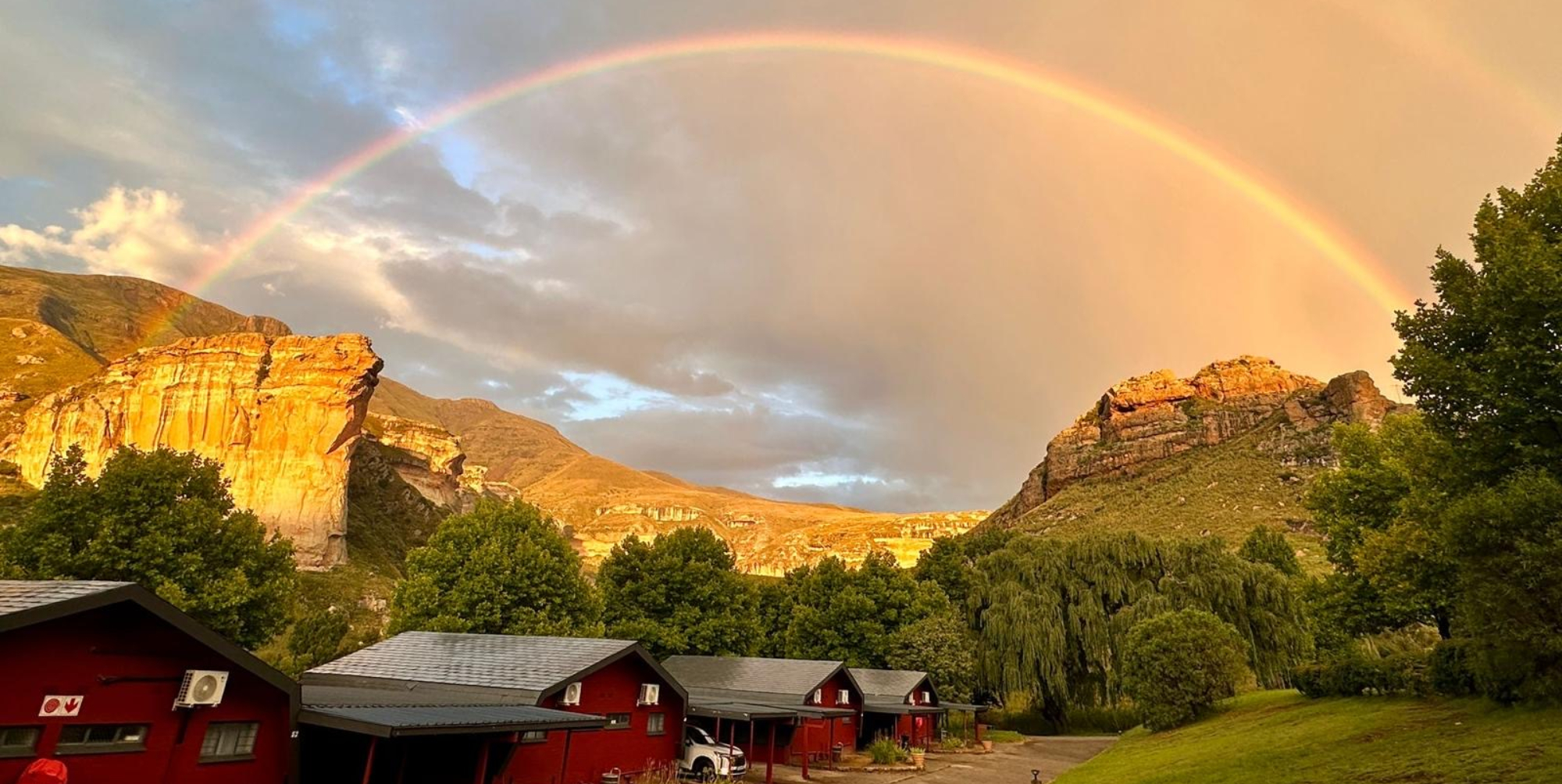
Arriving at the Golden Gate Hotel just as storm clouds were clearing felt perfectly timed. A vivid double rainbow arched over the dramatic sandstone formations the park is famous for, the cliffs glowing in the late afternoon light as if lit from within.
It was an almost theatrical introduction to this remarkable corner of the Free State – and a reminder that in South Africa’s heartland, nature rarely does things by halves.
Golden Gate Highlands National Park is defined by sculpted cliffs and sweeping grasslands where ochre, gold and burnt orange rock faces rise from rolling plains. It’s a place that immediately invites exploration.
 Day One
The first morning we laced up our boots and set off on a hike to Cathedral Cave, one of the park’s most famous natural landmarks.
The trail wound steadily upward through open veld, the scent of wild grasses drifting on the breeze. With each turn came another expansive view of undulating hills and layered cliffs stretching into the distance.
Reaching Cathedral Cave was worth every step. The vast sandstone overhang curves like the nave of a natural cathedral, its scale both humbling and exhilarating.
Standing beneath it, dwarfed by time and geology, you feel the ancient rhythm of this landscape, shaped by wind, water and thousands of years.
Our adventures continued in the saddle. Horse riding through Golden Gate offers a completely different perspective: slower, quieter and immersive. Hooves beat a steady rhythm along dusty trails as we crossed open plains with cliffs rising dramatically in the distance.
At times it felt like stepping into a South African cowboy film, clip-clopping through wide country under endless skies.
Later that afternoon we headed to nearby Clarens. Known as the “Jewel of the Free State,” this artsy village is filled with galleries, cafés, craft beer spots and charming local stores.
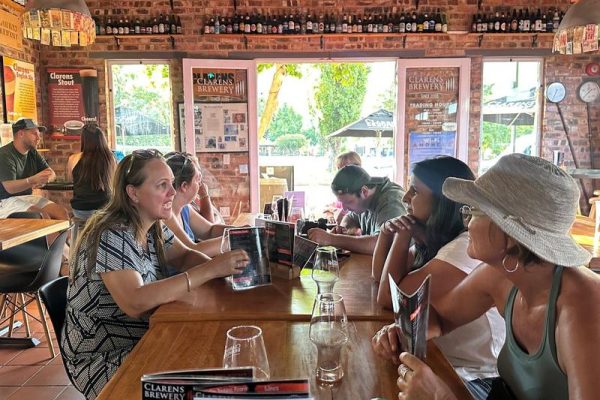
We cycled through town past sandstone buildings and lively shopfronts before settling in for a gin tasting at Clarens Brewery. Botanical notes and citrus undertones echoed the landscape around us – fresh, crisp and distinctly South African.
A township tour added meaningful depth to the experience, offering insight into local life beyond the postcard views.
It was a powerful reminder that travel is not only about scenery, but also about the communities that shape a place.
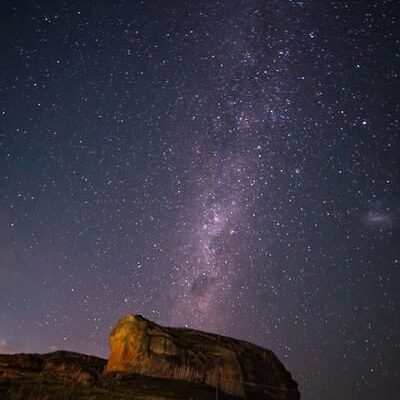
Relaxed and restored, we returned to the Golden Gate Hotel where one final spectacle awaited. Golden Gate’s night skies are extraordinary.
With almost no light pollution, the stars reveal themselves in dazzling clarity. After a day filled with rainbows, ridgelines and rich encounters, the glittering sky felt like the perfect closing act.
 Day Two
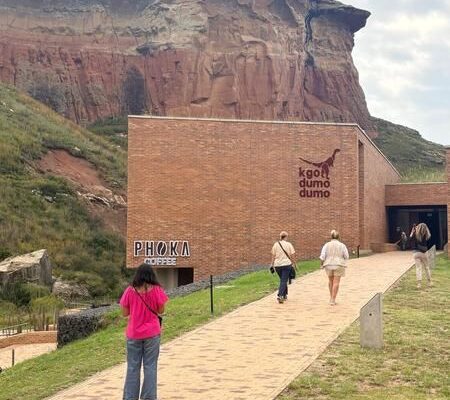
Tucked away in the Free State is one of the province’s most unexpectedly fascinating attractions: the recently opened Kgodumodumo Dinosaur Interpretation Centre.
Named after “Kgodumodumo,” a mythical Basotho creature said to swallow people whole before regurgitating them, the centre cleverly weaves together palaeontology and folklore.
Even the architecture feels prehistoric – bold, angular and earth-toned, echoing the surrounding sandstone cliffs.
Inside, visitors are guided through immersive exhibits that bring the Triassic period to life, when dinosaurs once roamed this very landscape.
The region is one of the richest dinosaur fossil sites in the world and the displays highlight significant discoveries made here, including some of the earliest known dinosaur species.
Interactive installations, fossil replicas and cinematic storytelling make the science accessible without oversimplifying it.
What makes the centre particularly memorable isn’t just the fossils, but the sense of deep time it evokes. Standing there, surrounded by ancient history and the vast Free State sky, you realise this quiet province has been extraordinary for far longer than we’ve been paying attention.
I’ll admit I’m not particularly fascinated by dinosaurs – much to the disappointment of my seven-year-old godson – but this place completely captured my imagination.
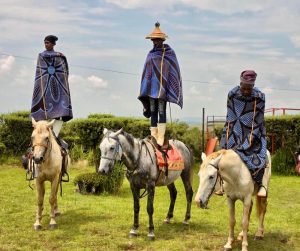 Later that day we enjoyed a Basotho cultural experience that felt less like a tour and more like an invitation into a living heritage.
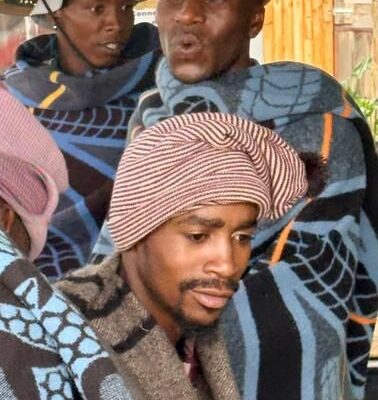
Wrapped in their distinctive woollen blankets, Basotho horsemen greeted us as we approached the village on the edge of Lesotho. They put on an impressive display of horsemanship, galloping across the fields before standing upright on their horses in a dazzling show of balance and skill.
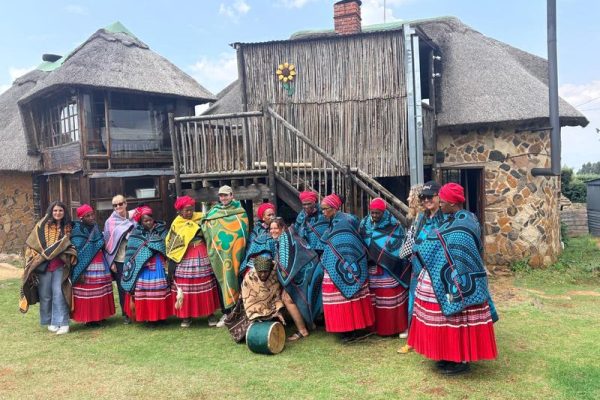
Then came the welcome. A group of Basotho women greeted us with singing, dancing and joyful whistles as they led us into the village.
Life here is shaped by altitude and resilience. Villages cling to rolling highlands, rondavels dot the slopes and livestock wander freely across the hills. Visitors are welcomed with warmth that feels genuine rather than staged.
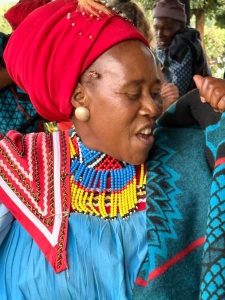 We shared delicious local food and traditional beer while an elder spoke about Basotho culture, traditions and the medicinal plants used for generations.
When he mentioned their herbal equivalent of hormone therapy, a few of us menopausal visitors listened particularly closely.
Women demonstrated traditional weaving techniques and showed us the art of fastening the Basotho blanket, while the famous conical Basotho hat – the mokorotlo – appeared everywhere as a symbol of national pride and identity.
The experience concluded with a wonderfully relaxing foot massage, a blissful end to a day rich in stories and culture. It was an authentic encounter that left a lasting impression.
Day Three
There are few places in the world where you can wake above the clouds, step into crisp mountain air and look straight across at one of Africa’s most dramatic landscapes. Witsieshoek Mountain Lodge is one of them.
Perched at 2,200 metres in South Africa’s northern Drakensberg, Witsieshoek offers a front-row seat to Sentinel Peak and the towering basalt cliffs of the Royal Natal National Park. This is the Drakensberg at its most cinematic.
Part of the magic is the journey itself. The final stretch climbs steeply through the Maloti-Drakensberg escarpment, winding past grazing cattle, sandstone outcrops and distant villages. By the time you reach the lodge, the world below feels far away.
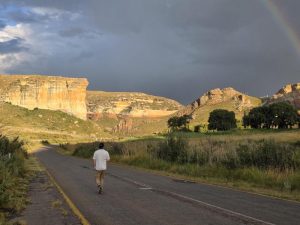 Accommodation ranges from comfortable rooms to contemporary chalets, all designed to maximise the spectacular views. Large windows frame the Amphitheatre like living artwork. At sunset the cliffs glow in shades of amber and rose, while at night the sky opens into a canopy of brilliant southern stars.
Arriving late in the evening, we settled in with a hearty supper and a glass of Pinotage perfectly suited to the crisp mountain air. Over dinner we learned more about the lodge’s inspiring story.
Originally established decades ago as a modest mountain retreat, the property was later revitalised through a public-private partnership designed to benefit the local Batlokoa community.
Working alongside government and private investors, the lodge was redeveloped to create sustainable tourism in one of the Free State’s most spectacular settings.
Today it operates as a community-linked enterprise, generating employment, skills development and revenue for the surrounding area – proof that tourism, when thoughtfully managed, can uplift communities while preserving the landscapes that draw travellers there in the first place.
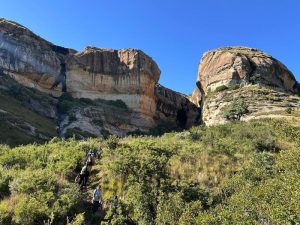 The Adventure Begins
At Witsieshoek, adventure isn’t an afterthought – it’s part of the experience.
Through partnerships with Thaba Adventures, visitors can explore the rugged Drakensberg terrain on guided hikes, trail runs and quad-bike or mountain-bike routes that reveal hidden valleys and sweeping panoramas.
For those seeking a bigger thrill, the Dragon’s Tale Via Ferrata offers a unique vertical adventure.
Steel rungs, cables and ladders fixed to cliff faces transform the rock into an accessible alpine playground, allowing both novice climbers and seasoned adventurers to experience the mountains from a dramatic perspective.
My own quad-biking experience certainly delivered the adrenaline, while a hike to Mahai Falls provided a memorable finale to three unforgettable days.
We didn’t have time to visit Tugela Falls, the second-tallest waterfall in the world, but if it’s even more spectacular than Mahai Falls, then that’s the perfect reason to return.
Because one thing became clear during this journey: three days in the Free State is simply not enough.