It’s rare that you hear the person charged with promoting tourism to their destination celebrate the fact that they are “average”.
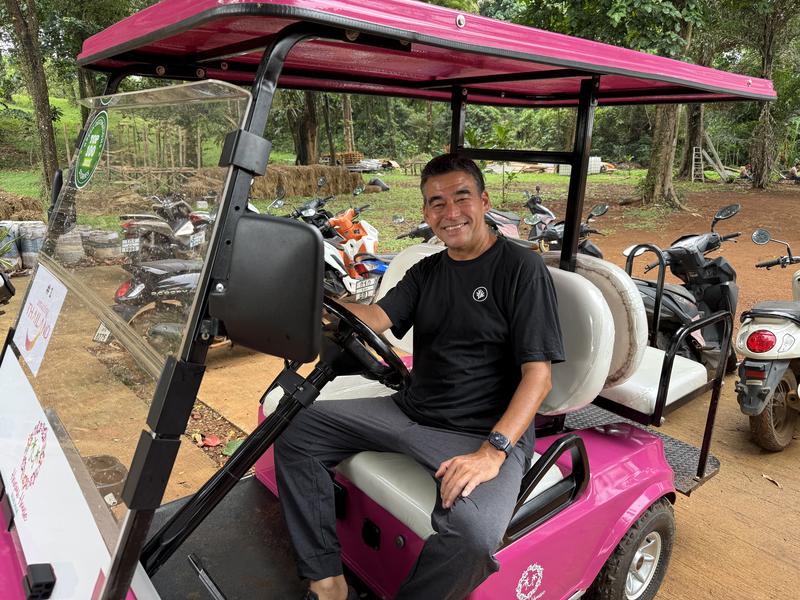
Yet Koh Mak is no ordinary island and Yodchai Sudhidhanakul (above) isn’t your run-of-the-mill tourism boss.
I met him during the recent “Meaningful Travel Experience” trade and media famil organised by the Sydney office of Tourism Authority of Thailand.
Mr Sudhidhanakul is the President of the Tourism Board of Koh Mak and was invited to address our group on why Aussies should come to this small island situated in the Gulf of Thailand.
His speech was powerful, eloquent and enlightening.
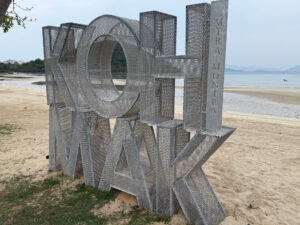 “This is an island that doesn’t have mass tourism and we want it that way. We don’t have the mountains of Koh Chang or the waterfalls like Koh Kood. We call it the power of being average,” he said with a smile.
“But when you have that kind of a situation, it gives you some competitive advantages, because it gives you time to adapt and the time to see what doesn’t work elsewhere.”
Koh Mak is only 16 square kilometres but benefits from a relatively upscale, low-volume market: the island has about 750 hotel rooms and a peak presence of roughly 1,800 visitors at any one time.
Most accommodations are small – often fewer than 20 rooms – which makes large tour groups infeasible. Currently 90 per cent of guests come from Europe and of those, about half come from German-speaking countries (Germany, Austria, Switzerland), who book out Koh Mak from November to April when escaping the European winter.
While still relatively unknown Down Under, Koh Mak is making a deliberate push to attract more Australians, an initiative made even more important given recent world events.
Australia is geographically closer than many European source markets and building awareness here could reduce the island’s dependence on long-haul travel patterns that are vulnerable to geopolitical and airline-routing disruptions.
The big question, of course, is why would the Aussies come?
 The island’s pitch to Australian travellers centres on authenticity, privacy and nature-led experiences rather than mass tourism.
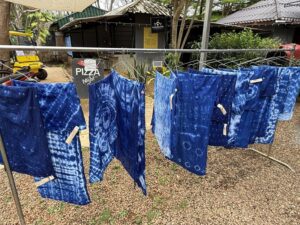
Koh Mak’s small-scale resorts, quiet beaches, community-run activities (tie-dye, pottery, cooking classes), sports amenities that emphasise low noise (tennis, pickleball, indoor/outdoor courts) and immersive conservation projects give Australians access to hands-on experiences they can’t get in larger Thai destinations.
“One of the main things that has put Ko Mak on the map is that we are Thailand’s first low carbon destination,” says Mr Sudhidhanakul.
This has been achieved in a number of ways. Koh Mak has rejected car ferries, which would make the island more accessible but also far less controllable.
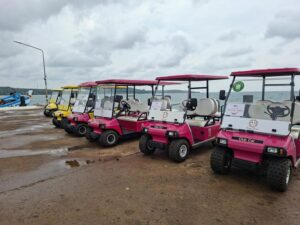
It also discourages car-centric transport, favouring motorbikes and small golf carts instead. No jet skis or banana boats are allowed – indeed anything that promotes noise in the water.
Koh Mak has pushed renewable energy adoption across its resorts (notably solar panels), reduced single-use packaging and plastics, and embraced waste reduction programs.
The island has a surprisingly sophisticated conservation portfolio for its size: a thriving animal clinic cares for the 349 dogs and cats who call it home and weekly beach cleanups keep the place tidy.
 Perhaps most telling is the fact there are no 7-Eleven stores on the island, making it almost unique in Thailand.
“We wanted to keep the opportunity for the locals, for the mom and pop shops to survive, so we said no to 7-Elevens. We have about 18 shops here but if there was one 7-Eleven, they would all die.”
Mr Sudhidhanakul uses the word “we” repeatedly during his address and it’s one of the key factors in Koh Mak’s sustainability success. The “we” he is referring to are the five local families who between them have owned 90 per cent of the island for more than 120 years.
“That plays a vital role because when you own almost everything, you are more in command of where you want to go.”
The families have gone so far as to draw up the Koh Mak Charter – which they call their ‘North Star’ – which maps out exactly what they do and don’t want for the island. It’s all about protecting the lives and future prosperity of the locals without resorting to mass tourism.
“When you have everyone on the same page, you are more likely to be able to execute what you want to do.
“If you don’t set policies, then it is like talking about sustainability as a marketing tool, not as something that is lived. That’s the key difference on this island. Once you have the North Star, everyone is working towards that.”
 Intrigued to learn a little more about Mr Sudhidhanakul’s background, I did a Google search. I was somewhat surprised by the results.
Educated in Europe, he is the former Chief Executive Officer of NokScoot Airlines (he knew Alan Joyce quite well, apparently) and Deputy Director of a major German company focusing on international cooperation for sustainable development.
More recently he co-founded Coral Gardeners Thailand, a reef restoration initiative operating on Koh Mak and neighbouring Koh Kood.
“Coral Gardeners is the most advanced coral restoration organisation in the world. They started in French Polynesia and I was lucky enough to get them here. This is the only place in Asia where you have the Coral Gardeners.”
Koh Mak is an island that sells simplicity, community and a carefully managed form of tourism that prioritises ecological and economic longevity over volume.
At the same time, the owners recognise the practical need to diversify source markets and build economic resilience.
If it can draw more Australians and other like-minded travellers through careful promotion and incremental innovation without increasing capacity or compromising the North Star charter, the island’s future looks sustainable: modest in scale, rich in experience and anchored in community stewardship.