
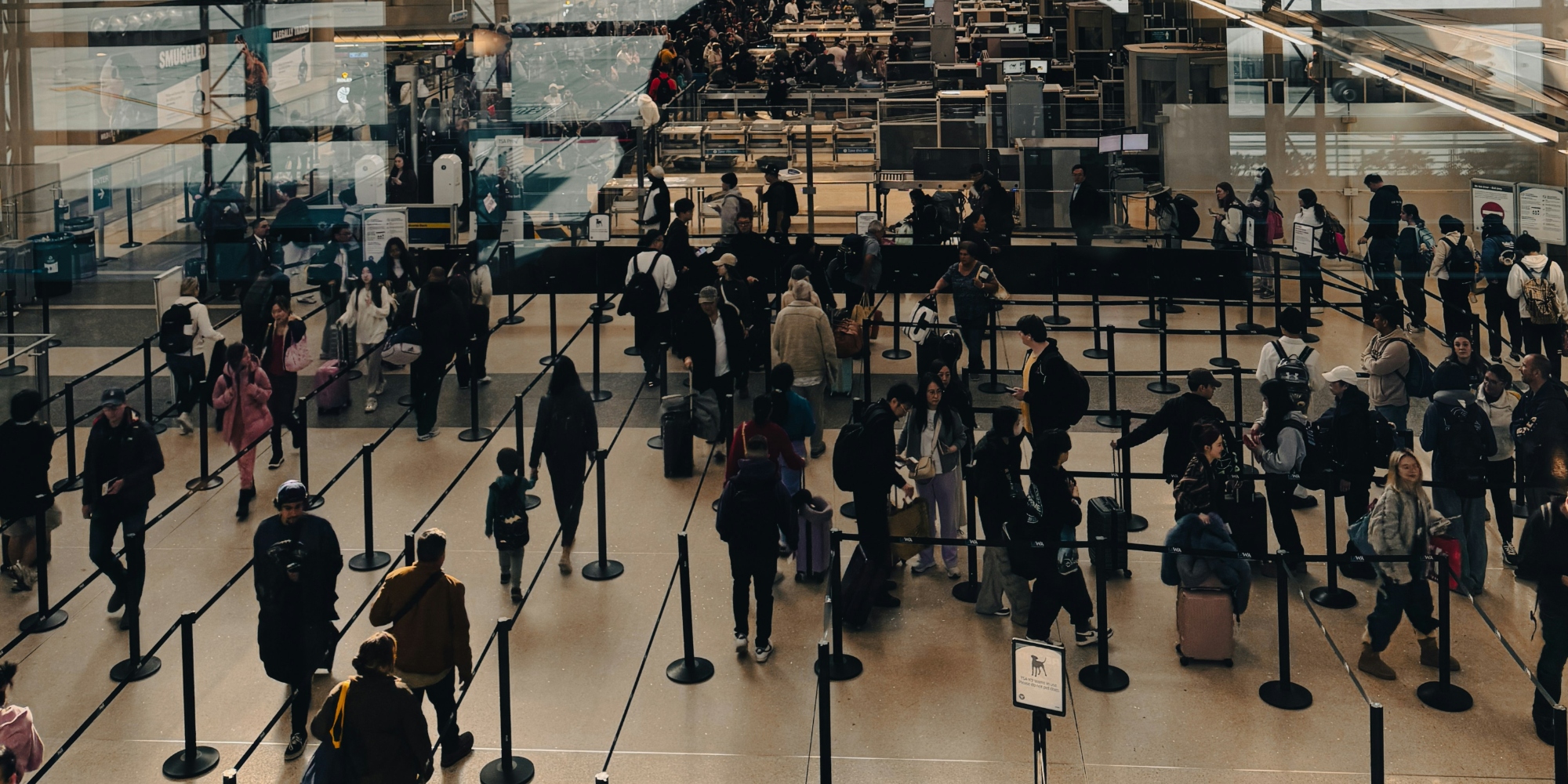
Australians heading to Europe this year could face significantly longer airport queues as the European Union’s new biometric Entry/Exit System (EES) beds down across major airports and border crossings.
The digital border control system became fully operational in April 2026 following a phased rollout across 29 participating European countries. It requires non EU travellers to register biometric data including fingerprints and facial scans when entering countries within the Schengen zone.
European authorities say the system is designed to strengthen border security and modernise immigration processing, but airlines and airport operators warn it is already contributing to delays at some major gateways ahead of the northern summer peak.
Ryanair has emerged as one of the strongest critics of the rollout, calling on the Spanish Government to suspend EES implementation until September after the airline said passengers faced hour long passport control queues over the May Bank Holiday weekend.
According to the carrier, some travellers missed flights as airports struggled with staffing levels, kiosk readiness and increased processing demands linked to the new system.
Ryanair said it had written to governments across all participating EES countries, including Spain, urging them to temporarily pause implementation during the peak summer season to reduce congestion and operational disruption.
The airline also cited Greece’s phased implementation approach as a model other countries should consider during the busiest travel months.
Ryanair Chief Operations Officer Neal McMahon criticised what he described as a “half baked” rollout, arguing some airports were unprepared for the additional processing requirements.
“It makes no sense that countries, like Spain, are continuing to implement the EU’s new Entry/Exit System when they are clearly not ready to do so,” McMahon said.
“As a result of this rollout, passengers are being forced to endure excessive passport control queues, and in some cases, missing flights.”
Industry groups and airlines have also raised concerns about delays at major European gateways including Madrid, Lisbon, Athens and Paris, where high passenger volumes are already placing pressure on immigration systems.
Unlike the previous passport stamping process, travellers entering Europe under EES must complete an initial biometric registration, a step expected to increase processing times, particularly for first time arrivals into the Schengen area.
The changes apply to travellers from visa exempt countries including Australia, the United Kingdom, the United States and Canada.
European officials say the system will digitally record entries and exits, replacing manual passport stamping while helping authorities monitor overstays and strengthen border oversight.
Airports across Europe have introduced biometric kiosks and automated processing systems as part of the rollout, but aviation groups warn even relatively small increases in processing times can quickly escalate into lengthy queues during peak periods.
For Australian travellers, the biggest impacts are likely to be felt during first entry into the Schengen area, particularly at major transit hubs where long haul arrivals are concentrated.
Travellers are also being advised to allow extra connection time for European arrivals as airports and border agencies continue adjusting to the new system.
EES will eventually operate alongside ETIAS, the European Travel Information and Authorisation System, a separate upcoming pre travel authorisation requirement for visa exempt travellers entering participating European countries.
Although ETIAS has also faced repeated delays, together the systems represent one of the biggest changes to European border processing in decades.





