

Webjet has become one of the first major Australian travel brands to launch directly inside ChatGPT, signalling a shift in how online travel agencies expect travellers to search, compare and book trips in the years ahead.
The new integration allows users to search flights and hotels using conversational prompts rather than the usual filters and booking forms. Travellers can ask ChatGPT for ideas like “weekend flights to Tokyo in September” or “family friendly hotels in Queenstown with a pool”, with live Webjet pricing and availability surfaced inside the chat.
Bookings are not completed within ChatGPT itself. Instead, travellers are redirected to Webjet’s website to finalise the purchase, similar to how existing travel metasearch and booking referral systems work.
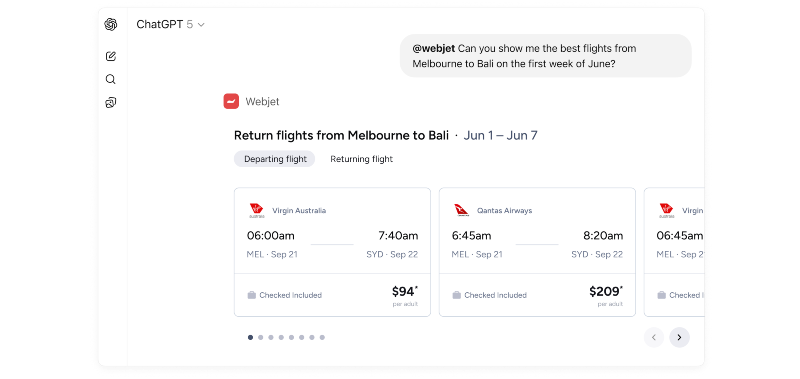
The move places Webjet alongside a growing number of travel companies experimenting with AI powered trip planning. Virgin Atlantic recently launched its own ChatGPT app, describing conversational travel search as a more natural way for customers to plan trips.
For Webjet, the launch is part of a broader repositioning of the brand as AI rapidly reshapes online travel behaviour. The company has already been investing in AI assisted itinerary planning and recently rolled out a major rebrand designed to shift perceptions beyond low cost airfare searches.
The timing is significant. Online travel agencies are increasingly confronting questions about how generative AI tools could disrupt traditional search traffic and booking funnels. Industry analysts and investors have flagged concerns that platforms like ChatGPT and Google’s AI products may eventually reduce the need for consumers to browse conventional booking sites in the first place.
Rather than resisting that change, Webjet appears to be leaning into it.
The company says the ChatGPT integration uses live Webjet data for flights and hotels across domestic, international and trans Tasman routes, although it warns users that AI generated responses may occasionally contain inaccuracies and prices should still be checked directly on Webjet before booking.
The launch also reflects a wider shift happening across the travel industry, where conversational AI is increasingly becoming part of trip inspiration, itinerary building and comparison shopping. Instead of opening multiple browser tabs and manually comparing routes, travellers are beginning to ask AI tools to narrow options down for them in a single interaction.
For travel brands, that creates both opportunity and risk.
If travellers begin their planning inside AI platforms rather than search engines, online travel agencies may need to compete not only on price, but also on how well their inventory integrates with AI assistants and recommendation systems.
Webjet’s latest move suggests the company believes the next generation of travel search may look a lot more like a conversation than a booking engine.





