
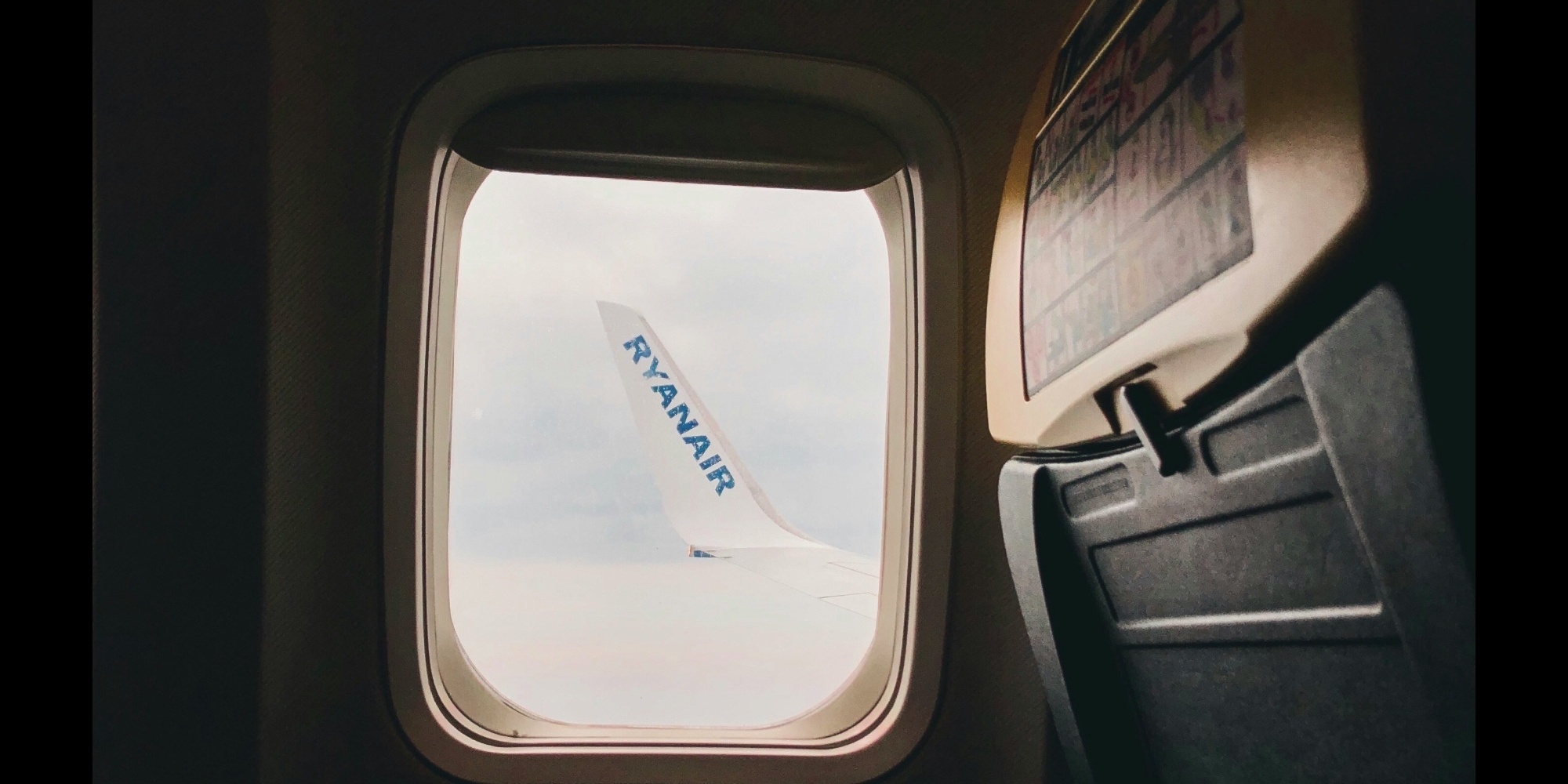
A Ryanair flight from Greece to Germany was forced to return to its departure airport after a passenger was partially pulled through a cabin window when it dislodged shortly after take-off.
The Boeing 737-800 had departed Thessaloniki for Memmingen on Friday morning (10 July) when passengers reported hearing a loud noise, described by one witness as sounding like a tyre bursting, before oxygen masks dropped from the ceiling as the cabin rapidly decompressed.
According to witnesses, a 61-year-old male passenger seated by the window had his head and shoulders pulled outside the aircraft. A Greek doctor who treated him on the tarmac said the man’s wife held onto her husband’s feet to stop him being pulled completely out. He remained restrained by his seatbelt throughout the incident. Ryanair confirmed one passenger requested and received medical assistance on the ground in Thessaloniki; the nature and extent of his injuries have not been detailed by the airline.
Ryanair confirmed the aircraft returned to Thessaloniki shortly after take-off when a passenger window dislodged in flight, and that it landed normally. Passengers were returned to the terminal, and a replacement aircraft was arranged, departing for Memmingen later that morning.
Greek media reports and industry sources suggest debris from the aircraft’s engine may have struck the window, though this has not been officially confirmed. The incident is under investigation by the Hellenic Air and Rail Safety Investigation Authority (HARSIA), with the US National Transportation Safety Board also assisting. Separately, flight-tracking data shows the same aircraft had diverted back to Thessaloniki shortly after take-off on a flight to Sarajevo the previous evening, for reasons that remain unclear.
Video shared on social media shows oxygen masks hanging throughout the cabin and damage to the window, while images taken after landing appear to show damage to the engine.
While the incident has understandably attracted widespread attention, experts note that explosive decompression events are exceptionally rare. Commercial aircraft are designed to allow flight crews to descend quickly to a safe altitude and land safely in the event of a loss of cabin pressure.





