Morocco is a destination that is continuing to grow in popularity.
After experiencing the country’s north first hand as one of eight Travellers Choice members on a six-night famil with Intrepid, it’s easy to see why.
The country offers a mix of culture, history, architecture, religion and hospitality that, although completely different from Europe, still pairs beautifully with it.
For Australian travellers, it would work well as part of a wider Portugal and Spain itinerary, making the long-haul journey even more worthwhile.
Our famil was a modified Intrepid itinerary focused on Northern Morocco, taking us on a roundtrip from Casablanca to Tangier, Chefchaouen, Volubilis and Fes.
While it didn’t include some of Morocco’s famous highlights, such as Marrakech or the Sahara, it still provided a keen sense of what makes the country so appealing.
On our first night we stayed at Idou Anfa Casablanca. The hotel itself felt modern and comfortable rather than traditionally Moroccan, with spacious rooms and facilities including a pool, gym, spa and restaurant.
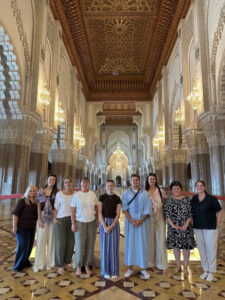
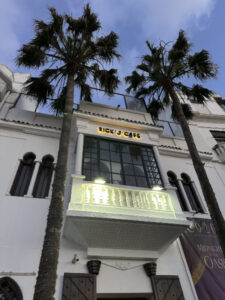 Sightseeing included time wandering through the medina, shopping and a visit to Hassan II Mosque – one of the largest mosques in the world and an absolute must-see. Positioned right on the Atlantic Ocean, it is architecturally stunning and gives visitors a real appreciation for Morocco’s religious and cultural identity.
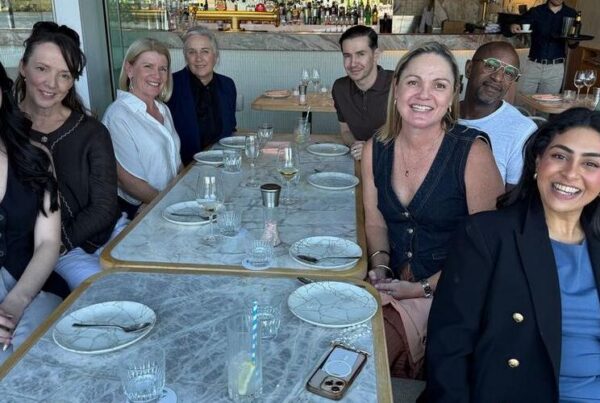
We also enjoyed dinner at Rick’s Café (left), which added a fun touch to our first few days.
Morocco’s largest city is contemporary and cosmopolitan and as such it offered a gentle introduction to the country before we moved into the more traditional medinas and riad stays later in the trip.
From Casablanca we boarded a high-speed train to Tangier. Sitting at the meeting point of the Mediterranean and Atlantic, and with views across to Gibraltar and Spain, it had a very different feel to the rest of the itinerary.
It was coastal, relaxed and peaceful, and I think it would be worth extending a stay here if time allowed.
For clients already travelling through Portugal or Spain, Tangier would work particularly well as a natural extension into North Africa.
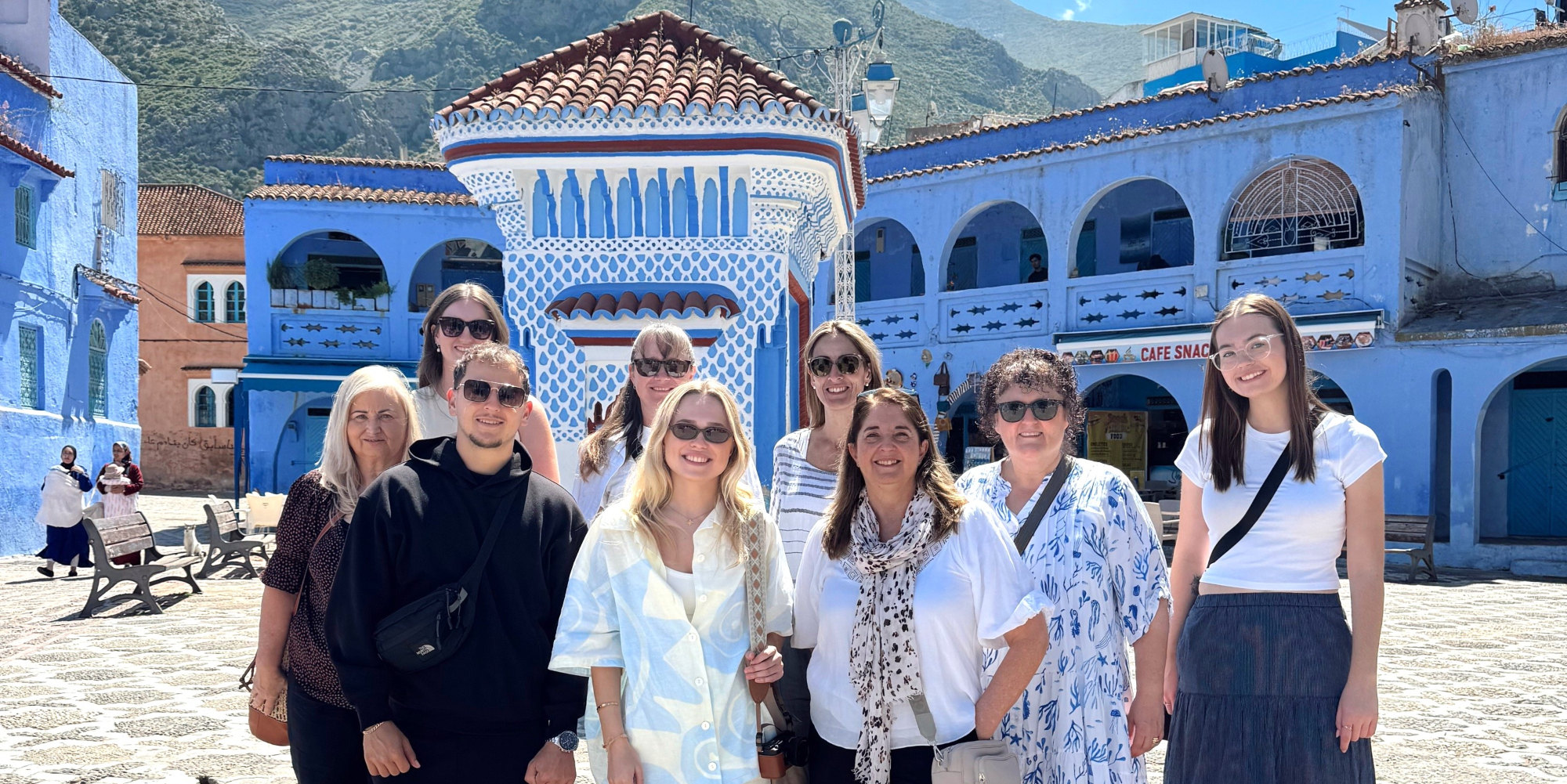
From Tangier we travelled by minivan into Chefchaouen (below), one of the visual highlights of the trip.
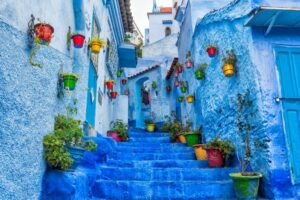 The Blue City really does feel like another world. The blue-painted laneways, staircases, doorways and hidden corners make it one of those destinations that is every bit as photogenic in person as it is online.
We stayed at Riad Gharnata, a traditional riad perched high above the town and while the property was full of charm and atmosphere, it also highlighted one of the realities of selling Morocco: authenticity and comfort do not always look the same as they do in Europe or Australia.
The riad itself was beautiful and full of character, but rooms were spread across multiple levels with stairs throughout. Breakfast was a traditional Moroccan spread and quite basic by Australian standards.
For the right client, this kind of stay is part of the appeal and adds to the experience of being immersed in the destination. However, it is important to set expectations and match accommodation style to the traveller.
Chefchaouen was also the place where the physical nature of Morocco became most obvious.
The town is built into the hillside, so there are many stairs, steep inclines and uneven pathways. We explored with a local guide, enjoyed a goat’s cheese tasting and had free time to wander the medina before walking up to the Spanish Mosque for sunset.
It was one of my favourite moments of the trip, with sweeping views over the blue town below, but it also reinforced that Morocco is not an easy destination for anyone with mobility concerns.
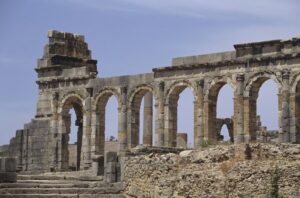 After leaving Chefchaouen we travelled to Volubilis, an ancient Roman archaeological site near Meknes and one of the best-preserved Roman ruins in North Africa.
Volubilis showed just how layered Morocco’s history really is and lunch overlooking the ruins was a beautiful addition to the day before we continued to Fes, Morocco’s cultural and spiritual centre.
Fes was another standout and, in many ways, felt like the most immersive destination on the trip.
Our touring included the Royal Palace, a pottery and mosaic workshop, the famous tanneries and time exploring the narrow laneways of the old medina.
Fes is sensory, chaotic and fascinating all at once, and it is exactly the kind of place where having a knowledgeable local guide makes all the difference.
 Morocco will not suit every traveller. As mentioned, I would be cautious about recommending it to anyone with significant mobility issues, or to clients expecting a polished, easy, luxury-style destination at every turn.
It is also not a destination I would sell based on nightlife or a strong drinking culture. As a predominantly Muslim country, alcohol is available in some hotels and select venues, but it is not a major part of the travel experience.
Instead, I would sell Morocco to culturally curious travellers who are open-minded, enjoy history, architecture, food, religion and local interaction, and who want something a little different from the standard Europe itinerary.
During the trip we enjoyed warm sunny days and cooler evenings, which made sightseeing very comfortable. Based on my experience, therefore, May is an excellent time to travel, especially for clients who want pleasant temperatures without the intense heat of peak summer.
There are some practical tips I would share.
Firstly, prepare clients for the tipping culture. While not compulsory, tipping is widely appreciated in restaurants, public washrooms and hotels, as well as with guides, drivers and sometimes even locals who assist with directions or photos. Cash is essential, particularly in the medinas.
Secondly, while Morocco does not have a strict dress code outside of mosque visits, I would still recommend longer pants, skirts or dresses and avoiding overly revealing clothing out of respect for the local culture. When visiting mosques, shoulders and knees must be covered.
For Australian travellers, I would strongly consider pairing Morocco as part of a broader itinerary with Portugal and Spain.
I think a 12-14-day Morocco itinerary would be ideal, following a similar route to our famil, but also incorporating Marrakech and the Sahara for a more complete first-time experience.
Overall, what stood out most was Morocco’s balance of cultural immersion, traditional accommodation, exceptional guiding and unforgettable scenery.
It may not be for everyone, but for the right client the destination is a vibrant, authentic and surprising option.
https://www.intrepidtravel.com/