
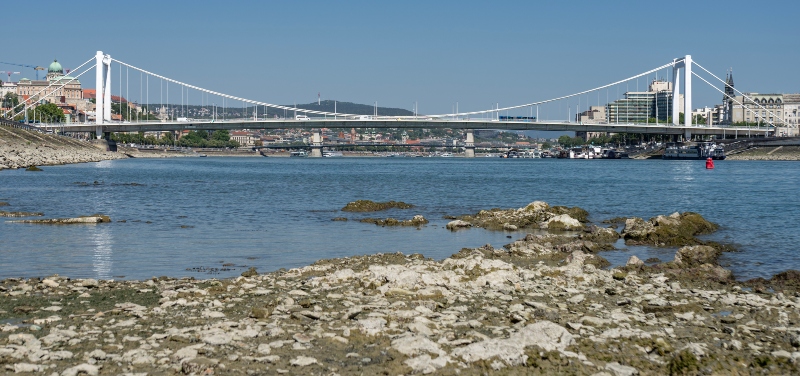
Current low-water conditions affecting some European waterways are a timely reminder that river levels do not only alter an itinerary. They can change the entire experience being sold.
Two of my clients recently joined the same 15-day cruise from Amsterdam to Budapest. As conditions deteriorated, their holiday involved two ship changes, repeated packing, coach transfers, missed scenic sailing, cancelled excursions, and the cruise portion ending two days early.
The operator continued to provide accommodation, transport, meals and sightseeing. Many destinations remained accessible, but the experience had shifted considerably from the river journey originally booked.
Their experience highlights an important lesson for anyone selling river cruising:
Preserving the itinerary is not necessarily the same as preserving the cruise experience.
What is the client really buying?
For some travellers, the appeal is the river itself: time to relax onboard, watch the scenery pass and settle into one cabin. For others, the main attraction is visiting several destinations, joining included sightseeing and experiencing local culture and food.
Most value both, but the balance matters.
A destination-focused client may still enjoy a holiday that continues by coach. A traveller who chose the cruise for scenic sailing, a gentle pace or the convenience of unpacking once may experience the same arrangements very differently.
One useful question is: Which part of the river cruise experience would be hardest for you to lose?
The answer can help determine whether the itinerary, operator and style of cruise are a good fit before price or inclusions become the deciding factors.
Explain what disruption may look like
Most European river cruises operate as planned, and no adviser can predict water levels months ahead. Significant disruption, however, can alter not only where clients travel, but how they travel, where they stay and the rhythm of the holiday.
The impact exists on a spectrum. At one end may be a changed berth or excursion. At the other, much of the holiday may continue by road or the cruise may be cancelled altogether.
The aim is not to catalogue every scenario, but to explain that preserving destinations may still mean losing some of the qualities that led the client to choose a river cruise.
Consider the client’s practical needs
The suitability conversation should go beyond destination preferences.
Repeated packing and short-notice transfers may be difficult for clients with mobility limitations. Long coach journeys may concern someone prone to motion sickness. Uncertainty and frequent changes can also challenge anxious travellers when plans are unclear.
A traveller seeking a settled, relaxing holiday may find these disruptions more difficult than someone comfortable adapting as arrangements evolve.
It is also worth explaining normal operating realities. On some itineraries, the sun deck may close for certain periods over several days because of low bridges and locks rather than abnormal water levels.
This is not about listing every worst-case scenario. It is about recognising whether changes such as repeated packing, coach transfers or uncertain arrangements may be particularly difficult for the client.
Operator handling still matters
River conditions are outside an operator’s control. Communication and contingency planning are not.
Clear briefings, realistic explanations, organised transfers and thoughtful alternatives can significantly affect the guest experience. So can acknowledging what has been lost, even when accommodation, meals and sightseeing continue.
A client can appreciate the crew, enjoy the destinations and return with good memories while still feeling that ship changes, coaches and hotel nights were not equivalent to the cruise purchased.
The consequences can continue after the holiday. Advisers may need to follow up refunds for cancelled departures or excursions, clarify cash offers or future cruise credits following an early termination, and ensure promised payments are processed. This work is rarely visible when the cruise is sold but becomes an important part of supporting the client when plans change.
Preparation, not prediction
Advising clients on river cruising involves more than comparing ships, cabins, inclusions and departure dates. The current disruption is a timely reminder that the value of a river cruise lies in more than the places it visits.
Most departures operate normally. Even so, understanding which parts of the experience matter most to each traveller can put possible changes into clearer perspective.
For experienced river cruise advisers, this may reinforce conversations already taking place. For those newer to the sector, it offers a practical framework for looking beyond what the itinerary promises and considering what the client is really buying.
The river may determine where the ship can travel. Good advice begins with understanding why the client wants to board it in the first place.