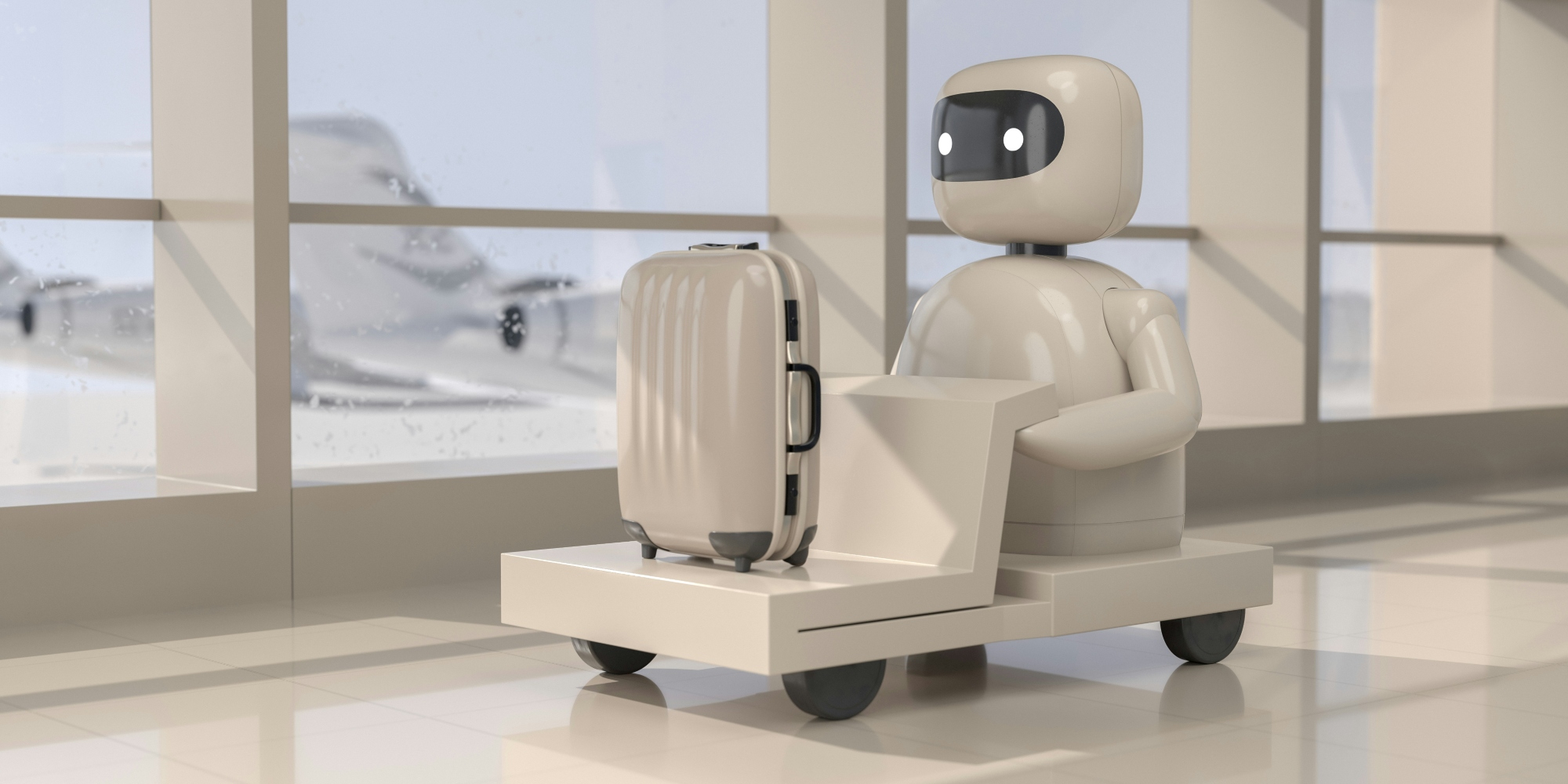
Travellers hoping to take their robot companions on holiday may need to reconsider their plans, with three major US airlines now refusing to carry human shaped and animal shaped robots.
United Airlines and Delta Air Lines have joined Southwest Airlines in banning the devices from both aircraft cabins and checked baggage, citing concerns about the large lithium ion batteries used to power them.
The restrictions follow several incidents involving robots travelling as passengers, including one in which a 3.5 foot humanoid robot named Stewie was given its own seat on a Southwest flight.
Stewie’s owner, Aaron Mehdizadeh of The Robot Studio, reportedly fitted the robot with a smaller battery to satisfy security requirements before buying it a ticket.
Stewie proved popular with fellow passengers, but its flying career was short lived.
Another robot passenger reportedly delayed a Southwest flight by almost an hour while crew considered where it could be seated and whether its battery was safe. The robot was initially moved from an aisle seat to a window seat before further concerns were raised about its power source.
Southwest introduced its ban in May, prohibiting human shaped and animal shaped robots from travelling in the cabin or as checked baggage regardless of their size.
Delta followed on 18 June, while United’s restrictions came into effect on 23 July.
United said the policy applied to “humanoid and animal-like robots in the cabin or as checked baggage”, adding that the devices often contain batteries that do not meet its requirements.
“We believe this change will help further ensure the safety of our customers and crews,” the airline said.
Delta’s rules temporarily prohibit robots designed to imitate a person or animal in their appearance, size, movement or behaviour. The airline also makes it clear that robot dogs do not qualify as trained service animals.
Small robot toys are exempt, provided they comply with the airline’s usual cabin baggage and battery restrictions. Other types of robotics may also be accepted by
United if they meet requirements governing their size, weight, functions and batteries.
The issue is not the possibility of robots misbehaving at 35,000 feet, but the fire risk posed by lithium ion batteries. Larger robots can require batteries exceeding airline and US Federal Aviation Administration limits, while their size can also make them difficult to store safely.
Passengers have long faced restrictions on power banks, spare batteries, smart luggage and other rechargeable devices, but the new policies show airlines are now preparing for a future in which travellers may arrive at the airport accompanied by something considerably more advanced than a laptop.
For travel agents booking clients on US flights, particularly itineraries involving domestic connections, it may be worth asking an additional question: will anyone in the party be travelling with a robot?
For now, at least, the answer may determine whether everyone makes it onto the aircraft.