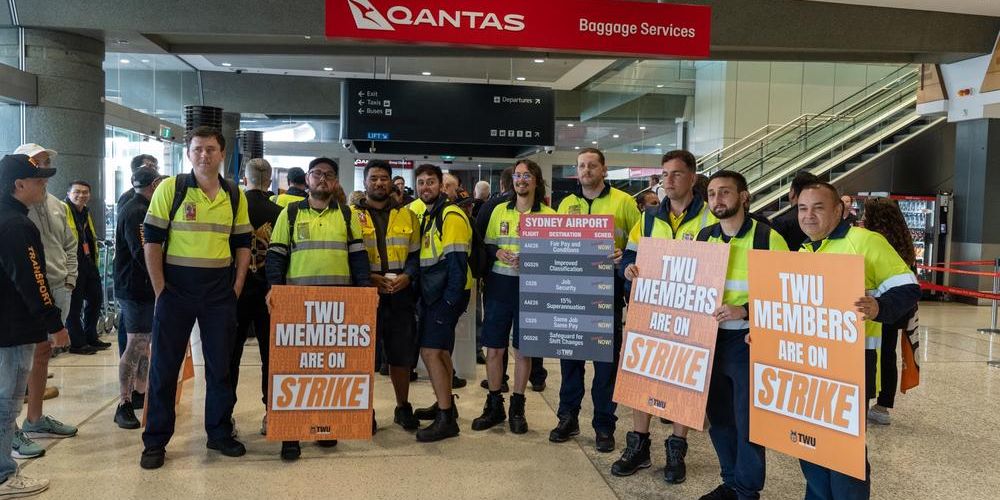
Industrial action at Australian airports has put travel disruption firmly on travellers’ radar, with hundreds of security and ground service workers walking off the job across Sydney, Brisbane, Adelaide and Perth.
At Sydney Airport, around 400 security workers took part in a two-hour strike last week, with further action planned for today (Sep 28), while hundreds of Qantas ground service employees also walked off the job for 24 hours.
Sydney Airport has warned passengers to allow extra time and stay alert for messages from their airline. Qantas says it has contingency plans in place and does not expect the action to disrupt its passenger services.
 For travellers with upcoming flights, the disruption is a timely reminder that an unexpected event at an airport can have a knock-on effect on the rest of a holiday, from missed connections to additional accommodation, meals and transport costs.
Natalie Smith, spokesperson for Comparetravelinsurance.com.au, says travellers should understand exactly what their policy covers before they fly.
“Industrial action is one of those situations where travel insurance can potentially provide an important safety net, but travellers shouldn’t assume that every policy will cover strikes or the costs that arise from them,” she said.
“Comprehensive policies can provide cover for certain losses resulting from strikes or industrial action, including additional travel, accommodation and meal expenses, depending on the policy terms and circumstances.
“The other really important factor is timing. If a strike or other travel event has already been announced when you purchase your policy, you may not be covered for losses arising from that known event.”
Are airline strikes covered by travel insurance?
“Potentially, but it depends on the policy and the circumstances,” said Ms Smith.
“Some comprehensive policies can provide cover for cancellations, delays or additional expenses resulting from strikes or industrial action. This can include additional travel and expenses accommodation and meals, as well as missed connections or certain prepaid bookings.
“But there are conditions and exclusions, so travellers should check the policy wording carefully rather than assuming they’ll automatically be covered.”
What happens if I buy travel insurance after a strike has been announced?
“Timing is critical when it comes to unexpected travel events.
“It’s essential to purchase travel insurance as soon as you start making payments towards your trip.
“If you wait until after a strike or major travel event has been announced, you would likely not be covered for cancellations, delays or other losses linked to that known event.
“Travel insurance is designed to protect you against unexpected events – not events that have already happened or are already known.
“And most importantly, buy your cover early. You want your policy in place before something unexpected happens, not once the disruption is already in the news.”