
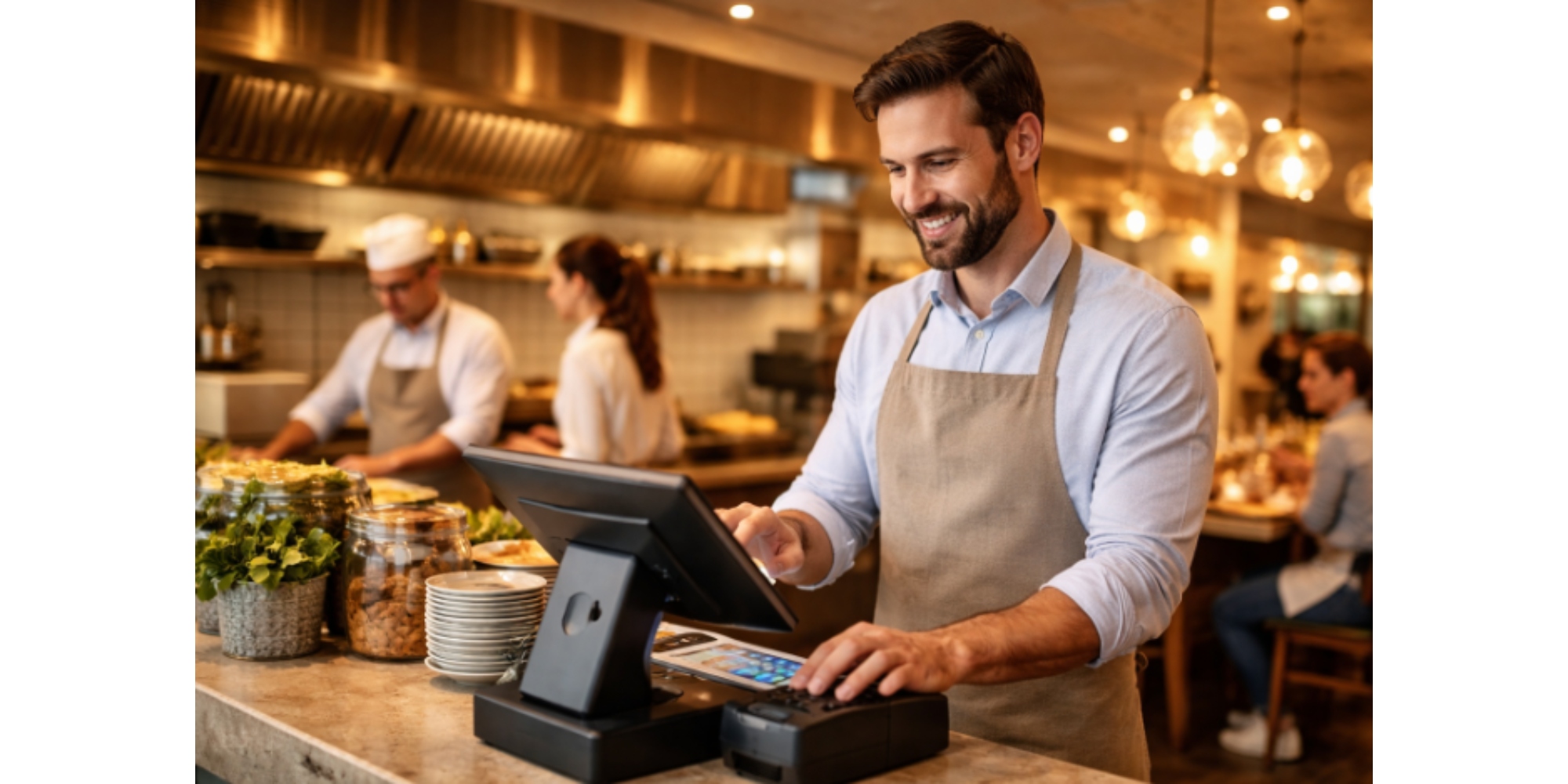
For hospitality operators comparing restaurant POS system software, the bigger question is not simply which screen looks best at the counter, but which platform genuinely helps a venue run more smoothly, serve guests faster, and make better business decisions over time. Across Australia’s dining landscape, from city cafés and coastal bistros to fast-paced takeaway concepts, POS software has become less of a back-office utility and more of a daily operating partner.
- Restaurant owners are managing tighter margins, higher guest expectations, and more pressure on staffing.
- Technology now affects service speed, order accuracy, reporting, and team coordination in real time.
A strong POS setup can quietly improve the guest experience without changing the personality of the venue.
Why POS Now Sits at the Centre of Restaurant Performance
There was a time when a POS system was judged mainly by one task: taking payment. That era has passed. In today’s restaurant environment, the POS touches nearly every part of service, from order flow and bill settlement to menu changes, staff permissions, table management, and end-of-day reporting.
For many operators, this shift has happened gradually. The venue may still look warm, personal, and hospitality-led on the surface, but behind the scenes, the business increasingly depends on digital coordination. If the POS is slow, confusing, or poorly matched to the concept, those problems show up quickly in service quality.
- A poor system often creates delays that customers can feel, even if they cannot identify the source.
- A good one reduces friction across the floor, the kitchen, and the payment process.
The value of the right system is often visible in consistency rather than in flashy features.
What Restaurant Owners Actually Need From Their POS
Many restaurant businesses do not need the most complex platform on the market. They need one that works naturally with their service style. A fine dining venue, a neighborhood brunch café, and a takeaway-focused burger shop all move differently. Their POS needs are not identical, even if they share the same goal of running a tighter operation.
That is where many buying mistakes happen. Owners sometimes choose software based on feature volume rather than operational fit. In practice, staff rarely benefit from having every possible tool. They benefit from having the right tools in the right places.
- Speed matters more than novelty during a busy lunch or dinner rush.
- Simplicity often leads to better staff adoption and fewer errors.
Systems should support hospitality rather than forcing teams to work around technology.
Ease of Use Is Not a Small Detail
A restaurant can have excellent food and strong customer demand, but if staff struggle with the interface, service quality can still suffer. Every extra tap, correction, or delayed modifier entry adds pressure during peak periods. When new staff join, a complicated platform also stretches training time and increases the risk of mistakes.
In that sense, usability is not just a convenience issue. It affects labour efficiency, guest satisfaction, and manager workload. A system that feels intuitive under pressure becomes an operational asset.
- Shorter training time helps venues with high staff turnover.
- Clear workflows reduce order-entry errors.
Managers spend less time troubleshooting and more time leading service.
The Rise of Cloud-Based Thinking in Hospitality
One of the most noticeable changes in recent years has been the shift toward cloud-based restaurant POS systems. This matters because restaurant management no longer happens only from behind the front desk. Owners and managers increasingly want visibility across trading hours, staff activity, sales trends, and service patterns, even when they are not physically on site.
This does not mean every operator is looking for a highly technical environment. In fact, most are looking for the opposite: flexibility without complexity. The attraction of cloud tools is often practical. They can support quicker updates, easier oversight, and stronger continuity between service periods.
- Modern operators want access to information without being tied to a specific venue.
- Menu or pricing updates are easier when systems are more flexible.
Visibility across shifts can support faster and more confident management decisions.
Why Cloud Does Not Need to Mean Complicated
For some independent operators, the language around hospitality technology can sound heavier than it needs to be. But the appeal of cloud-based POS systems for restaurants is often very simple. They help teams stay connected, help managers stay informed, and make it easier for businesses to adapt.
A restaurant does not become more hospitable because its software is fashionable. It becomes better run when the system helps the team stay accurate, responsive, and calm. That is the real reason cloud-based platforms have become part of the conversation. They are less about jargon and more about operational resilience.
- Better access to data can support quicker decisions.
- Flexible systems usually handle change more smoothly.
The strongest platforms often feel practical rather than technical.
Different Restaurant Models Require Different POS Strengths
Not all restaurants use technology in the same way. Full-service venues care deeply about table flow, bill splitting, and course timing. Casual dining concepts may focus on menu flexibility and speed. Fast-paced takeaway and delivery businesses often depend on rapid order entry and clean handoff to the kitchen.
This is why a one-size-fits-all mindset rarely works. The best operators evaluate POS systems based on service rhythm, not just vendor presentation. A system that works beautifully in one environment may slow down another.
- Restaurants should assess software against real service conditions.
- The daily pace of the venue should shape the buying decision.
Good fit matters more than a long feature list.
The Role of the Quick Service Restaurant POS System
The demands on a quick-service restaurant POS system are particularly intense. In quick-service environments, speed is inseparable from profitability. Transactions are frequent, queues build fast, and the margin for hesitation is small. Staff need to move quickly, customers expect clarity, and kitchen communication must be immediate.
That does not mean quick-service businesses need stripped-down thinking. On the contrary, they need smart workflows designed for pressure. Accuracy, speed, and reporting all matter because even small inefficiencies get multiplied across a high volume of orders.
- Fast ordering and payment flow are critical in quick-service environments.
- Kitchen coordination becomes more important as order volume rises.
Reporting can reveal bottlenecks that are hard to spot during service itself.
Reporting, Insight, and the Business Side of Hospitality
One of the most underrated functions of modern POS software is reporting. Restaurant owners are not only running service; they are managing margins, labour, menu performance, and demand patterns. A good POS turns daily transactions into useful operational insight.
This is especially valuable in a market where input costs, staffing challenges, and consumer behaviour can shift quickly. Owners need to know which items sell well, when trade peaks, where discounts are being used, and how individual shifts perform. Without that visibility, decision-making becomes slower and more instinctive than strategic.
- Sales reports can support better rostering and menu planning.
- Clear visibility helps owners respond faster to trading patterns.
Better data can reduce guesswork in a volatile market.
Why the Best Technology Still Needs a Human Outcome
Hospitality is not improved by software alone. Guests rarely remember the platform a venue used, but they do remember whether service felt smooth, whether staff seemed confident, and whether payment at the end of the meal was simple rather than awkward. Technology matters because it indirectly shapes those moments.
That is why the best POS decisions are often the least dramatic. They do not transform a restaurant into something unrecognizable. Instead, they remove friction. They support staff, maintain consistency, and create more room for genuine hospitality.
- The goal is not more technology for its own sake.
- The goal is fewer avoidable service interruptions.
A well-chosen system helps restaurants feel more polished and more reliable.
What Owners Should Evaluate Before Choosing a System
Buying a POS should be treated as an operational decision, not just an IT purchase. Restaurant owners need to consider how the platform behaves on a busy Saturday night, during staff onboarding, during menu changes, and at the end of a long trading week when reports actually need to make sense.
Key Questions Worth Asking
- Is the system easy for new staff to learn quickly?
- Does it match the venue’s service style and pace?
- Can it support both front-of-house and management needs?
- Are reports clear enough for practical business use?
Will it still fit the business if the venue grows or changes direction?
Final Thoughts
For Australian restaurant operators, POS software is no longer a background decision. It is part of the operating model. The right platform can support smoother shifts, better reporting, stronger staff confidence, and a more consistent guest experience. The wrong one can quietly create friction every single day.
The most useful way to think about POS, then, is not as a piece of hardware or a technical requirement, but as a service tool with business consequences. When chosen thoughtfully, it helps restaurants do what they already want to do better: serve well, run efficiently, and stay agile in a competitive market.





