
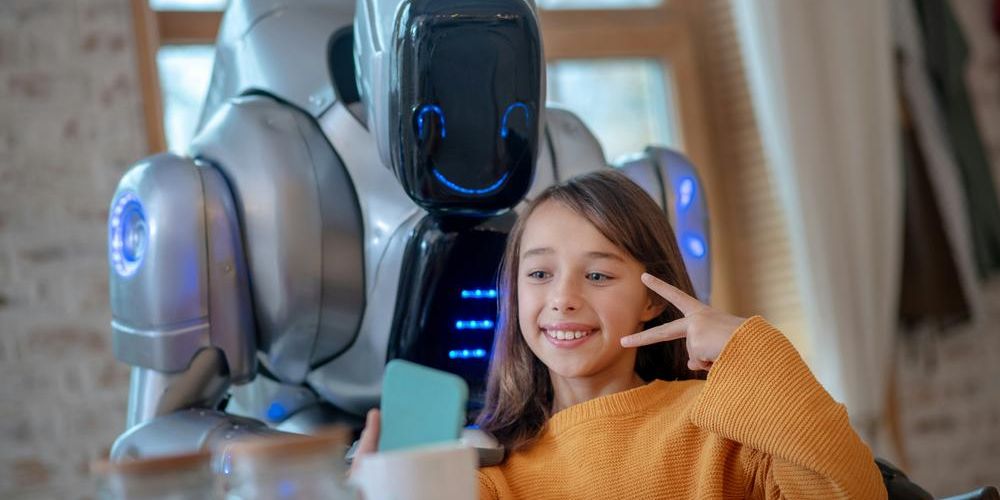
The world’s first hotel fully staffed by robots just moved a step closer with a landmark deal signed in China.
The project will bring embodied AI into every stage of the guest experience.
The deal is between Pudu Robotics, a global leader in commercial service robotics, and Shenzhen Culture & Tourism Industry Development Co. Ltd.
The hotel is planned for the Shenzhen-Zhongshan Link, one of the most ambitious infrastructure projects in the Guangdong-Hong Kong-Macao Greater Bay Area in China.
Designed as a next-generation hospitality destination, the hotel will integrate robots across every major service scenario, including guest reception, room delivery, cleaning, food service and guest support.
Powered by embodied AI and multi-robot collaboration, the project represents one of the industry’s most comprehensive deployments of robotics in a real-world hospitality environment.
“This partnership represents an important step toward large-scale deployment of embodied intelligence in premium hospitality environments,” said Cong Guo, Co-founder and CTO of Pudu Robotics.
“It also provides an opportunity to explore new service models where AI and robotics work together to deliver intelligent, end-to-end experiences in the real world.”
The Shenzhen-Zhongshan Link is widely recognized as one of the world’s most complex cross-sea transportation systems, combining bridges, tunnels, artificial islands and underwater interchanges into a single engineering marvel.
As a strategic gateway connecting key cities across the Greater Bay Area, the West Artificial Island provides a unique platform to showcase next-generation technologies to visitors from around the world.
With a long-term vision extending toward 2030, Pudu Robotics and Shenzhen CTID Co. Ltd will implement the project in multiple phases.
They will progressively introduce advanced robotics and AI capabilities to create a new global benchmark where hospitality, tourism and intelligent automation converge.
A trial operation is scheduled to commence by the end of the year, opening selected guest rooms and robot-powered services to the public.
By integrating multiple robot types into a unified operational framework, the hotel will enable continuous, autonomous service throughout its public spaces, guest rooms and back-of-house operations, establishing one of the industry’s first truly end-to-end robotic hospitality environments.





