Q: What gap in Antarctic travel did you see that convinced you the time was right for a hybrid cruise–sailing expedition and why hasn’t anyone attempted this before?
A: Antarctic exploration has evolved a lot in the recent years, but in becoming more seamless, it has also become more structured.
We saw room for a different kind of experience with more space for rawness and a deeper connection to the environment.
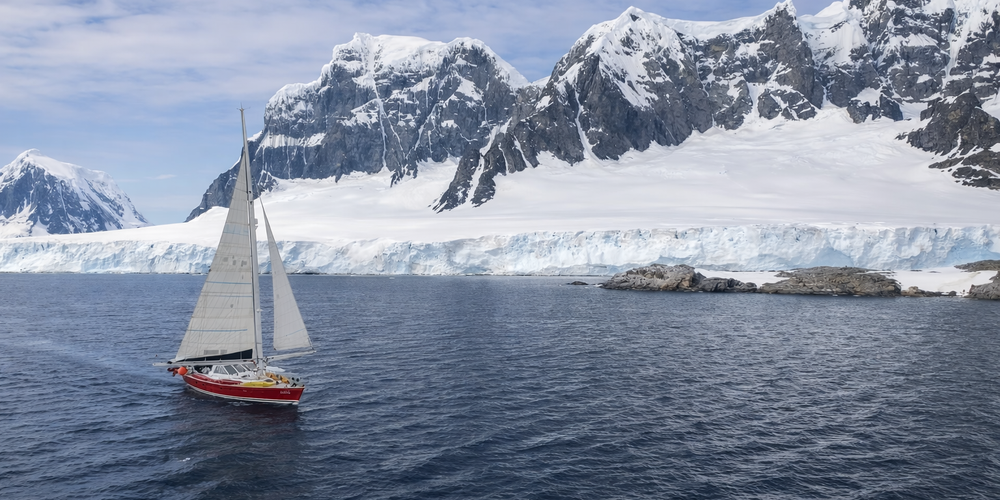
That’s what led us to a hybrid cruise–sailing approach. Sailing reintroduces elements that are harder to replicate, such as movement with the conditions, a slower pace and a more immersive way of experiencing Antarctica.
A willingness to sacrifice scale for authenticity sits at the core of it. It’s likely one of the reasons this hasn’t been widely attempted, alongside the operational complexity of combining a purpose-built expedition vessel with a sailing yacht in Antarctica.
Q: You’ve spoken about “returning to the true spirit of exploration.” How does the sailing component change the guest experience compared to traditional expedition cruising?
A: Sailing fundamentally slows everything down…in the best possible way.
Guests are no longer just observing Antarctica; they’re moving through it with intention. You hear the ice, you are dependent on the wind conditions and you become part of the environment rather than simply passing through it.
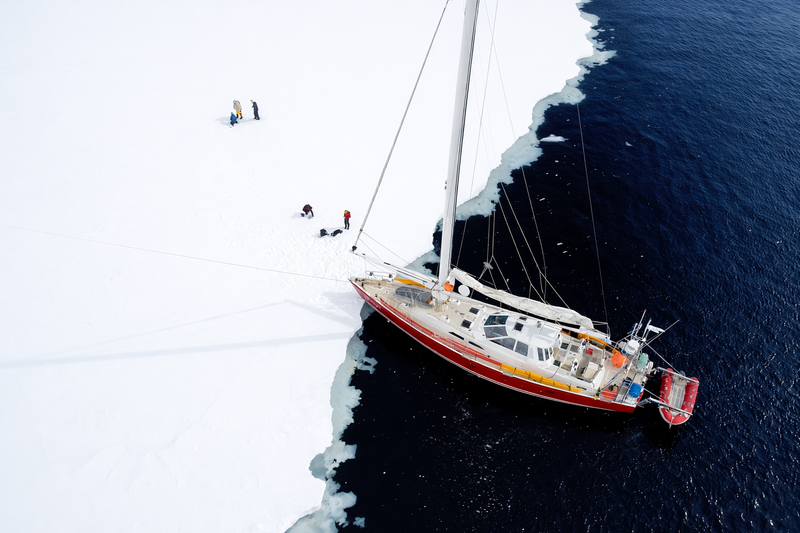
It also opens up a more personal experience. Smaller groups, quieter approaches to wildlife and the ability to access areas in a way that feels far more exploratory than scheduled.
It’s less about ticking off landing sites and more about experiencing Antarctica as a living, breathing wilderness up close.
 Q: With visitor numbers rising and landing‑site competition increasing, what advantages does your tour offer over larger operators?
A: Scale is our biggest advantage.
We operate with a small number of guests, which gives us far greater flexibility: both in terms of where we go and how we experience each location.
While larger ships often have to work within tight schedules and shared landing slots, we can adapt in real time.
The sailing component also allows us to approach areas differently, often more quietly and with less impact.
It’s not just about accessing Antarctica, it’s about how you access it and how that shapes the experience.
Q: Innovation in Antarctica comes with responsibility. How do you balance the desire to push boundaries with the need to uphold strict environmental and wildlife‑protection standards?
A: For us, innovation doesn’t mean doing more, it means doing things better.
We operate strictly within IAATO guidelines and our small group size naturally reduces our footprint.
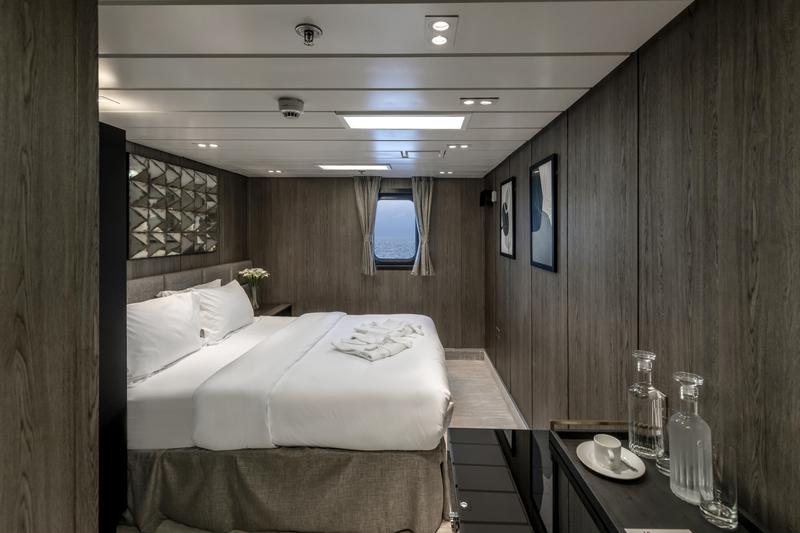
The sailing element (onboard Icebird) allows for quieter, lower-impact movement through sensitive environments, while our use of a repurposed flagship vessel (St Helena) that carries max 98 guests reflect the same philosophy.
Instead of building new, we believe in extending the life of existing vessels, especially those with a strong historical legacy like St Helena, which already carries a deep connection to exploration and remote travel.
 Q: Why do you think travellers today are looking for more immersive experiences just like the one you are offering?
A: There’s a clear shift away from passive travel. People are seeking meaning, not just destinations.
Antarctica, by nature, demands presence. When you combine that with a more hands-on, elemental way of exploring, like sailing, it creates something far more personal and memorable.
Travellers want stories they’ve truly lived, not just places they’ve visited. That’s what immersive experiences deliver.
Q: Looking ahead, do you see this hybrid approach becoming a blueprint for future polar travel, or is it intentionally designed to remain a rare, small‑scale experience?
A: We believe this approach will inspire aspects of future polar travel, but it’s not something that can or should be scaled widely.
Its strength lies in its rarity. The logistics, the expertise required and the philosophy behind it all point toward a deliberately small-scale model.
For Terra Nova Expeditions, the goal isn’t to grow bigger, it’s to stay closer to what makes Antarctica extraordinary in the first place.
Images courtesy of Terra Nova Expeditions.
Bookings for the 2026/2027 Ultimate Antarctic Adventure are now open. Departures include December 28, January 6, 2027, January 16, 2027, and January 25, 2027.