Travellers are asking different questions than they were even a decade ago.
After more than 20 years in the cruise industry, one of the most significant changes I’ve observed is the growing interest in how travel benefits the destinations being visited.
Alongside itinerary, experience and value, sustainability is increasingly shaping traveller expectations and influencing purchasing decisions.
For expedition cruising, this shift creates a unique opportunity.
As more people seek access to some of the world’s most extraordinary destinations, operators have a responsibility to demonstrate that exploration and stewardship can go hand in hand.
The conversation has evolved beyond impact reduction to focus on how we can contribute through science, conservation, innovation and meaningful partnerships with local communities.
 Innovation shaping the future
One of the most visible transformations in expedition cruising has been the rapid advancement of technology.
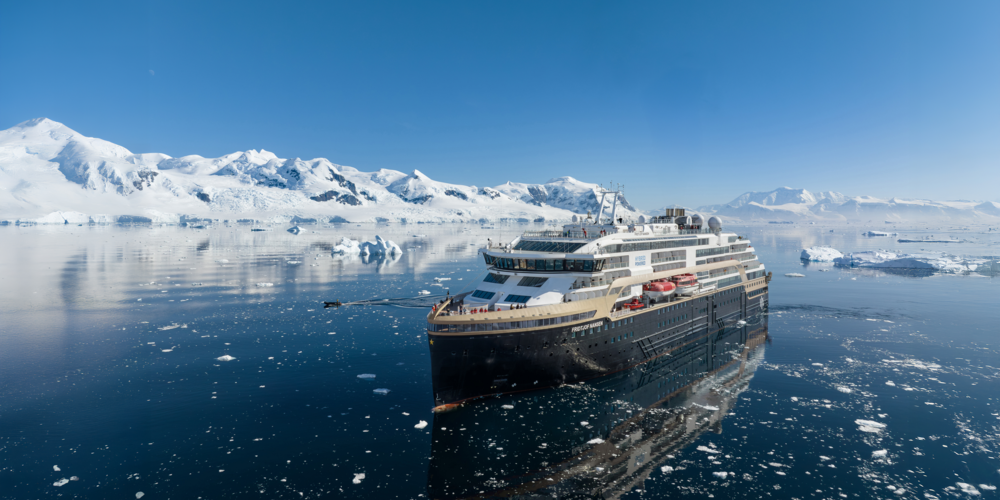
Hybrid-electric expedition cruise ships were first introduced to the industry in 2019 with HX’s MS Roald Amundsen and MS Fridtjof Nansen, demonstrating that lower-emission operations are possible even in some of the world’s most remote and environmentally sensitive environments.
In 2025, we launched two fully electric inflatable Zodiac-style ‘silent science boats’ aboard MS Fram and MS Fridtjof Nansen as part of a pilot programme operating in both Antarctica and the Arctic.
Designed to reduce underwater noise pollution while supporting research activities, the science boats provide an exciting glimpse into how future technologies could help minimise environmental disturbance while enhancing expedition experiences.
We’re also exploring the role of sustainable biofuels, alternative propulsion systems and even AI-enabled navigation technology that could help optimise routing and improve fuel efficiency across our operations in the years ahead.
By 2050, it is our goal to operate at Net Zero carbon emissions across our entire fleet.
While there is no single solution to decarbonisation, progress will come through a combination of innovation and collaboration across the industry, as well as a willingness to continually challenge the status quo.
 Picture courtesy Greg Funnell
Transforming ships into platforms for science
One of the most exciting developments in expedition cruising is the growing role ships can play in advancing scientific research and education.
Particularly in remote areas where scientific expeditions have limited access, pairing real research missions with citizen science initiatives offers significant benefits.
Scientific leaders can go deeper in their studies in more remote areas with more resources, greater access to technology that reduces their footprint and more citizen scientists to get behind their research mission and spread the word about conservation.
In 2025 alone, HX Expeditions supported 42 scientific collaboration projects, facilitated more than 1,650 cruise nights for guest scientists and enabled more than 46,000 citizen science submissions from guests participating in research activities around the world.
We’re proud to lead the industry in this area, where our ships increasingly act as platforms for data collection in regions where scientific access is often limited.
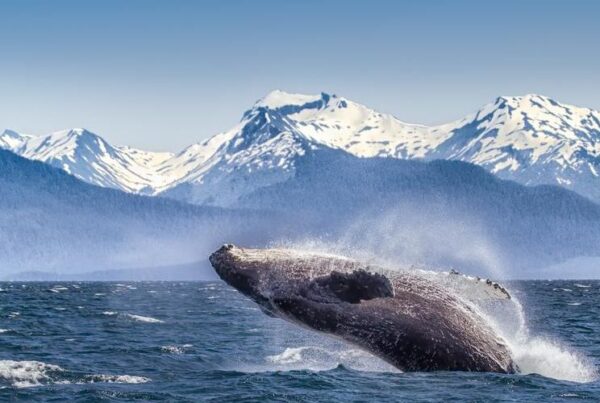
Researchers are using HX vessels to study everything from whale populations and underwater soundscapes to ocean health, biodiversity and climate change impacts in polar regions.
At the same time, meaningful partnerships can help deepen guest engagement through science-led education programmes.
More than 3,000 travellers participated in our UTAS learning programmes in 2025, reflecting growing demand for travel experiences that provide knowledge and understanding alongside exploration.
For many guests, these experiences create a deeper connection with the destinations they visit and a greater appreciation of the importance of conservation.
 Picture courtesy Snap Photography
Protecting the environments we explore
Expedition cruising provides access to some of the most remarkable ecosystems on Earth, making environmental stewardship a fundamental part of cruise operations aiming to become more sustainable.
One area where we’re seeing encouraging progress is underwater noise, and in turn noise pollution, reduction.
We’ve joined the European LOWNOISER initiative as it’s contributing directly to research focused on reducing the impact of underwater radiated noise on marine ecosystems.
This work will help inform future vessel design and operational practices not just for HX but across the wider maritime industry.
We’re also continuing to evolve our approach through what the industry calls ‘slow cruising’.
By prioritising longer stays and deeper exploration over distance travelled, we can enhance the guest experience while supporting a more thoughtful approach to destination management.
This model also helps distribute tourism benefits to smaller and less-visited communities that may otherwise be overlooked.
Small operational changes can also have a significant cumulative impact.
Through our partnership with Ocean Bottle, more than 1,200 tonnes of plastic have been removed from waterways globally, while initiatives such as refillable amenities and reduced single-use plastics continue to help minimise waste onboard.
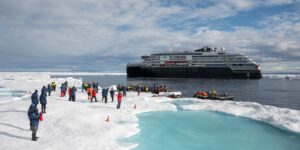 Picture courtesy Kim Rormark
Creating stronger destinations
Sustainability is ultimately about people as much as it is about the environment.
Prioritising local partnerships, local sourcing and community-led experiences allows tourism benefits to remain within destinations.
We have seen particularly exciting progress in Greenland, where itineraries, experiences and culinary programmes are increasingly being shaped alongside local communities, businesses and cultural leaders.
In Arctic Canada, our community-led excursion programme has helped create direct economic benefits for local residents, artists and businesses while providing guests with richer and more authentic cultural experiences.
In its first year alone, these experiences generated meaningful revenue that flowed directly into participating communities.
I believe that it’s our responsibility as cruise companies to not just be neutral but to make our travel count by fostering long-term relationships with these communities and delivering tangible benefits in exchange for their warm welcome.
Our commitment extends through HX Foundation, which supported 28 projects globally in 2025 and distributed more than €226,000 to initiatives focused on conservation, education and community resilience.
These projects range from scholarships and youth programmes to emergency assistance and community development initiatives in destinations across our global network.
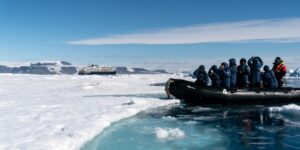 Picture courtesy Kay Fochtmann
Looking ahead
The future of expedition cruising will be shaped by collaboration, innovation and a shared commitment to responsible exploration.
Traveller expectations continue to evolve. Increasingly, people want to understand the impact of their travel choices and seek experiences that not only minimise harm but contribute positively to the places they visit.
I’m proud to be part of a team that invests in lower-emission technologies, expands opportunities for scientific research, supports local communities and shares our progress transparently.
We’re focused on embracing ambitious long-term goals, including a pathway towards net-zero emissions by 2050 and continued investment in the technologies and partnerships that will help get us there.
Success in expedition cruising will increasingly be measured not only by where we travel, but by what we contribute along the way.
The next wave of expedition cruising is not simply about going further. It is about travelling better, creating deeper connections and ensuring that exploration leaves a positive legacy for future generations.