
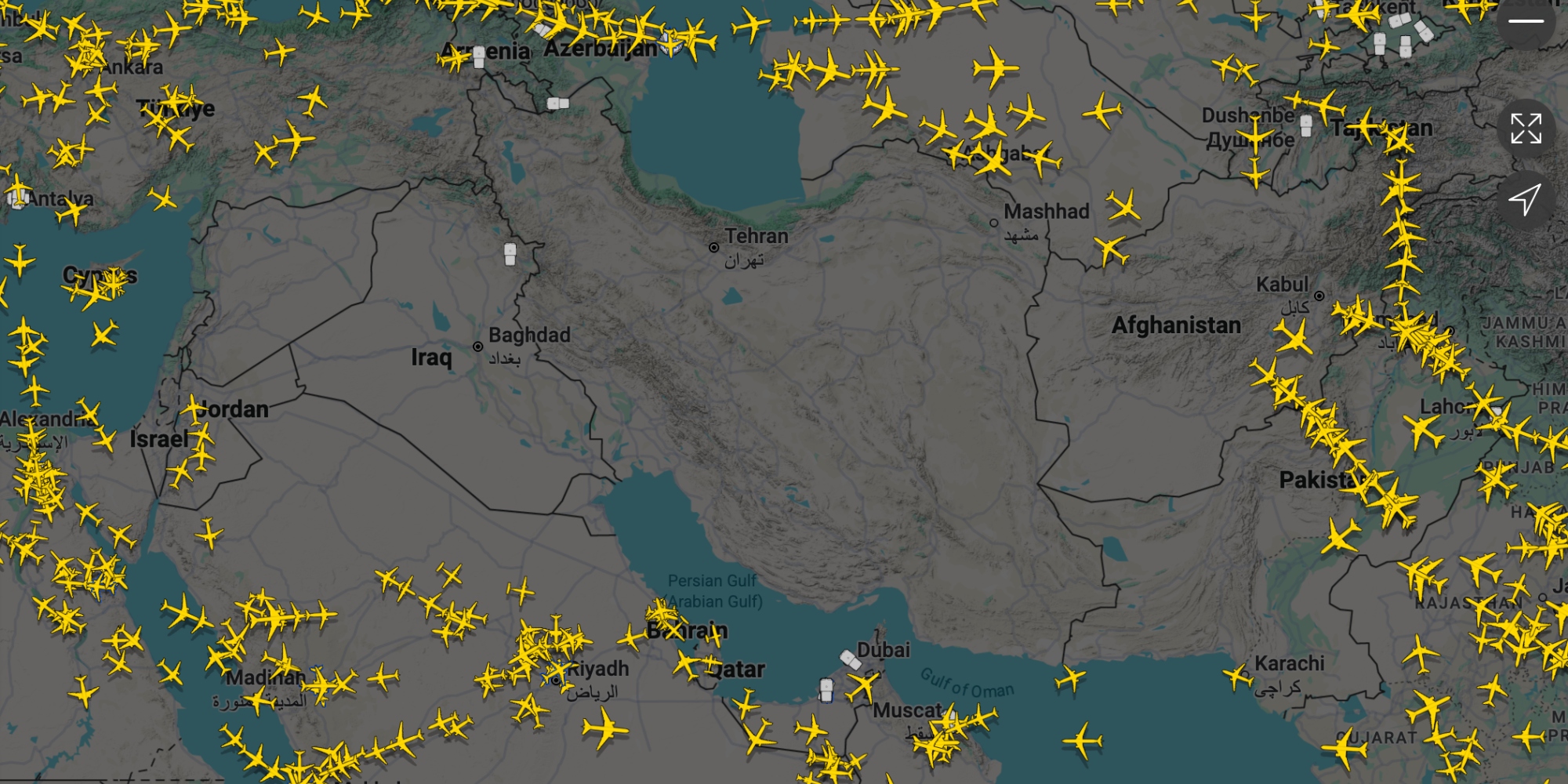
Middle East tensions have escalated sharply since Friday, with airstrikes, airspace closures and a major hotel fire in Dubai affecting tourists and disrupting travel across the region.
What Has Happened Since Friday
-
Israel and the US have carried out strikes on targets in Iran, with Iran and several neighbouring states responding by closing their airspace.
-
Airspace has temporarily emptied over Iran, Israel, Iraq and Jordan, forcing airlines to divert or cancel flights across the region.
-
In Dubai, debris from an intercepted missile sparked a major fire at luxury beachfront hotel Fairmont The Palm, leading to evacuations of guests and adding to traveller anxiety around popular Gulf stopover destinations.
Travel agents are in crisis management mode, dealing with disrupted itineraries, long waits at airports and anxious clients reacting to footage of a major Dubai resort under attack.
DFAT Advice For Travellers
- As at 1 March, Smartraveller lists the United Arab Emirates, Iran, Syria and Yemen among the Middle East countries under its highest do not travel level four advice, with other locations such as Israel, Lebanon and the Occupied Palestinian Territories subject to severe warnings and calls to avoid or leave as commercial options allow.
-
DFAT’s Smartraveller alerts on the Middle East conflict warn that the security situation is extremely volatile, with a risk of reprisal attacks and further escalation.
-
The advisory makes it clear that conflict in the Middle East can affect safety and security elsewhere, including protests, unrest and a higher risk of terrorism in areas where tourists gather and around embassies.
-
Travellers are told that airspace closures around Middle East hubs could cause flight delays and cancellations globally, and that if they travel to or through the region they may not be able to leave if conflict escalates.
Agents and consumers should treat this as live advice that can change day to day, especially for the UAE, Israel, Lebanon and surrounding states.
Airlines And Routes Affected
-
Airspace closures and security concerns have seen Emirates suspend operations to and from Dubai for periods, with flights grounded at Dubai International and Al Maktoum airports until authorities begin reopening key corridors.
-
Qatar Airways has suspended flights to and from Doha while Qatari airspace is closed, and Kuwait Airways and Saudia have cancelled services as neighbouring states shut their skies.
-
Qatar travel: Virgin Australia flights operated by Qatar Airways between Australia and Doha have been impacted by the closure of Qatari airspace.Guests scheduled to travel between Australia and Doha in the coming days are advised to closely monitor their flight information.
-
Other regional carriers including flydubai, Air Arabia and EgyptAir have cancelled or cut back services to and from hubs in the UAE, Qatar, Kuwait, Bahrain and Oman as they respond to rapidly changing restrictions.
-
Turkish Airlines has cancelled flights from Istanbul to Lebanon, Syria, Iraq, Iran and Jordan until early March and temporarily halted services to Gulf hubs, while European and Indian carriers including Lufthansa, British Airways, Air India and IndiGo have also suspended some Middle East routes.
For Australians, that means flights via Dubai, Doha, Abu Dhabi and other Gulf and Levant gateways may not operate as scheduled, even if the booking was made months ago.





