The incident has prompted a major aviation investigation and renewed scrutiny of airport safety procedures.
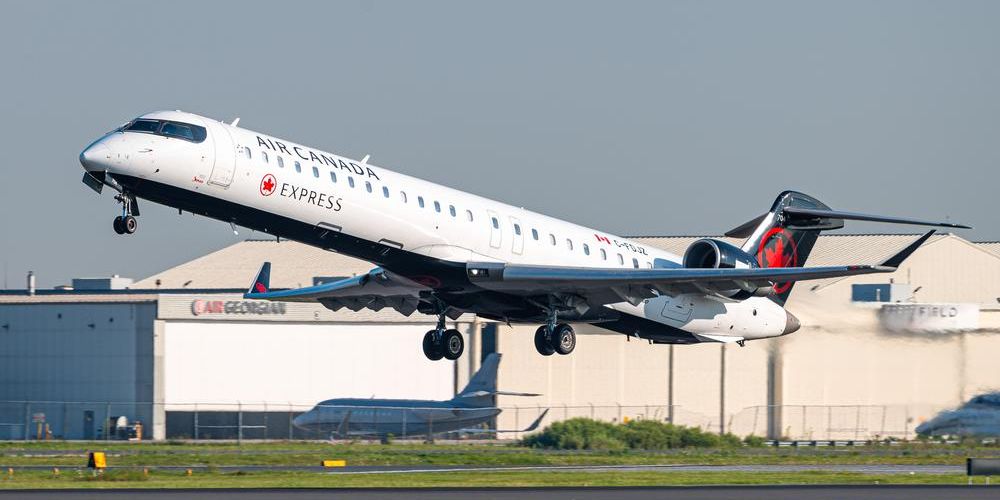
The crash occurred as the Bombardier CRJ-900 aircraft (main image) approached the runway following a flight from Montreal.
Operated by Jazz Aviation under the Air Canada Express banner, the plane was carrying 72 passengers and four crew members at the time of the incident.
Authorities confirmed that both the captain and first officer were killed on impact, the only fatalities in the accident.
More than 40 passengers, crew members and emergency personnel were injured, with several taken to hospital, some suffering serious injuries.
Preliminary findings suggest the aircraft collided with a Port Authority fire truck that had been cleared to cross the runway while responding to a separate emergency involving another aircraft.
Air traffic control audio indicates a last-minute attempt to halt the vehicle, with urgent warnings issued moments before the crash.
In a remarkable survival story, a veteran flight attendant was reportedly ejected from the aircraft during the collision while still strapped to her seat, sustaining multiple injuries but surviving what her family described as a “miracle”.
The crash forced the temporary closure of LaGuardia Airport, one of the busiest hubs in the United States, triggering widespread disruption and hundreds of flight cancellations. Operations have since resumed, though delays continue.
The National Transportation Safety Board has launched a full investigation alongside the Federal Aviation Administration and Canadian authorities.
Investigators are focusing on runway procedures, communication between ground vehicles and air traffic control, and whether staffing pressures may have contributed to the tragedy.