
As a self-confessed Cruise-a-holic, you might assume that for me, the longer the better.
Admittedly, my first love is the sea and I’m happiest bobbing, staring into the deep blue, amusing myself with my inner fantastical monologue (“I could be a mermaid if I somehow met a sea-witch who’d grow me a tail and teach me to breathe underwater. I’d be so pretty….) while sipping an extra-sweet mojito.
But (gasp) the longest cruise I have ever taken is two-and-a-half weeks – and I honestly think that’s my limit.
I often get asked, “How long is too long on a cruise?” And I can’t seem to make a firm decision as there are so many factors to consider.
How many sea days in a row? How many port stops? Who am I cruising with (can I really share a confined space with any human for 100 days?) and what type of cabin will I be in?
Somewhere between a cheeky seven-night escape and a 120+ day world voyage, there’s a tipping point.
Where exactly that sits depends on what kind of traveller you are, how you like to experience the world – and how deeply you’re willing to surrender to life at sea.
Long cruising isn’t just a holiday. It’s a lifestyle. And a serious commitment.
 Above: Grand Lobby, Queen Anne. Picture courtesy Cunard
Let’s start with the headline act: world cruises. These are the ultimate, slow-travel dream. Think four months at sea, multiple continents, unpack once and wake up somewhere new every few days.
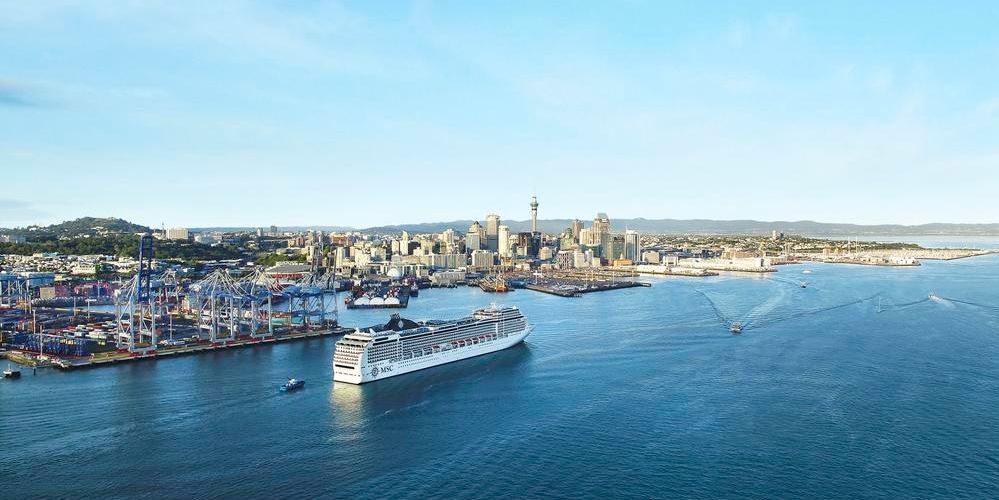
Take the 2026 World Cruise aboard MSC Magnifica (main image). This 131-night journey spans six continents and 33 countries, with overnight stays in places like Los Angeles, Auckland, Sydney, Manila, Tokyo, Port Louis and Cape Town.
It’s the kind of itinerary that reads like a bucket list. What’s most appealing about this itinerary are the overnight port stays – rare and warmly embraced by both guests and crew.
There’s something incredibly romantic about that level of immersion and having the luxury of time.
You’re not rushing through destinations, ticking boxes or racing back to the ship. You’re lingering. You’re settling in. And onboard, you form routines.
Grabbing that morning coffee from your favourite barista who knows your order, sunset cocktails with the group you met at trivia and sing-a-longs at the Piano Bar. Suddenly, you are surrounded by familiar faces and the cruise has transformed into a floating neighbourhood.
But let’s be real here: 131 nights is a long time.
Even with incredible itineraries and evolving onboard experiences there’s a significant commitment required. Time, money and energy.
It’s no coincidence that Princess Cruises reports the average age of their world cruise guests sits just over 70, with retirees making up a large portion of the market. I mean, when I’m 70, a very long cruise sounds much better than heading to the local RSL for the meat raffle.
More Australians are embracing these epic sailings, with a record-breaking 88% of guests on the 2025 Princess World Cruise coming from Australia.
 Take the 114-day 2026 World Cruise from Sydney aboard Crown Princess (above) sailing on May 10 for a globe-spanning, four-month adventure.
This is a great example where long cruising really starts to make sense for Australians and New Zealanders.
When you weigh up the physical toll of long-haul flying versus gradually crossing oceans by ship, there’s a strong argument for taking the scenic route. It’s slower, yes, but it’s also gentler. And there’s no jet lag.
That same philosophy applies to repositioning cruises. They are wildly underrated and are less about port-hopping and more about the journey itself.
They tend to offer excellent value for money (especially on a per-day basis), attract an interesting mix of travellers and gives guests the space to actually enjoy the ship.
You’re not constantly packing a day bag or rushing off on excursions. Instead, you lean into the onboard experience: the shows, the dining, the wellness, the simple joy of having nowhere to be.
Of course, the trade-off is fewer ports. If you’re someone who cruises purely for destinations, these might feel a little slow. But if you’re open to a different rhythm, they can be incredibly rewarding.
Then there are the classic ocean crossings. To be honest, these do not really appeal to me, but I’m always up to be proved wrong. I mean, you can’t knock something unless you’ve tried it, right? These transatlantic and transpacific voyages harken back to the golden age of travel.
Let’s take Cunard, in particular. This famous cruise line has been perfecting this style for more than 180 years, even pioneering the concept of the world voyage back in 1922.
Today, ships like Queen Mary 2 continue that legacy, offering elegant crossings defined by gala evenings, guest speakers and the timeless ritual of afternoon tea. I do love afternoon tea.
I suppose there’s something beautifully nostalgic about crossing an ocean with intention. No distractions. No endless port stops. Just days at sea to read, reflect and disconnect. Something that is lacking in today’s hectic pace.
Sea days can feel luxurious… until they don’t. Having surveyed my followers on social media, apparently there’s a point, usually somewhere around day 10 or 12, where the novelty can wear off. You start to crave different scenery, different routines, maybe even just solid ground.
 (Above) Come From Away. Picture courtesy Cunard
So… how long is too long?
Here’s the Honey take.
If you’re new to cruising, start small. A transpacific or repositioning cruise in the tw0- to four-week range is a great way to test your sea legs – literally and figuratively. You’ll get a feel for ship life without overcommitting.
If you’re already cruise-curious and love the onboard experience, push a little further. Try a longer repositioning or a partial world cruise sector. See how you adapt to the rhythm of longer voyages.
If you’re dreaming of a full world cruise? Make sure you’re ready – logistically, emotionally. Because spending 100+ nights at sea is less about the destinations and more about the ship and the journey within.
The beauty of long cruising is that it gives you time. Time to explore, to rest, to connect, to be still. But like anything, too much of it can tip from indulgent to overwhelming if it’s not the right fit.
So maybe the real question isn’t “how long is too long?”
Maybe it’s: how long feels just right for you?





