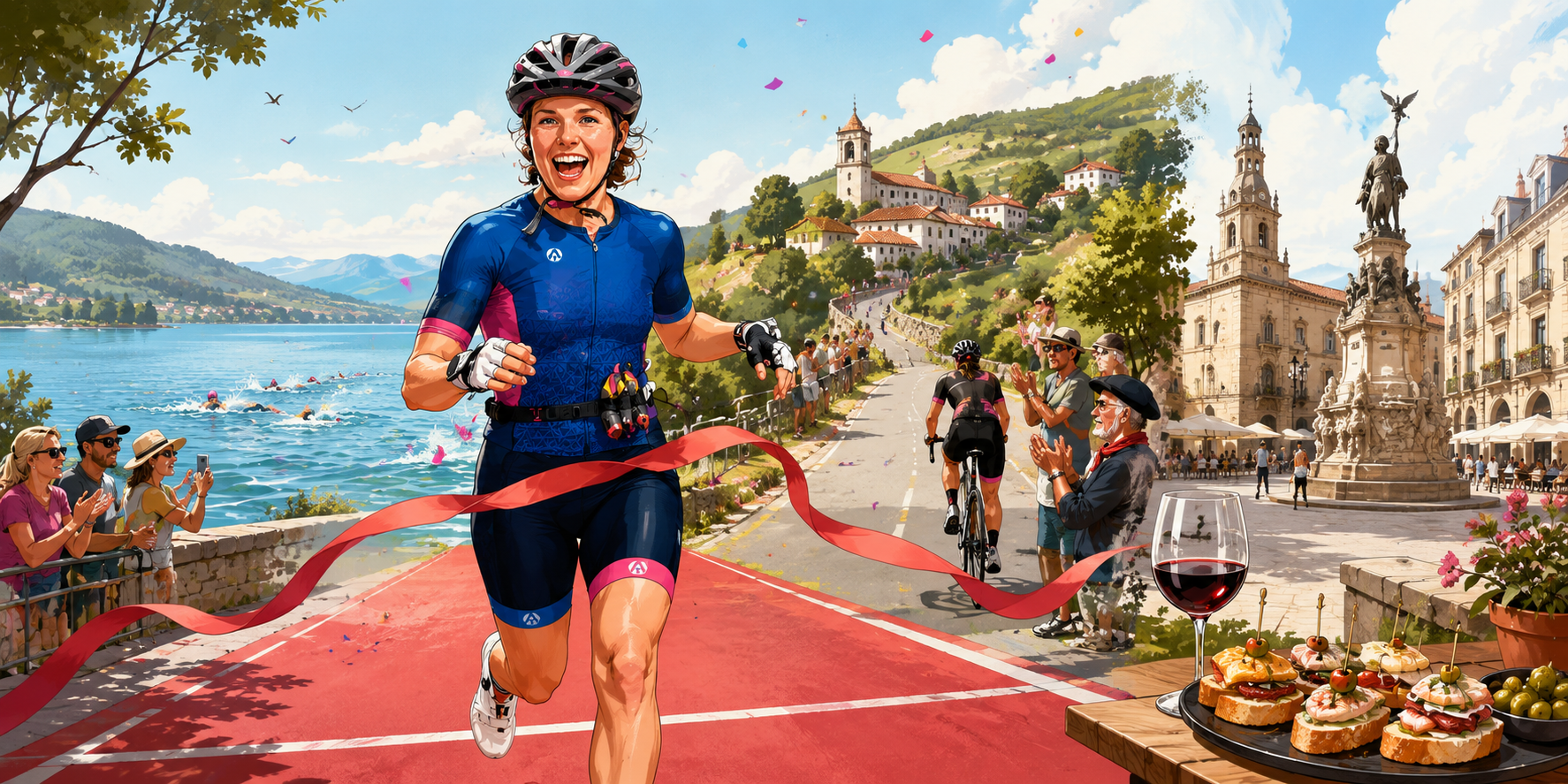
For keen runner Steph Ovenden, last year’s holiday in Spain began not with a destination shortlist, but with the search for the right IRONMAN.
Steph wanted a race with a lake swim rather than the sea and, after 3.8 kilometres in the water and 180 kilometres on the bike, a relatively flat marathon.
Filtering the European calendar eventually led her to Vitoria-Gasteiz in Spain’s Basque Country, where she competed in July 2025.
There was another consideration. Her husband Jamie was happy to travel to support her, but only if the race was somewhere he would actually enjoy visiting.
“I chose that specific race,” Bristol-based Steph said. “I wanted one that was a swim in a lake as opposed to the sea and I wanted a flat run course. Jamie had said to me that he would love to come and support me doing it, but only if I went somewhere nice. So I figured that Spain was somewhere nice.”
Before registering, Steph had never heard of Vitoria-Gasteiz and doubts the smaller Basque city would otherwise have appeared on her holiday radar.
That is at the heart of the increasingly popular ‘run-cation’, or ‘race-cation’: rather than choosing a destination and finding an event while there, the race comes first and the holiday grows around it.
In Steph’s case, it determined almost everything.
She registered around eight months ahead and booked flights and accommodation soon afterwards, deliberately choosing somewhere close to the finish line.
She arrived with her parents on Thursday for a Sunday race, allowing time for registration, briefings, inspecting the lake and delivering her bike and equipment to transition points.
Jamie and her stepson Jacob arrived on Saturday, avoiding the most logistics-heavy days, but the preparation itself became part of Steph’s experience of the destination.
During the cycling leg, the course passed through villages outside the city where residents came from their homes to cheer competitors.
She remembers a group emerging from a church and stopping to watch the riders pass, while closed roads gave athletes unusual access to the centre of Vitoria-Gasteiz.
“It’s such a privilege to see a place in such a positive light,” she said. “You get to see a really lovely atmosphere in a place.”
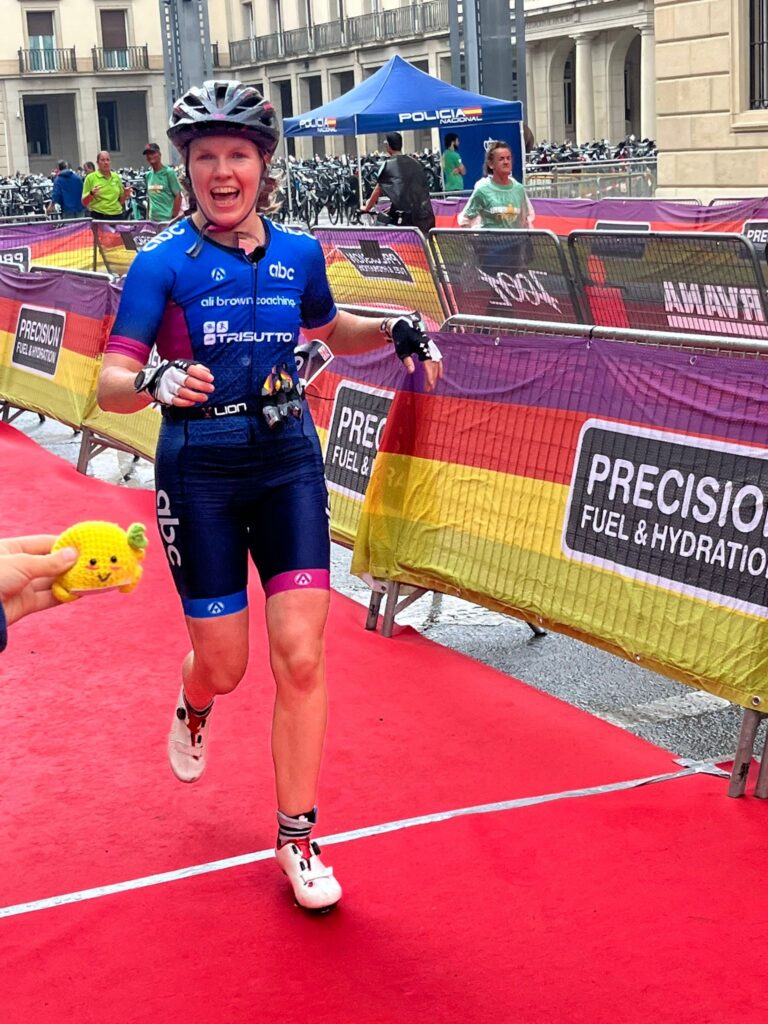
The race also introduced the family to places they might never have found independently. They returned to the lake used for the swim the following day for a picnic and another swim.
Race week transformed the city itself. Steph found relatively little English was spoken, but locals instantly recognised the competitor wristband she wore around town.
“It kind of felt like being part of some kind of crazy cult,” she said. “Whenever we were walking around, my mum was always pointing more people out. It felt very exciting with everybody getting ready for it.”
Once the IRONMAN was over, the holiday changed pace. Steph, Jamie and the wider family continued to Bilbao, turning the trip into a longer Basque Country break and giving her several days to recover.
In Bilbao there was sightseeing, an art gallery and plenty of walking, but food became a particular priority.
“I did a lot of eating,” she said. “I was just very hungry all the time. If you want to sample a lot of a city’s food, it felt like I could eat one of everything at every place we went to.”
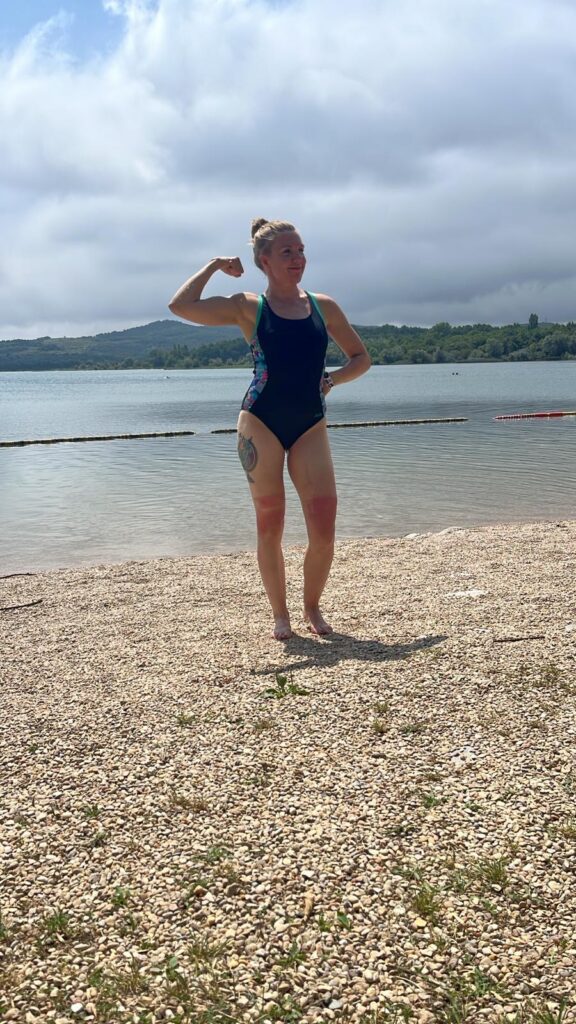 Back where it began: Steph Ovenden returns to the IRONMAN Vitoria-Gasteiz starting point the morning after her race, before heading on to Bilbao.
Recovery also meant accepting a slower itinerary. When other family members walked uphill to see the large Bilbao sign, Steph chose a long sleep followed by a gentle walk to a nearby bar and a few afternoon glasses of wine.
For her, that is part of the appeal of combining endurance events with holidays.
Months of training and the effort of race day make the relaxation afterwards feel earned, while travelling somewhere interesting gives supporters their own reason to make the trip.
“It brings out the best of both of those things,” she said. “Those endurance events are hard work mentally and knowing that you’re then going on a cool trip as part of it is really exciting.”
Vitoria-Gasteiz was not Steph’s first run-cation and will not be her last.
She has previously travelled to Munich and Lisbon for marathons and is planning Budapest with a friend who shares her enthusiasm for race-based city breaks. Edinburgh Marathon, IRONMAN Wales and potentially a half IRONMAN in Austria are also ahead.
“We basically are planning to do at least one a year now for the foreseeable future,” she said.
Her enthusiasm is increasingly reflected in travel data.
Agoda has reported accommodation searches rising 73% year on year around the JTBC Seoul Marathon, 41% around a Mt Fuji event and 19% around the Amazing Thailand Marathon Bangkok, while Strava reported global participation in running clubs increased 59% in 2024.
Sydney offers a particularly strong Australian example. After joining the Abbott World Marathon Majors in 2025, its 2026 event attracted more than 123,000 ballot entries, with more than 40,000 runners from more than 140 countries expected to participate.
Trip.com recorded hotel bookings in North Sydney and the CBD rising 49% year on year around the event, while domestic flight bookings increased 47% and international bookings 31%. International visitors were also staying an average 4.2 nights, demonstrating how a race can drive a considerably broader trip.
Sydney may also be more demanding than some runners expect. A Holafly index assessing elevation, altitude, historical climate, terrain and cut off requirements across 18 certified races ranked it 11th overall and the toughest of the seven Abbott World Marathon Majors assessed, ahead of Boston, New York, London, Chicago, Berlin and Tokyo.
At the more extreme end, the index was led by Nepal’s Mount Everest Marathon, while China’s Great Wall Marathon involves 5,164 stone steps and Singapore recorded average race conditions of 27.5°C and 82% humidity.
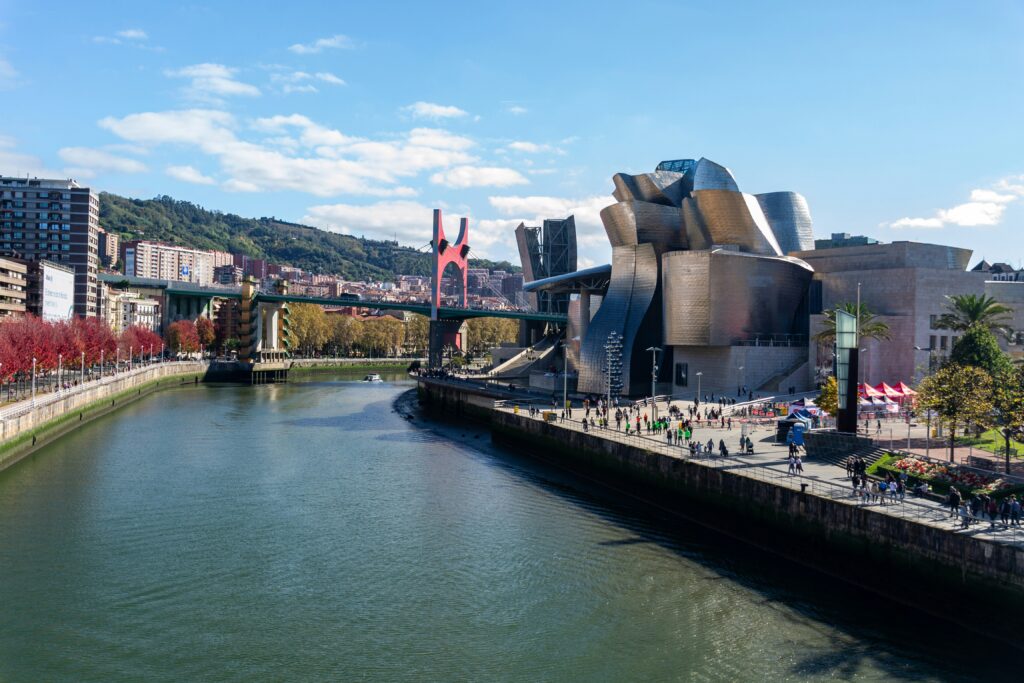 Steph and her family holidayed in Bilbao after her race
For travel advisors, race trips can present a different set of planning considerations from an ordinary city break, particularly for triathletes travelling with bicycles and specialist equipment.
Accommodation close to the start or finish, registration requirements, transport, food and recovery days all become part of the itinerary.
Steph avoids flying the day after a major event and believes accommodation location should be one of the first considerations.
“If you’ve just finished a marathon, you’re going to be knackered,” she said. “You don’t want then to have to take two trains and a bus to get back to where you’re staying.”
Even breakfast can require planning. During a marathon trip to Lisbon, she and a friend bought what they believed were familiar porridge oats for race morning, only to discover they were something quite different, leaving her friend struggling to eat before the event.
It is a small example of why Steph advises runners to consider how they will actually feel before and after a race rather than treating the event and holiday as completely separate parts of the trip.
Her experience in Spain illustrates the attraction neatly.
She chose Vitoria-Gasteiz because the race suited her, discovered a city she had never previously considered and experienced the Basque Country through an event that drew residents onto its streets, before turning the finish line into the beginning of a family holiday.
For Steph, with Budapest, Edinburgh, Wales and perhaps Austria ahead, the question is no longer simply where to race next.
It is where the race will take her.