Watching a grizzly bear in the wild is memorable. Watching the same bears over several days, learning their names and beginning to understand their relationships is something else entirely.
That distinction makes Knight Inlet Lodge in British Columbia a compelling proposition for wildlife focused clients.
The experience is not built around a single excursion or hurried sighting. Guests stay within the bears’ habitat, returning to the estuary at different times to observe how the animals feed, communicate and respond to one another.
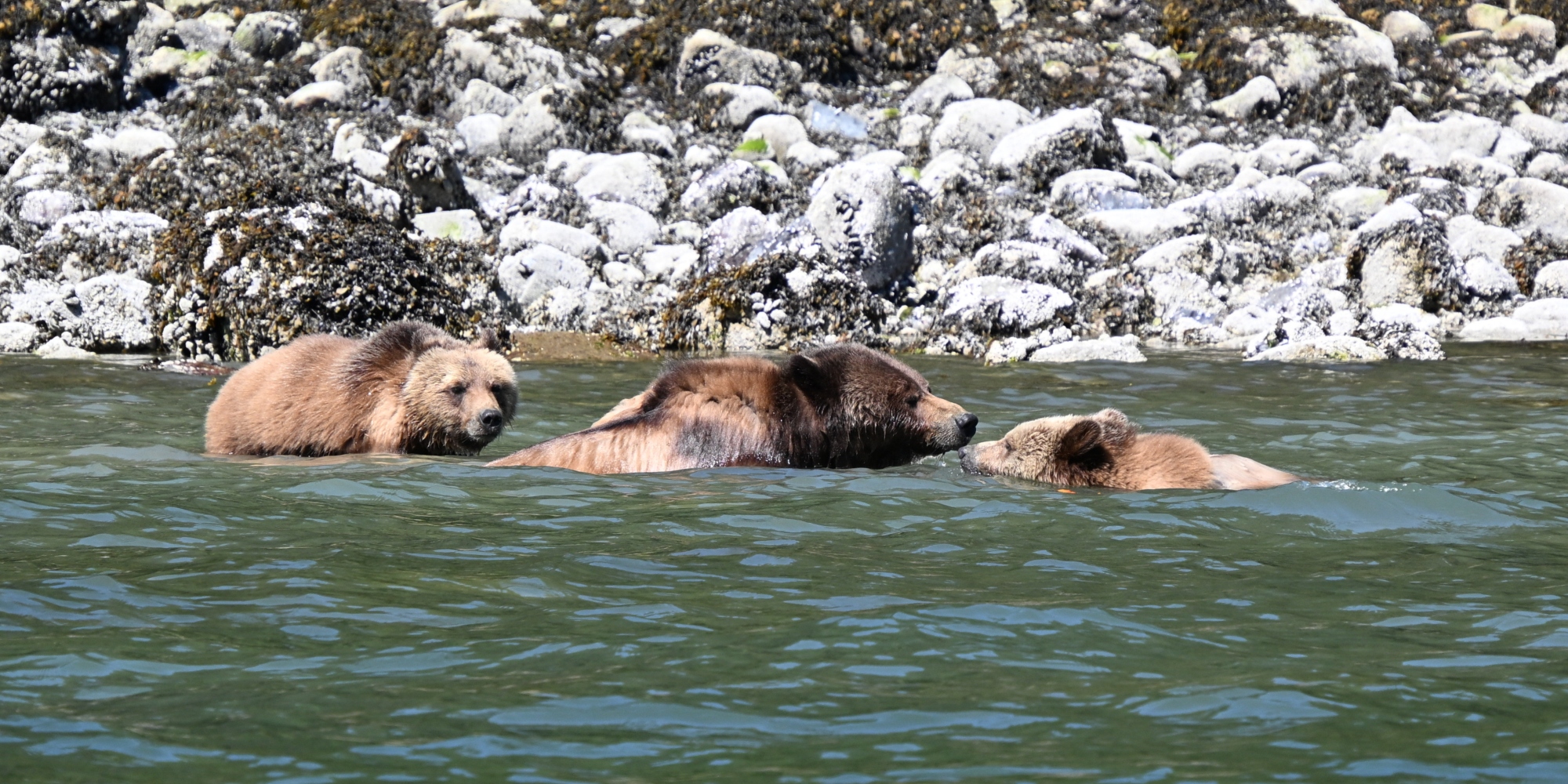
During my stay, I watched Lenore, a female now in her 20s, feeding with her yearling cub. I followed the courtship of Lillian and a large male called Chestnut and saw Thimble navigating the estuary with two cubs.
By the time I left, they no longer felt like anonymous animals passing through the landscape. They were individuals whose lives and family histories researchers had followed for years.
For travel agents, that depth is one of the lodge’s strongest selling points.
Time with the bears
Many wildlife experiences depend on one scheduled drive or cruise. At Knight Inlet Lodge, clients can make bear viewing the focus of their stay.
Those who prioritise grizzlies can join up to four estuary excursions a day, providing around six hours of potential viewing. This allows guests to experience different tides, conditions and patterns of activity rather than placing every expectation on one outing.
It also creates space for quieter encounters.
Guides do not rush between bears or fill every moment with commentary. Boats may wait ahead of an animal’s path, allowing it to approach or move away on its own terms. Guests can watch a bear graze, turn rocks along the shoreline or interact with another bear without pressure to move on.
For photographers and clients with a serious interest in wildlife, that unhurried approach can be more valuable than simply getting close.
A habitat bears return to
Knight Inlet Lodge floats in Glendale Cove, an estuary within the Great Bear Rainforest. Its location gives bears access to several food sources within a relatively compact area.
In spring, they feed on protein rich Lyngbye’s sedge and search the exposed shoreline for small fish, crabs and other marine life. Berries become available as summer progresses, followed by the salmon runs that help bears build their winter fat reserves.
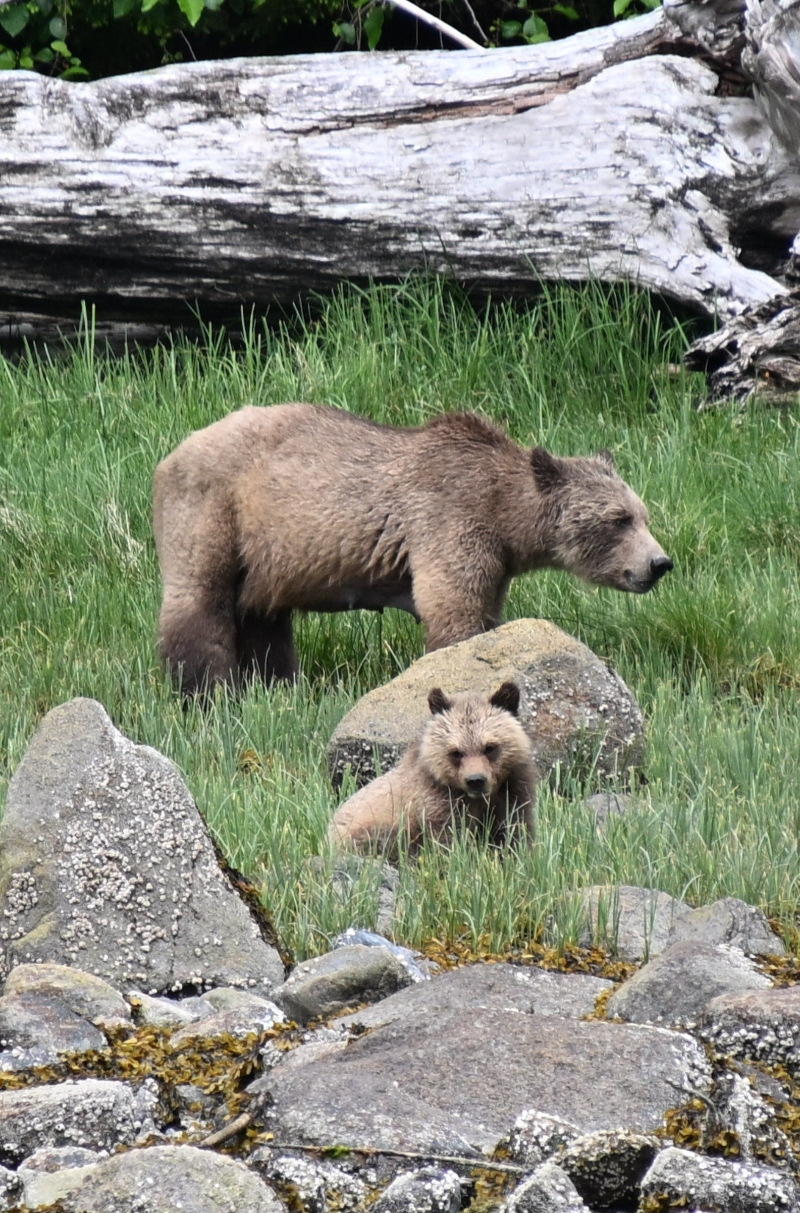 This changing menu makes Glendale valuable across much of the viewing season, rather than only during the salmon run.
To better understand what I had been watching in Glendale Cove, I spoke with Dr Melanie Clapham, a conservation biologist who has conducted research at Knight Inlet Lodge since 2009.
Dr Clapham explained that the combination of estuary, tidal shoreline, forest, higher slopes and salmon streams gives bears access to a varied diet without having to travel great distances.
For agents, this creates an opportunity to sell different experiences according to the client and time of travel.
Spring brings fresh vegetation, courtship behaviour and the possibility of mothers with young cubs. Summer combines bear viewing with longer days and other outdoor activities. From late August, returning salmon attract bears to the rivers and guests use purpose built viewing stands overlooking the fishing areas.
No season can guarantee a particular sighting, but each reveals a different part of the bears’ annual cycle.
Bears with names and histories
The lodge’s guides are not simply identifying a species. Their knowledge is informed by decades of research into the bears using Glendale Cove.
Lillian is 14-years-old and one of Lenore’s daughters. Researchers have followed her since she was a cub.
She is known as a confident and dominant female, much like her mother. Thimble is more cautious and will often move away rather than risk conflict, behaviour Dr Clapham also observed in Thimble’s mother, Bella.
These characteristics influence where the bears feed, how they interact and what their cubs may learn from them.
When I asked Dr Clapham about the very different personalities I had noticed among the bears, she explained that individual life experiences can influence their behaviour and what mothers pass on to their cubs.
“They have their own life experiences and life histories, which shape their behaviour and what they pass down to their cubs,” she explained.
This knowledge transforms the guest experience.
A guide can explain not only that a male and female are courting, but who those bears are, whether they have been seen together before and where they may travel after breeding season.
When I watched Chestnut shadowing Lillian across the sedge meadow, she appeared far more interested in eating than in his attention. Dr Clapham explained that this was typical. Females remain focused on feeding while males devote more time to locating and following potential mates.
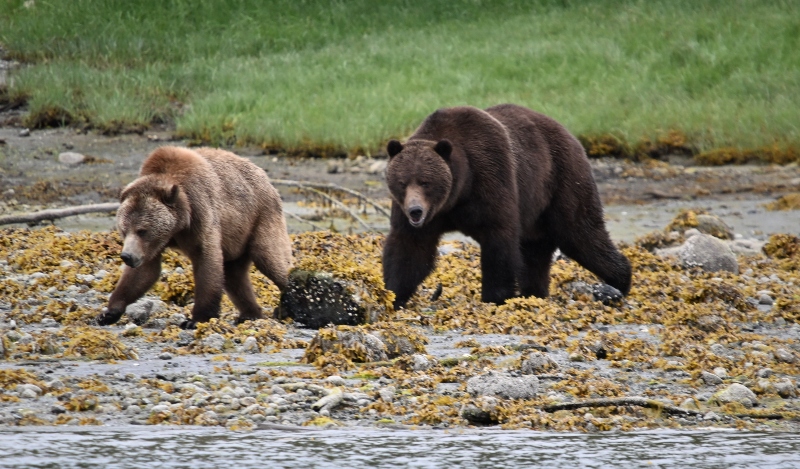 Lillian and Chestnut
A pair may stay together for about a week before separating. Lillian is likely to continue using Glendale through summer and autumn, while Chestnut may travel between river systems before returning for salmon.
Clients therefore leave with more than photographs. They gain an understanding of the lives continuing after the boats return to the lodge.
Responsible viewing that protects natural behaviour
One of the most important reasons to recommend Knight Inlet Lodge is the way bear viewing is managed.
During my visit, the bears rarely appeared to alter their behaviour because we were present. They continued feeding, resting and interacting while guides maintained a respectful distance.
A commercial bear viewing management plan has operated in Glendale Cove for more than 20 years. Its objective is to prevent visitors from disturbing bears or displacing them from important feeding areas.
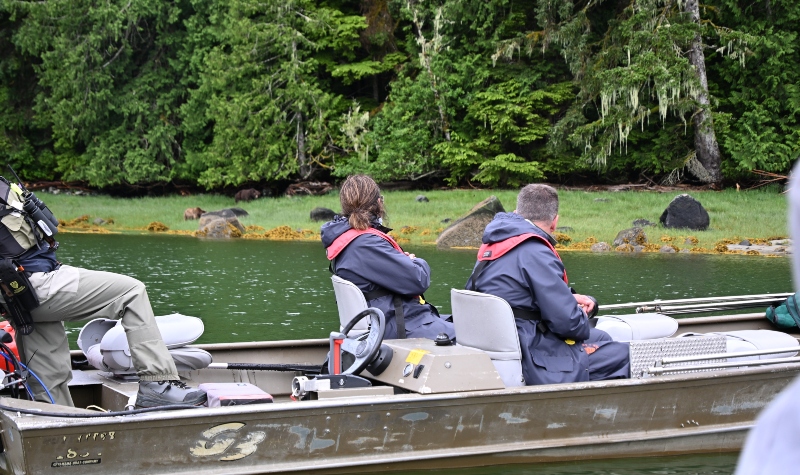 The animals are aware of the boats and have become accustomed to their controlled presence. They are not fed, so people never become a source of reward.
Dr Clapham describes visitors as a neutral stimulus. The bears recognise that people are present but have no reason to approach them for food or perceive them as an immediate threat.
Guides monitor body language and change position if a bear shows discomfort. The aim is not to engineer the closest possible photograph, but to let the animals behave naturally.
For agents increasingly asked about animal welfare and responsible wildlife tourism, this is a significant point of difference.
Research supported by every stay
Guests are also entering a working research environment.
Dr Clapham works with Nanwakolas Council and First Nations Guardians to monitor grizzlies across the region. Remote cameras record when bears visit river systems, trails and rubbing trees, helping researchers understand their movements and habitat use.
Through the BearID Project, the team is also developing facial recognition technology capable of identifying individual bears from photographs and video. The system could help researchers follow their movements between watersheds without relying solely on capture and tracking collars.
Knight Inlet Lodge supports this work through accommodation, logistics and funding, including a conservation levy paid by guests. Findings are shared with guides and incorporated into the lodge’s interpretation.
Clients therefore help support conservation research while benefiting from current, place-specific knowledge during their stay.
Who should agents recommend it to?
Knight Inlet Lodge is an obvious fit for clients interested in wildlife, photography or conservation, but its appeal is broader.
Small group excursions and detailed interpretation suit travellers who prefer meaningful experiences over fast paced sightseeing.
The floating lodge, included meals and organised activities provide comfort in a remote setting, making it suitable for clients who want wilderness without sacrificing hospitality.
Agents should set realistic expectations. These are wild animals and no particular bear or behaviour can be promised. The lodge’s value lies in repeated, carefully managed viewing opportunities within productive habitat, supported by guides who understand what guests are seeing.
Clients are not taken into the estuary simply to find a grizzly, take a photograph and leave. They are given time to watch individual bears, learn their stories and understand the landscape sustaining them.
A bear sighting may be the reason they book. The knowledge and connection are what they are likely to remember.
For travel agents interested in booking Knight Inlet Lodge or discussing trade rates and partnerships, contact the team directly at [email protected], or for prepared itineraries featuring the lodge, contact Entire Travel Group.