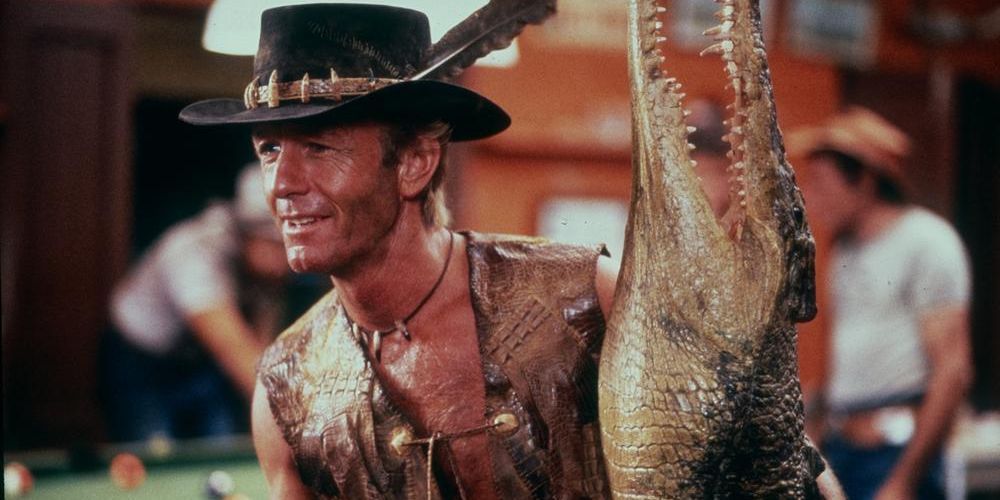
A special screening of Crocodile Dundee will take place this week as the film celebrates its 40th anniversary.
The rugged and beautiful landscape of Kakadu captured the imagination of the world after the film made its debut in the USA on September 26, 1986.
Crocodile Dundee opened on 879 screens in the USA and became the biggest-grossing film in Australia’s history.
In America, it grossed $US174.8 million at the box office and was only pipped by Top Gun as the most successful film in the USA in 1986.
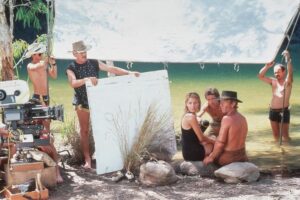 It wasn’t the first time that Paul Hogan, who played the larrikin Mick Dundee, had promoted Australia on the international stage, with Tourism Australia’s ground-breaking “shrimp on the barbie” ads igniting interest.
But it was Crocodile Dundee’s larrikin narrative, combined with Kakadu’s dramatic landscape – an integral component of the film – that transformed and supercharged Australia’s fledgling tourism industry almost overnight.
To make the anniversary, the film will be screened on September 26 at the famous Deckchair Cinema in Darwin.
In 1980, Australia attracted 904,558 international visitors, including 113,964 Americans. By 1990 – after two Crocodile Dundee films had been released – inbound tourism had doubled to 2.14 million and 251,500 American visitors.
Commenting on the 40th anniversary, Lauren Ganley, Chair of Kakadu Tourism, said that Hogan’s roguish, good-humoured character was the perfect complement to the Kakadu landscape.
“The film goes much deeper than some people might think, capturing the spirituality of the local Traditional Owners along with the region’s rich cultural significance,” said Ms Ganley.
“Crocodile Dundee introduced some of Australia’s most spectacular outback locations – such as the Gunlom waterfall and infinity rock pools and the Nourlangie and Ubirr rock art sites – to the world and created such a positive impression of the country that it helped transform Australian tourism to one of our most dynamic industries.
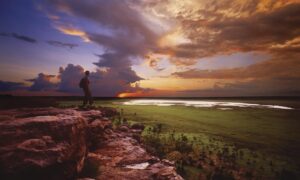
Ubirr Sunset, Kakadu National Park. Picture courtesy Peter Eve/Tourism NT
“The fact that these filming locations sit within a UNESCO World Heritage listed National Park means they are being preserved so that visitors from around the world can appreciate the unique destination.
“One of the most encouraging aspects of tourism development in Kakadu has been the growth of local Aboriginal businesses involved in tours, experiences, hospitality and accommodation.
“While the Kakadu landscape is a key attraction for visitors, the 65,000 years of Aboriginal heritage is increasingly a key driver of visitation.”
To help visitors explore the locations featured in the first two Crocodile Dundee films, Kakadu Tourism has produced a self-guided tour that is available via the website.
Main image courtesy Rimfire Films