Planning a trip to the Cook Islands is refreshingly simple, but knowing where to base yourself, where to eat and how to get around makes all the difference.
This practical guide follows on from our Cook Islands 101: Two Islands, Two Moods feature.
Accommodation in the Cook Islands spans everything from simple, good value resorts through to family friendly full service stays and genuinely luxe lagoon front villas. Rarotonga is ideal if you want choice and flexibility across different beaches and budgets, while Aitutaki leans more boutique and wind down focused, with accommodation designed to make the most of that famous lagoon.
Staying in five different properties gave us a great sense of what each area offers and which type of traveller each resort might appeal to.
We started at The Rarotongan Beach Resort and Lagoonarium, which was an excellent introduction to Rarotonga.
Set on the south west coast where the lagoon is wide and shallow, it is perfectly placed for easy swimming and snorkelling straight from the beach, plus it has that classic resort set up with activities, a family friendly feel and plenty of space to spread out.
Overall, it is a strong first stop for first timers who want an on the beach base with one of the best lagoon areas on the island right out front.


On day two we flew to Aitutaki and stayed at Pacific Resort Aitutaki, a true wind down option on an island that is naturally quieter and more boutique.
Our beachfront villa delivered the biggest wow of the trip and the whole resort is designed around making the most of the lagoon, from the infinity pool outlook to the easy access for kayaking and swimming.
Overall, Pacific Resort Aitutaki is ideal for couples or special occasion trips where the priority is privacy, comfort and doing very little, very well, with a lagoon view that never gets old.
Back in Rarotonga, we checked into The Edgewater Resort & Spa, one of the island’s larger properties.
It has a more commercial feel and a strong family focus, with facilities and activities that keep kids busy from morning to evening.
The beachfront location is on the western side where the lagoon edge is closer to land, which makes it great for whale watching (Jul-Oct).
Overall, Edgewater is best suited to high energy families who want plenty happening onsite, with the pool, kids club and activity schedule doing most of the heavy lifting.


We then stayed at Club Raro, Edgewater’s adults only sister resort, in the north east.
It is a budget friendly option for couples and adult groups who want somewhere comfortable to sleep, a pleasant pool scene and easy access to explore the island.
The beach here was made up of coral and the water was rough during our visit, but the pool bar was a fun novelty and the atmosphere at night, especially around the buffet dinner, felt festive and local.
Overall, Club Raro is a practical, adults only base if you plan to be out exploring most days and want a relaxed place to swim, grab a drink and sleep well without paying for frills you will not use.
For our final night we went out with a bang at Pacific Resort Rarotonga in Muri.
The lagoon is at its widest here, calm and serene, with islets dotted through the water like little stepping stones.
Our first floor room had a huge balcony overlooking the beach and it became our favourite place to decompress, shaded and comfortable but still completely in the view.
We also had the best meal we ate at any of the hotels on the trip, an outdoor dinner beside the beach with string lights and flame torches adding to the magic.
Overall, Pacific Resort Rarotonga is the one to book if you want boutique comfort in the best lagoon location on the island, with genuinely excellent dining and the kind of balcony you will actually use.


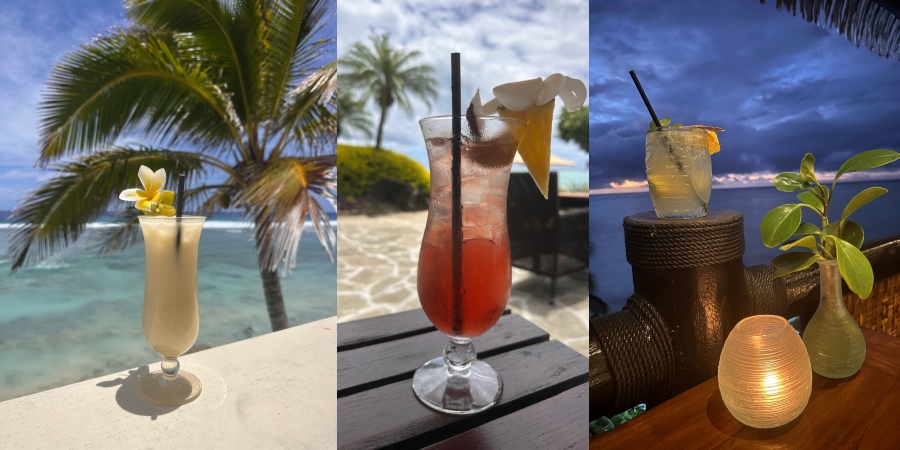
Cocktails at sunset?
The west facing resorts; Aitutaki’s Pacific Resort, The Edgewater Resort and the Rarotongan Beach Resort all delivered on the Pacific sunset promise…and happily all the resorts offered Happy Hour cocktails.


Eating well: my top picks
Most of the places that we tried offered a mix of local and western food. A must try is ika mata, the Cook Islands’ ‘national dish’. It’s a dish of raw fish marinated in coconut juice, very similar to Fiji’s Kokoda.


Two meals stood out. The first was dinner at Pacific Resort Rarotonga, hands down the best food we had across the hotels. The second was On The Beach Restaurant and Bar at Manuia Beach Resort on the western side of Rarotonga.
We also ate at Antipodes, an adults only Mediterranean inspired restaurant slightly inland with expansive views. It is special occasion territory. The food was delicious, but portions were enormous, so order with a lighter hand than we did.

On the other end of the price scale, the night markets in Rarotonga are an easy, low key way to sample local flavours alongside familiar favourites.
Food stalls serve everything from grilled fish and seafood plates to ika mata, fried noodles and slow cooked meats, with plenty of casual, good value options for an informal dinner.
There is also a strong Pacific influence across the menus, with coconut, taro and tropical fruits appearing in both savoury dishes and desserts, alongside crepes, burgers and wood fired pizza for those wanting something simple.
It is relaxed, social and family friendly, with long shared tables and a steady flow of locals and visitors, making it as much about the atmosphere as the food itself.
Tap water is not drinkable on the island and most locals do not drink it. You will see filtered water dispensers dotted around the island, but availability varies by property so it is worth refilling when you can.
Cash is still useful for local purchases. The New Zealand dollar makes things simple, but do not assume everywhere is card only.
There is a bus service that operates regularly on the main road around the island. There’s no Uber and taxis are not cheap.
We hired a rental car from Avis at the airport. This turned out to be an affordable and very useful option (they drive on the left).