
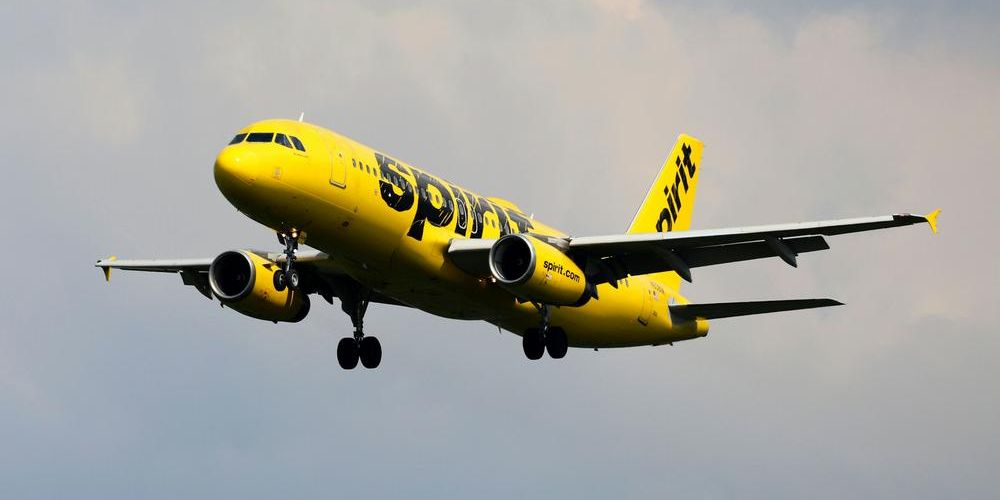
Low-cost carrier Spirit Airlines has ceased operations after 34 years, becoming the first major aviation casualty of the Iran conflict and leaving thousands of workers and passengers in limbo.
The airline abruptly shut down on Saturday after failing to secure a last-minute $500million bailout from the Trump administration, grounding all flights and triggering chaos at airports across the United States.
Around 17,000 employees are now out of work, while hundreds of thousands of passengers face disruption, with millions carried annually and roughly 1.7 million domestic travellers flying with the airline in a typical month.
“All Spirit flights have been cancelled and Spirit guests should not go to the airport,” the company said in a statement.
At the centre of the collapse is a dramatic surge in jet fuel prices linked to the Iran war.
Spirit’s recovery plan had assumed fuel costs of about $US2.24 per gallon, but prices more than doubled to roughly $US4.51 by late April, blowing a hole in its finances.
Jet fuel typically accounts for about a quarter of airline operating costs, leaving low-cost carriers especially exposed to sudden price shocks.
While executives cited “oil prices and other pressures” as decisive, analysts say the fuel spike was likely the final straw rather than the sole cause.
Spirit had already endured years of financial strain, two bankruptcies and a failed merger with JetBlue blocked on competition grounds in 2024. Political debate has since erupted over whether that decision weakened the airline fatally.
Founded in the 1980s, Spirit was a pioneer of the ultra-low-cost model in the United States, offering rock-bottom base fares and charging extra for everything from baggage to seat selection.
The approach reshaped the market, forcing larger airlines to introduce “basic economy” tickets and helping drive down fares on competing routes.
Its collapse now raises a broader question: is the budget airline model under threat? Industry experts say not necessarily, but it is becoming harder to sustain.
Larger carriers have adopted similar pricing strategies while benefiting from greater scale and financial resilience.
Meanwhile, volatile fuel costs and rising operational expenses are squeezing smaller operators.
Spirit’s demise may lead to higher fares in some markets, as competition diminishes.





