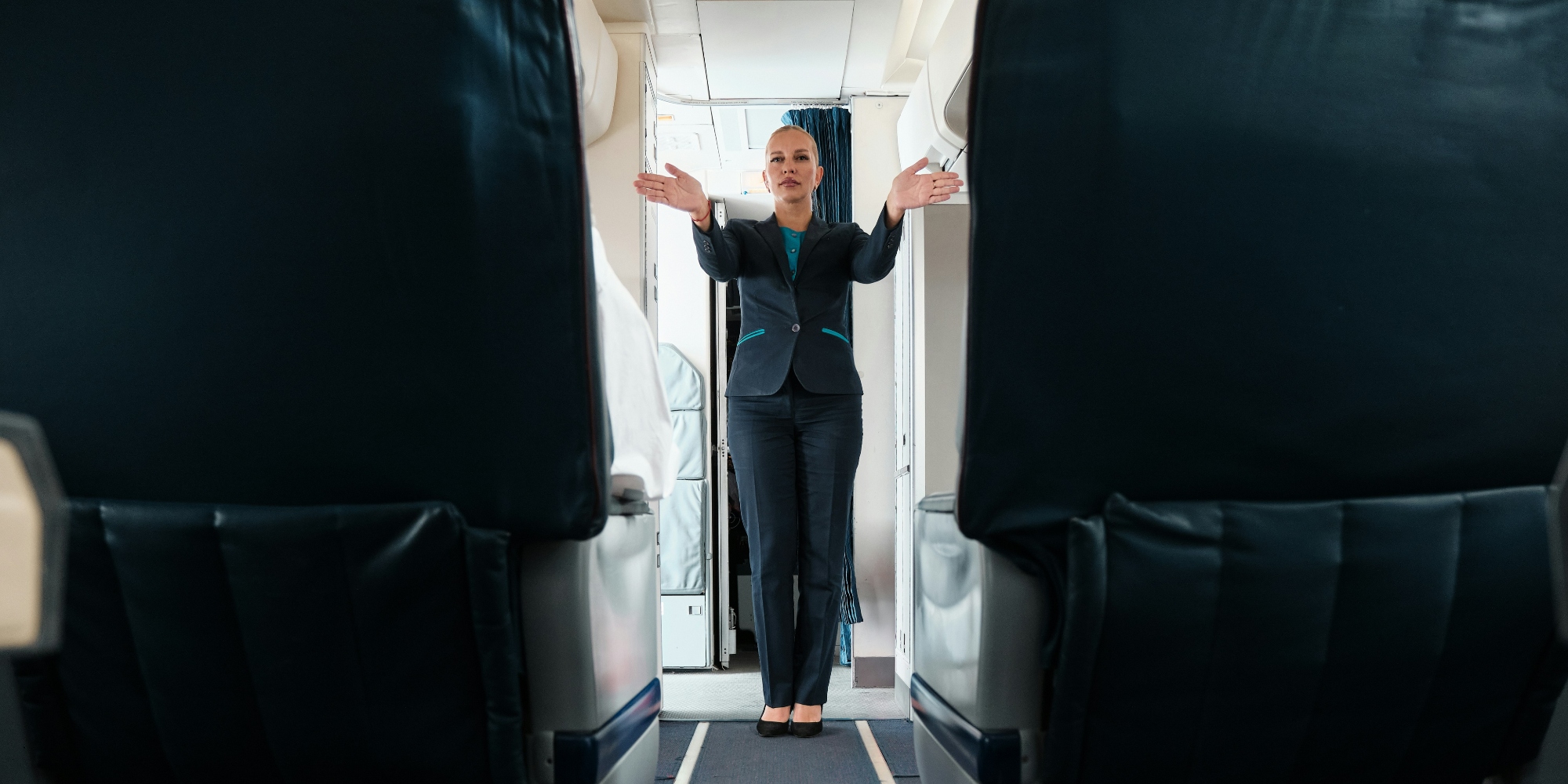
Most of us tune out when the crew runs through safety instructions, especially on short, routine hops between big cities.
For Brooklyn therapist Rachel Mariotti, a Sunday night Air Canada Express flight from Toronto to New York started out exactly that way: delayed, frustrating, and utterly ordinary.
Minutes later she was jumping from a damaged jet wing in the dark, realising how much those simple instructions really matter.
Speaking to Fox5 in New York this week, Rachel described how she was seated in an emergency exit row on the CRJ 900, heading home after what should have been a quick hop into LaGuardia. The flight was significantly delayed and frustration on board was building, but the journey itself felt routine until the aircraft came in to land on a rain slick runway.
“The landing itself was pretty rough,” she recalled, “and then the pilots…, they hit the brakes, and that’s when I knew it was something significant because I was jerked forward pretty hard.”
In the next few seconds, Rachel’s role as an exit row passenger stopped being theoretical. The woman seated next to her, Rebecca, managed to remove the over wing exit door, doing exactly what crews brief exit row passengers to do before take off. But in the confusion they made a mistake that Rachel now highlights for other travellers:
“We didn’t realize that we’re supposed to chuck it out the window,”
she said, explaining how they initially propped the heavy door against a seat and partly blocked the opening. It was a small detail from the safety card and briefing that suddenly mattered a great deal as people tried to get out.
As passengers scrambled toward the exit, instinct collided with instruction. Some wanted to grab their bags, others hesitated at the opening onto the wing, and a few were clearly in shock. Rachel and Rebecca had to focus on moving the door, getting themselves out and encouraging others to follow without luggage, just as cabin crew always stress in demonstrations.
“We have to get out on the wing, we don’t know if this plane is going to blow up,”
Rebecca told her, prompting them to step onto the wing and make the eight to ten foot jump down to the tarmac.
Only after she reached the ground did Rachel fully process what had happened. Turning back, she saw the front of the aircraft completely destroyed and a Port Authority fire truck flattened on the runway, a scene she described as like a movie.
Around her, passengers stood dazed, many with cuts and bumps on their heads, some bleeding heavily yet insisting they did not need hospital care. Later, she learned that the two young pilots, Captain Antoine Forest and First Officer Mackenzie Gunther, had died in the impact after keeping the aircraft under control and choosing not to turn away from the vehicle.
For Rachel, that realisation shifted her perspective from fear and confusion to gratitude. “Once I realized that the pilots sacrificed their lives, I mean, you’re just grateful to be here,” she told Fox5, emphasising her deep respect for the crew who stayed with the aircraft to slow it down in those final seconds.
Her experience has resonated with aviation professionals and frequent flyers who have long warned against complacency when it comes to safety briefings. Rachel admits that she, like many travellers, often only passively paid attention in the past, and says this accident has changed that.
Her message is simple: if you are in an exit row, really listen, read the card, and mentally rehearse what you would do; wherever you sit, note your nearest exits, keep your shoes on for take off and landing, and be ready to leave your belongings behind.
Beyond the immediate drama of the crash and evacuation, Rachel is also candid about the quieter aftermath. Physically, she has walked away with bruising from her seatbelt, a sore neck and hip, and has already seen a doctor to check for injuries. Mentally, she is taking time off work, leaning on friends and familiar routines, and drawing on her skills as a therapist to process the shock. She stresses that many survivors who appear okay in early interviews will need support and possibly professional help in the weeks and months to come.
Rachel’s story is a powerful, first hand reminder that the safety demonstration at the start of every flight is not background noise. It is a plain language survival guide tailored to the exact aircraft you are sitting in. The next time a cabin crew member stands in the aisle and asks for your full attention, Rachel’s night at LaGuardia is a compelling reason to put down the phone, look up, and listen.
Releated story: https://traveltalkmedia.com.au/new-video-shows-fatal-runway-crash/