Located just over 2,000 kilometres north of Ottawa and just south of the Arctic Circle, Iqaluit (pronounced ee-kha-loo-eet) is the capital of Nunavut and one of Canada’s most fascinating destinations.
Depending on the season, residents experience as little as four hours of daylight in winter and up to 20 hours in summer.
The first thing I notice about Iqaluit is the airport. Painted a cheerful red, it stands out against the snow and rock that surround Canada’s Arctic capital.
It plays an important role beyond passenger travel. The runway is regularly used by aircraft manufacturers to conduct cold weather testing, bringing some of the world’s largest and most advanced aircraft to Nunavut during the depths of winter.
Regular flights connect Iqaluit with Ottawa, Montreal, Yellowknife, Edmonton, Rankin Inlet and Kuujjuaq, primarily on Canadian North and First Air.
Airfares are often eye wateringly expensive, a reminder that every passenger, parcel and piece of fresh produce has to travel vast distances to reach Nunavut. Residents benefit from discounted local fares, but visitors should be prepared for a significant travel bill.
Despite being the gateway to Canada’s eastern Arctic, Iqaluit remains one of the country’s least visited destinations.
What makes Iqaluit remarkable is not just its location, but the fact that it functions as a thriving modern city in one of the most remote parts of North America.
There are no roads connecting Nunavut to the rest of Canada. Everything and everyone arrives by air or sea.
With a population of around 7,500 people, Iqaluit is smaller than my local Sydney suburb of Balgowlah. There are no traffic lights and only about 20 kilometres of roads, yet it serves as the political, economic and cultural heart of Canada’s newest territory.
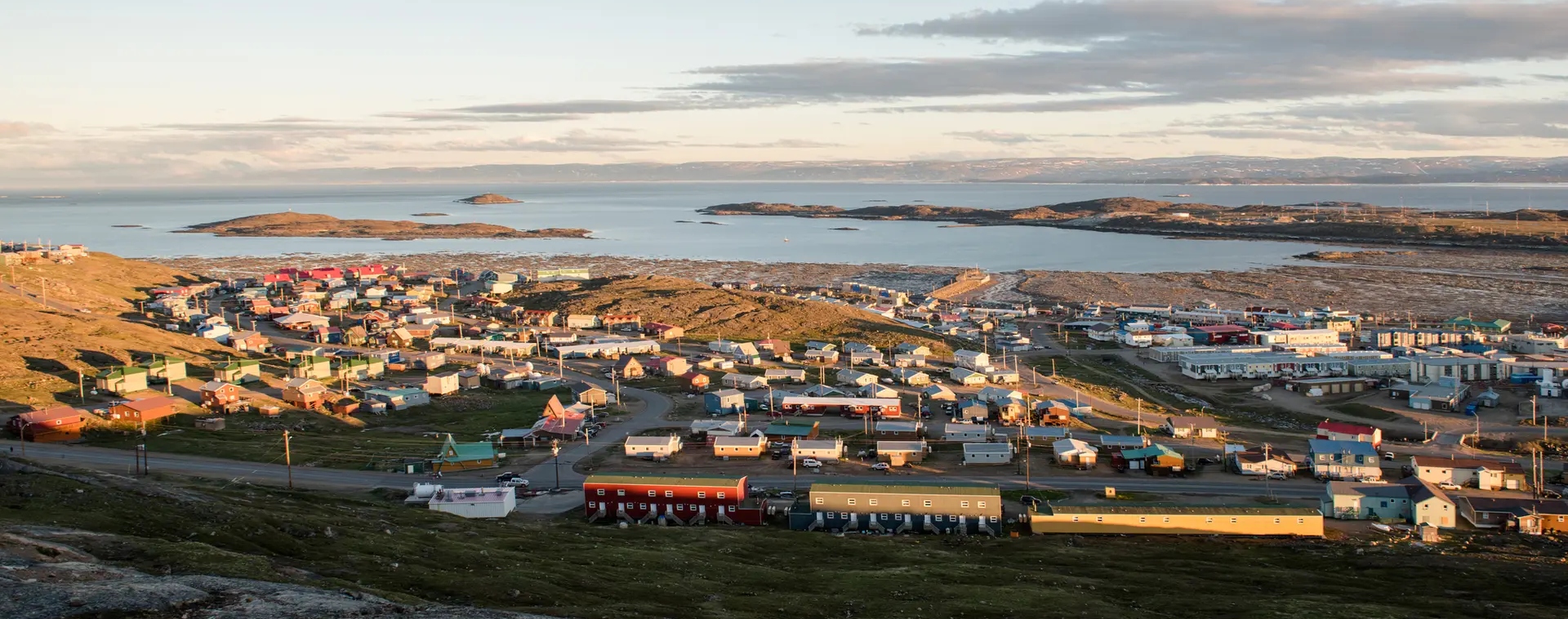 Iqaluit in the summer
During my stay, I was hosted by Annah and Meeka from Destination Nunavut, whose local knowledge opened doors that most visitors never see.
Annah invited me into her home. From the inside, it could have been a comfortable family house in Sydney, Vancouver or London.
The differences were subtle but revealing: a huge food storage cupboard stocked for months ahead and an oversized entryway packed with boots, coats and winter gear.
That visit challenged many of my assumptions about life in the Arctic. Iqaluit may be one of the most remote cities in North America, but what surprised me most was how ordinary it felt.
Families go to work and school. Friends meet for coffee. Children play hockey. Life continues much as it does elsewhere, just under very different conditions.
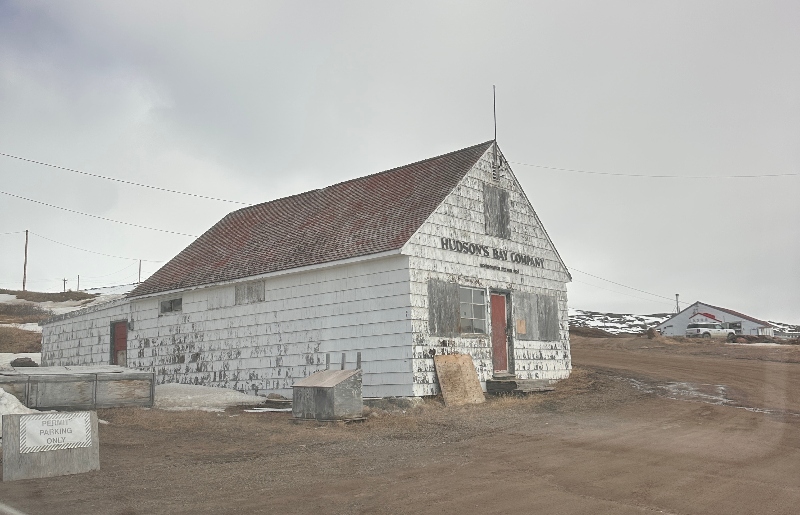 One of the original Hudson Bay Company buildings
Food prices are notoriously high because almost everything must be flown in or shipped during the brief summer supply season. Salaries are estimated to be around 60 per cent higher than in southern Canada to help offset the cost of living, while housing remains one of the city’s biggest challenges.
Winter doesn’t stop life. It simply moves indoors. Football, hockey and even swimming continue throughout the coldest months. Hunting and fishing remain important parts of daily life and continue to supplement many families’ diets.
Nothing illustrated modern northern life quite like Meeka’s excitement about the arrival of Tim Hortons. For Australians, imagine a cultural institution somewhere between Starbucks, McDonald’s and a neighbourhood bakery.
Nunavut is the last Canadian territory to get one. Meeka had not tried it yet because, in her words, “the queues are too long”.
Instead, she took me to the local hospital cafeteria, which she declared served the best value breakfast in town. It turned out to be excellent advice.
In Inuktitut, Iqaluit translates to “place of many fish”. At the Unikkaarvik Visitor Centre, Lawrence Inutiq-Sackett explained that a more precise meaning refers to “three or more char”, the Arctic fish that has sustained Inuit communities for generations.
Lawrence’s guided tour provided a fascinating introduction to Inuit culture. Alongside life size displays of Arctic wildlife, visitors learn about the Inuit understanding of seasons.
Rather than four seasons, Inuit traditionally recognise six: Upingarqsaaq, the return of longer days; Upingaaq, the time of moving ice; Auyaq, when the sun never leaves the sky; Ukiaksaaq, the time of shorter days; Ukiaq, the return of the ice; and Ukiuq, the cold, dark season of winter.
Lawrence shared stories from his childhood, taught me about traditional Inuit ways of life and even gave me the chance to play an Inuit drum. At the end of the visit, I was presented with an Order of Arctic Adventures North of 60° certificate.


I also learnt a fascinating piece of Arctic innovation. The Inuit are credited with inventing sunglasses. Traditional snow goggles were carved from whale bone and custom fitted to each wearer, protecting eyes from the intense glare reflecting off snow and ice.
Today, around 60 per cent of Iqaluit’s population is Inuit, with the remaining 40 per cent drawn from across Canada and around the world. The city is home to an elementary school, high school and French language school.
Alongside standard subjects, students learn Inuit Qaujimajatuqangit, traditional Inuit knowledge and societal values. Lessons can include Inuktitut language instruction, traditional sewing, hunting and land based survival skills, ensuring cultural knowledge is passed to future generations.
One of my most memorable experiences came with Kool Runnings, an Arctic adventure outfitter specialising in dog powered expeditions. My guides were Emma, Leetia, Elania and Maiya, an all female teenage dog sled team whose enthusiasm was infectious.
They represented exactly what impressed me most about Iqaluit: young Inuit balancing traditional knowledge with modern ambitions.
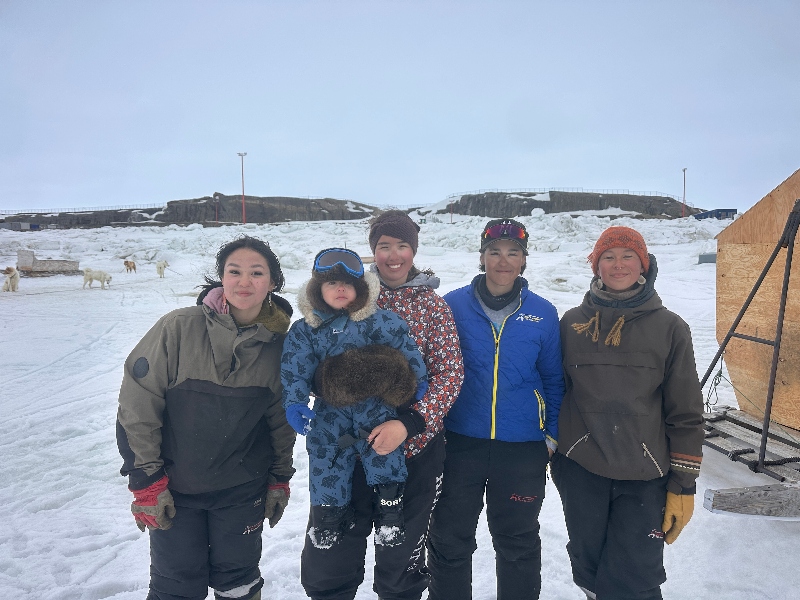 Kool Running’s Maiya, Leetia, Elania, Emma (& Elania’s little brother!)
As we travelled across the frozen landscape, they shared stories about hunting trips with their dogs, life in Nunavut and their hopes for the future.
Emma is studying Environmental Science in Vancouver. Leetia is training to become a veterinarian in Prince Edward Island. Elania represents Nunavut in ice hockey and hopes to study adventure guiding in British Columbia. Maiya is still at school and happily exploring where her interests might take her.
Their confidence, ambition and connection to their culture left a lasting impression.
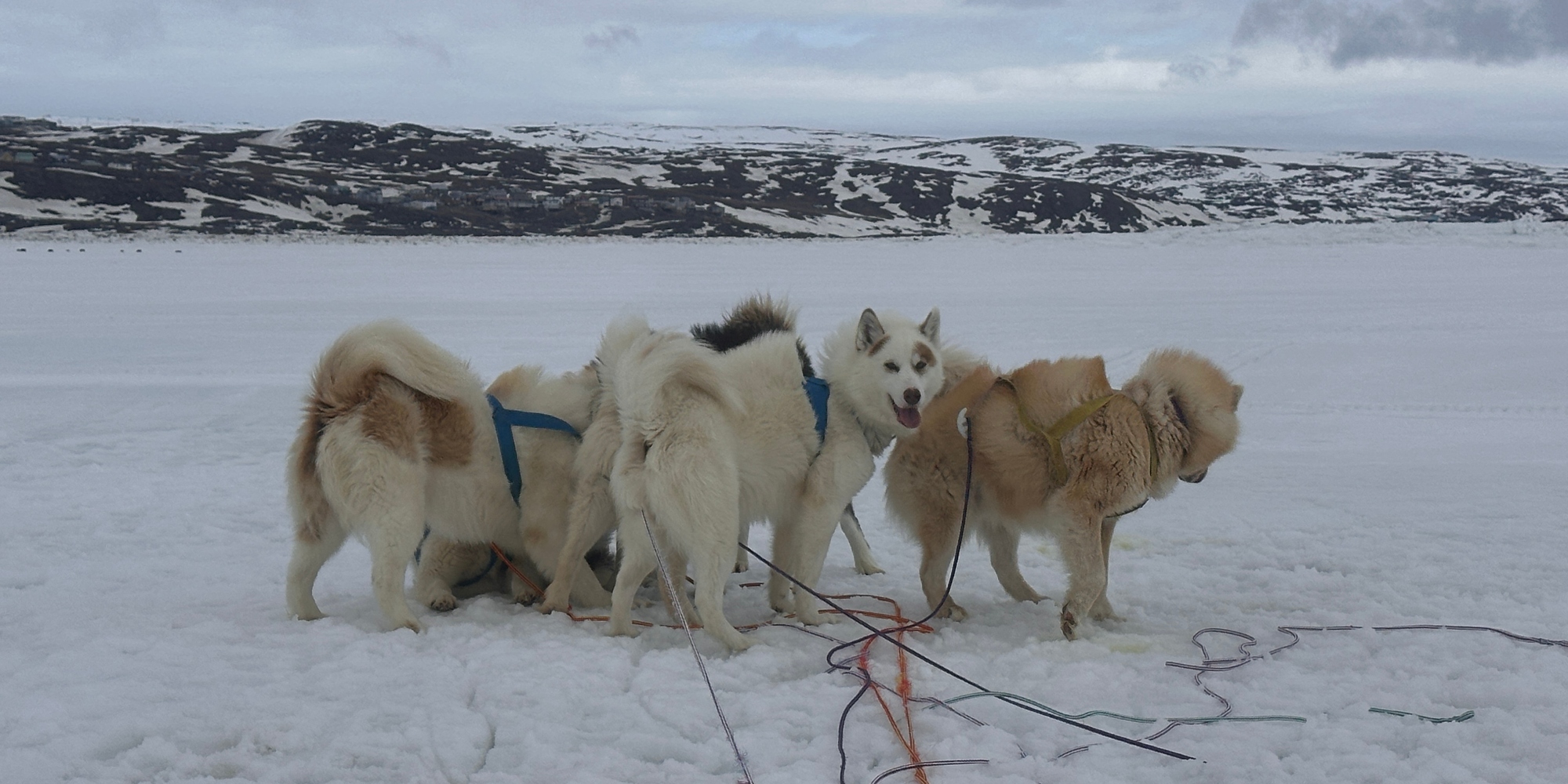
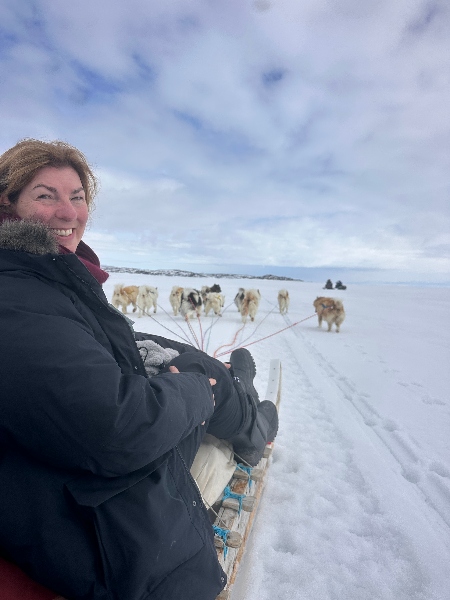
I also learnt that dog sledding traditions vary significantly across Canada’s Arctic regions. Unlike the team formations I experienced in Manitoba last year, Nunavut’s dogs fan out across the ice on individual long lines.
The hardy, thick coated dogs (Qimmiit in Inuktitut) spend winter living on the sea ice outside town before moving onto land when the ice melts. Sea ice typically surrounds Iqaluit from late autumn until early summer, shaping everything from travel and recreation to traditional hunting practices.
 Dog sledding remains an important cultural tradition, but its survival has not always been guaranteed. During the 1950s to 1970s, large numbers of Inuit sled dogs were killed across parts of the eastern Arctic during a period when Inuit families were being encouraged and pressured to settle permanently in communities. The issue remains deeply painful for many Inuit and has been the subject of inquiries, government reviews and ongoing discussion about the impact those actions had on traditional ways of life.
Listening to Emma, Leetia, Elania and Maiya talk about their dogs, it was clear that the connection between Inuit communities and sled dogs remains strong. Their stories were not about preserving history in a museum. They were about a living tradition that continues to evolve alongside modern life in Nunavut. Watching a group of ambitious young women guide their team across the frozen landscape felt like a reminder that culture survives not because it stands still, but because each generation finds its own way to carry it forward.
Traditional soapstone and marble carvings are among Nunavut’s most recognisable art forms. While galleries and souvenir shops offer beautiful pieces, prices can be substantial.
My guides shared a lesser known alternative. On Friday afternoons, visitors can purchase carvings created by inmates at the Aaqqigiarvik Correctional Healing Facility, with proceeds helping support the artists.
Iqaluit has become an increasingly important gateway for Arctic tourism. Cruise operators including Silversea, Ponant, Quark Expeditions and Viking regularly use the city as an embarkation or disembarkation point for voyages through the Canadian Arctic.
Most cruise passengers treat Iqaluit as little more than a gateway to the Arctic, flying in the day before embarkation and leaving as soon as they disembark.
That’s a mistake. Give yourself a few extra days and you’ll gain a much richer appreciation of the region.
Meeting local residents, learning about Inuit culture, visiting the museums and visitor centre, trying Arctic activities and simply experiencing daily life in Canada’s Arctic capital adds valuable context to every fjord, glacier and wildlife sighting that follows.
I stayed at the modern Aqsarniit Hotel, known locally as “the new hotel”, which provides contemporary accommodation and conference facilities. Like the city itself, it reflects a place that is growing and changing while remaining firmly connected to its Arctic roots.
Perhaps that’s the real lesson of Canada’s Arctic capital. Beyond the sea ice, the long winter nights and the extraordinary geography lies a thriving community that is both deeply connected to tradition and firmly focused on the future.
For travellers willing to venture north, Iqaluit offers something increasingly rare: the opportunity to experience a place that feels genuinely different while being welcomed into everyday life.