At FarmFest recently near Toowoomba, a couple of school students asked me what the biggest threat to our business was. I did not need long to think about the answer.
Politicians!
Not competitors. Not online booking sites. Not even AI. Politicians.
And before anyone jumps to the usual left versus right argument, this is not about one side of politics.
It is about a political class, here and overseas, that too often seems completely disconnected from the pressure real businesses and everyday Aussies are carrying.
Travel has had another reminder of that recently. The conflict in the Middle East created uncertainty for travellers, airlines, insurers and agents.
People see headlines, panic sets in and suddenly clients are asking whether they can travel, whether they are insured, whether their flights will operate and whether they should cancel trips they have spent months or years planning.
That reaction is understandable, but the reality is usually far more complicated than the headline.
Airlines are constantly reviewing airspace, aircraft safety, crew safety and operational risk. Travel insurers have policy wording that matters. Different airlines have different waivers, dates, conditions and processes. What was true last week may not be true this week.
That is the part people do not always see. When politicians make decisions, or fail to prevent situations escalating, the impact does not stay in a press conference or a parliamentary chamber.
It lands on small businesses, on staff trying to help worried clients, on travellers who have saved for years and on families who simply needed a holiday.
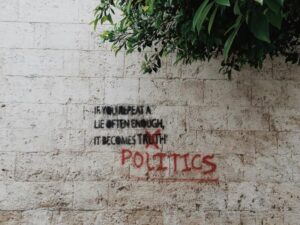
Frankly, the travel industry is tired. We are tired of dealing with the fallout of decisions made by people who will not personally wear the consequences. But the Middle East is only one part of it.
Look at the wider picture for travel and tourism in Australia. Company fees keep rising. Wage costs are rising. Superannuation obligations continue to shift.
The RBA card surcharge ban may sound consumer-friendly in a headline, but someone still has to pay the cost of card acceptance. If businesses cannot recover those costs transparently through surcharges, they will be forced to absorb them or build them into pricing.
That is not magic. That is just moving the cost somewhere else.
Then there is the Passenger Movement Charge increasing again, adding more cost to international travel.
This comes after the Australian passport fee increased to $422, making it the most expensive passport in the world, meanwhile Singapore charges around $52 AUD for one of the strongest passports globally.
At some point, these costs stop looking minor. Australian travellers are having their wings clipped before they even leave the country.
That cost is especially frustrating given ongoing public complaints about the durability and quality of the current Australian passport design.
Tourism Australia funding has been cut at a time when Australia should be fighting harder to compete for global visitors.
The cruise sector continues to warn about government charges, port costs and regulation making Australia less competitive.
We need to stop pretending these are isolated decisions. They all add up.
Every extra fee, every new compliance burden, every tax dressed up as a small increase, every regulation that sounds simple in Canberra but lands heavily in the real world, it all pushes costs higher.
And who pays in the end? Not the politicians. Businesses pay first, then clients pay, then staff feel the pressure, then everyday Aussies wonder why everything costs more.
The frustrating part is that travel is not some optional luxury industry sitting on the sidelines.
Travel supports small businesses, regional economies, events, tourism operators, airports, cruise ports, hotels, guides, restaurants, farmers, transfer companies, insurance providers and thousands of jobs across the country.
It is also something many families now protect in their budgets because it matters to their lives, not just their Instagram feed.
Travel gives people something to look forward to, a reason to switch off, time with family and friends, and a proper break from the constant pressure of work and everyday life.
Tourism Australia recognised this years ago through its ‘No Leave, No Life’ campaign, which was built around research into annual leave stockpiling and the workplace barriers that stop people from taking holidays.
The whole premise was simple: people need to take their leave and holidays matter for both employees and the broader visitor economy.
So when governments keep making travel more expensive, more complicated or less competitive, they are not just putting pressure on an industry.
They are making it harder for everyday Australians to access something that is directly linked to rest, recovery, work-life balance and wellbeing.
 It also feels like governments at every level have forgotten how business actually works.
They talk about productivity while adding complexity. They talk about cost-of-living relief while increasing costs. They talk about supporting tourism while cutting destination marketing and making Australia more expensive to visit. They talk about small business while making it harder to run one!
And when something goes wrong overseas, travel businesses are expected to calmly pick up the pieces, interpret airline policies, explain insurance wording, manage client stress and somehow keep everyone moving.
We do that because it is our job, but travel agents are real people too.
We are not call centres without a pulse. We are small business owners, employees, parents, partners and members of our communities.
We are often working through the same uncertainty as our clients, while also trying to support dozens of other people through it.
So yes, ask questions. Get advice. Check your route, your insurance, your airline policy and your options. But do not assume a headline tells the full story and do not forget that behind every disrupted booking is a real person trying to help.
The travel industry is resilient. It always has been. But resilience should not be an excuse for governments to keep loading more pressure onto businesses and travellers.
If politicians genuinely want to support small business, tourism and everyday Aussies, they need to stop treating every industry as an endless place to find another fee, another charge, another tax or another compliance burden.
Because eventually, someone pays!
And it is rarely the people making the decisions.