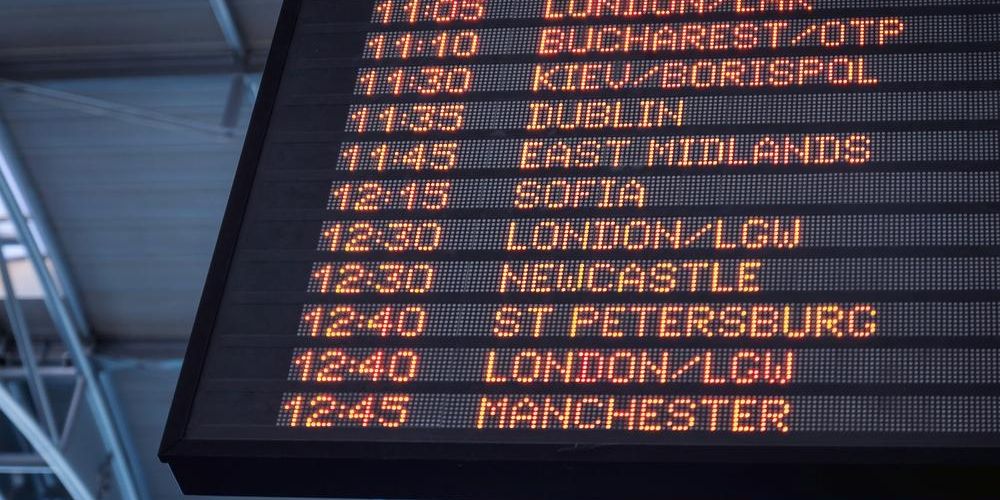
Australian’s travelling to the UK have been warned of possible flight disruptions after a technical failure caused widespread cancellations.
The problem affected the flight processing system operated by National Air Traffic Services (NATS), with major airports including London Heathrow, Gatwick and Stansted, as well as Manchester, Birmingham, Edinburgh and others, caught up in the chaos.
NATS said the technical issue had been identified and a fix implemented, with the system returning to normal operation.
However, the knock on impact has continued as airlines work to clear a huge backlog of disrupted flights.
More than 1,000 flights were reported cancelled by Tuesday evening, while hundreds more were delayed.
Flight tracking data showed disruption across at least 15 UK airports, with passengers reporting lengthy waits on aircraft and inside terminals.
British Airways, easyJet and Ryanair were among the airlines hit hardest. Ryanair said more than 65,000 of its passengers had been affected by delays of up to eight hours and that it had cancelled more than 50 flights. British Airways also warned that disruption would continue into today (Wednesday).
The impact has also spread beyond the UK, with aircraft held at airports elsewhere in Europe because of the disruption to the British network.
NATS said the problem was caused by an issue with its flight data processing system and insisted that passenger safety had not been compromised.
However, the latest failure has reignited questions about the reliability of Britain’s air traffic control infrastructure.
It is the third major NATS disruption in just over three years, following a significant failure in August 2023 that affected around 700,000 passengers and resulted in more than 1,500 flight cancellations. A further technical problem disrupted flights in 2025.
The UK’s Civil Aviation Authority has said it expects NATS to provide a full report into the latest incident and will consider whether further action is required to improve the reliability of the system.
For travellers flying to or from the UK, the disruption means delays and cancellations may continue even though the technical fault itself has been resolved.
Passengers are being advised to check directly with their airline before travelling to the airport and to allow extra time for potentially lengthy delays.