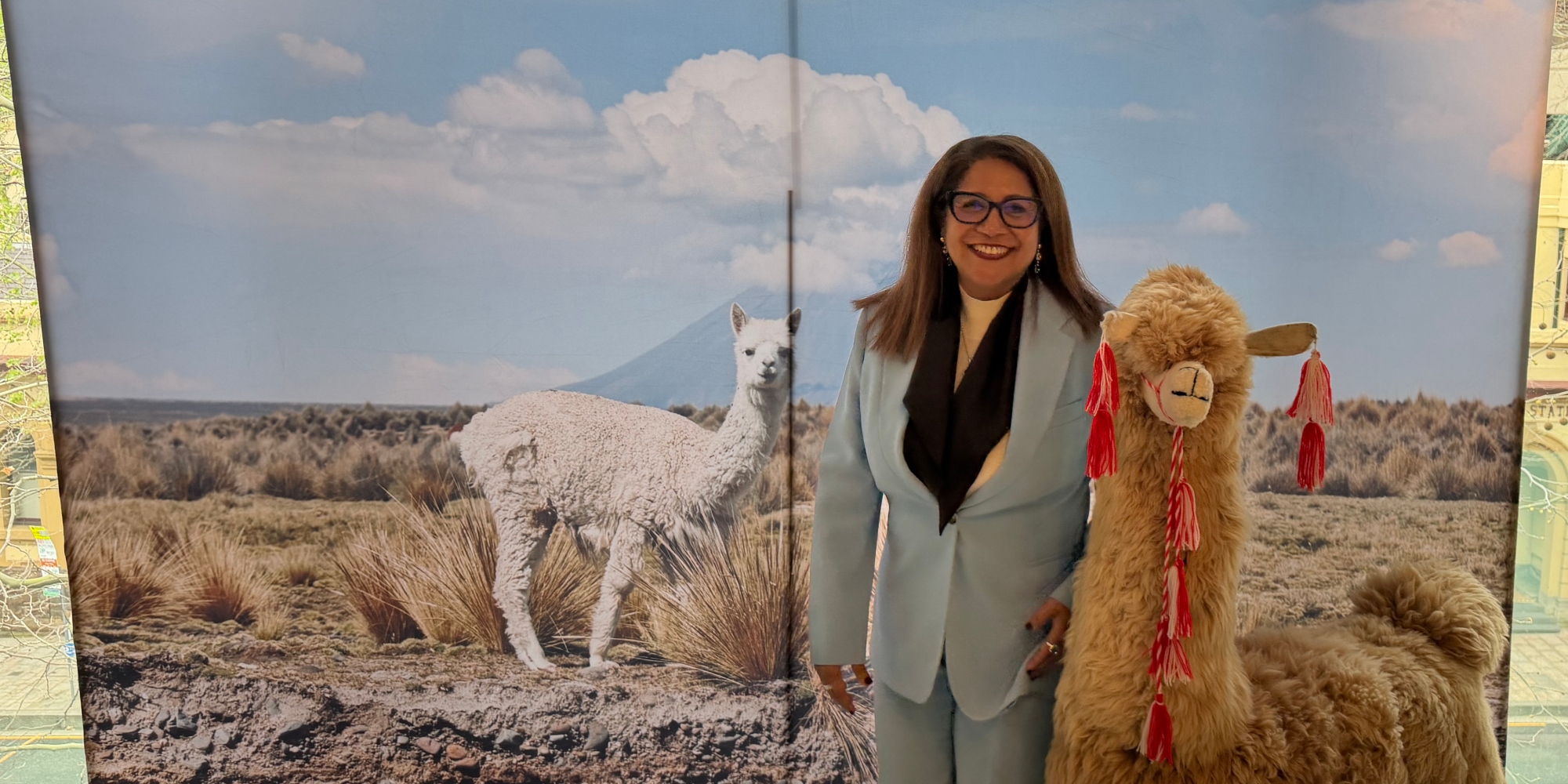
Australian travellers are particularly well suited to Peru because they are culturally curious, adventurous and increasingly interested in experiences that have not been manufactured for tourists, according to PROMPERÚ’s Trade, Tourism and Investment Commissioner to Australia and New Zealand, Soledad Campos de Parry.
Speaking to Traveltalk following PROMPERÚ’s travel advisor breakfast in North Sydney, Ms Campos de Parry said Australians were looking for far more than a collection of famous landmarks.
“Australian travellers are very particular,” she said. “They are culturally curious but also laid-back. I think that is a unique combination.
“They expect history, art and living culture, but they also have a very high level of adventure. Hiking and nature are important and we can offer that in Peru.”
Ms Campos de Parry has represented Peru in several international markets, including Colombia, Canada, Mexico, Ecuador and Bolivia. She said living and working abroad had helped her understand how travellers from different countries approached a destination.
Her experience in Australia has led her to believe Peru’s combination of the Andes, Amazon rainforest, coastal landscapes, food and community-based tourism aligns closely with the interests of Australian travellers.
“Younger generations are looking for experiences that are not fabricated,” she said. “Infrastructure can be fabricated, but you cannot fabricate the experience of sharing with a community — its knowledge, ancestors, history and food.”
She pointed to a recent PROMPERÚ activation at the World Surfing Conservation Conference on the Gold Coast, featuring the caballito de totora, a traditional reed watercraft still used by fishing communities on Peru’s northern coast.
“This is a living culture of surfing that goes back 3,000 years and is still with us through the fishing community,” she said.
PROMPERÚ says 34,721 Australians visited Peru in 2025, an increase of 27 per cent on the previous year. Ms Campos de Parry attributed the growth to the combined efforts of airlines, tour operators, travel advisors and promotional campaigns presenting different sides of the country.
Gastronomy has become an increasingly important part of Peru’s tourism story, allowing visitors to experience the country’s biodiversity and regional cultures through food.
Its culinary credentials received further recognition in June when Lima was named Time Out’s Best City for Food in 2026, ranking ahead of Bangkok, Mexico City, London and Barcelona. The publication praised the Peruvian capital for the quality, affordability and diversity of its dining scene, alongside its use of native Peruvian ingredients.
Ms Campos de Parry highlighted the country’s more than 4,000 native potato varieties, as well as its Amazonian fruits, seafood, chillies, quinoa and produce grown at different elevations. She also referenced Peruvian chef Virgilio Martínez, whose internationally recognised cuisine presents ingredients according to the altitude and ecosystem in which they are found.
“When you see the dish on your table, you see products from altitudes that you may never be able to reach,” she said. “You also see a piece of art that stimulates the senses, creativity and imagination.”
Asked what every visitor should try, Ms Campos de Parry found it difficult to settle on just one dish.
From the coast, her personal favourites include ceviche and arroz con pato, a northern Peruvian dish of duck served with green, herb-infused rice that reminds her of her family roots.
In the Andes, she recommends quinoa and pachamanca, in which meat and other ingredients are cooked underground using heated stones. In the Amazon, she points to local fish, bananas and fruits that many Australian visitors will not have encountered before.
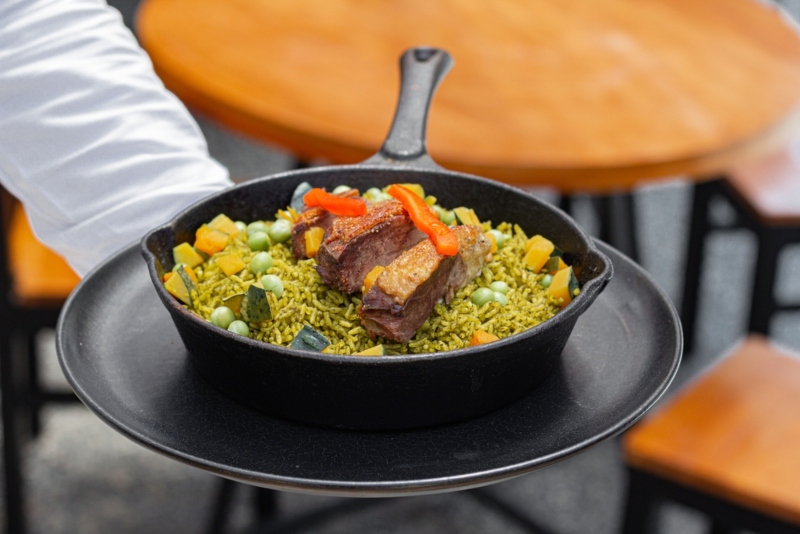 Arroz con pato
“It is something different to taste, but it is also a personal experience of the journey through Peru,” she said.
For a first visit, Campos de Parry recommends allowing at least 15 days. As well as providing time to explore several regions at a relaxed pace, a longer itinerary gives travellers time to acclimatise before visiting higher-altitude destinations.
While her remit covers exports and investment as well as tourism, she does not view tourism as a standalone industry.
“Tourism has an impact on communities and their economies, but it is not only related to the economy,” she said.
“It is also about identity and sharing our millennia-old culture. It is about how proud we feel to share the generosity of our country, its different climates and biodiversity, while maintaining and supporting the communities.”
Ms Campos de Parry stopped short of suggesting a nonstop Australia–Peru service was imminent, instead pointing to LATAM Airlines’ one-stop connections from Sydney and Melbourne to Lima via Santiago.
“When we think about Latin America, we often think it is too far, but it is not necessarily too far when you compare the hours on the plane with travel to other destinations,” she said.
“We are together on the Pacific and we have much to share.”